“It would be very easy for the US Navy to exert complete control over what does and does not go up and down the Strait now,” the article, from Just the News, claimed.
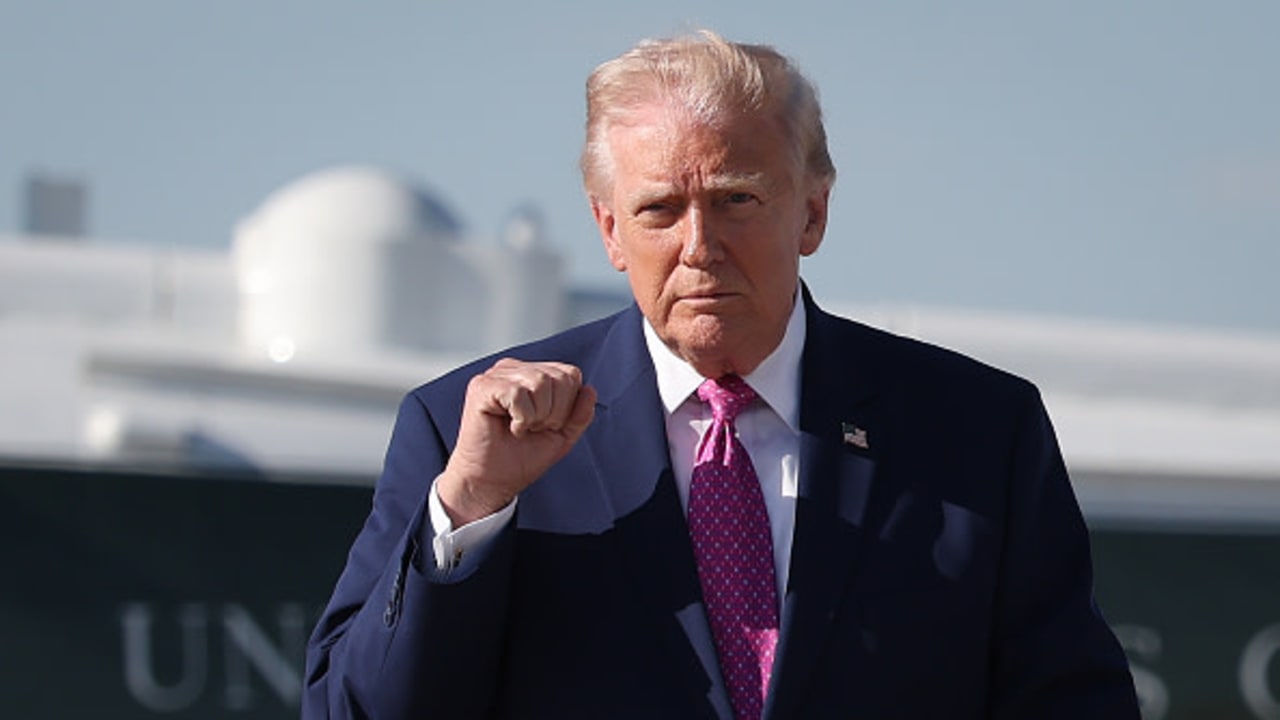
After both the US and Iran reported a failure to reach a deal during the weekend’s ceasefire talks in Islamabad, US President Donald Trump on Sunday shared an article suggesting he would "out-blockade Iran’s hold over the Strait of Hormuz."
The article, from Just the News, claimed that the president could repurpose the strategy he used against Venezuela, and that “it would be very easy for the US Navy to exert complete control over what does and does not go up and down the Strait now.”
“We leave here with a very simple proposal, a method of understanding that is our final and best offer,” Vice President JD Vance said after nearly 24 hours of negotiations.
“We will see if the Iranians accept it.”
Pakistan, the country currently leading the mediation efforts, released a statement expressing gratitude to both sides for their willingness to negotiate and urging them to uphold the ceasefire until a deal could be reached.

Reports claim talks were tense, officials nearly came to blows
As of Sunday morning, both the US and Iranian delegations left the negotiation table unsatisfied, with Vance claiming the US had been “quite flexible,” and the Iranian team saying the negotiations had been “conducted in an atmosphere of mistrust.”
In addition, Turkish media reported that negotiations surrounding certain key topics were so tense - namely, the management of the Strait of Hormuz - that Iranian Foreign Minister Abbas Aragchi and US Special Envoy Steve Witkoff nearly came to blows.
Alongside nuclear disarmament, the Strait of Hormuz remains at the center of the US-Iran talks. US Navy ships reportedly crossed the Strait of Hormuz on Saturday just as the negotiations kicked off, though Iran has denied the reports and threatened to attack any unauthorized ships in the strait.
This comes after Trump said in a Saturday post to Truth Social that the United States has begun the process of clearing underwater mines from the Strait of Hormuz.
“We’re now starting the process of clearing out the Strait of Hormuz as a favor to Countries all over the World, including China, Japan, South Korea, France, Germany, and many others,” Trump stated, slamming the named nations for not having the “courage or will” to do so themselves.