‘This Is My Personal Contribution to Ukraine's Victory’
At Language Lab in Kyiv, Ukrainian language teachers are navigating a classroom transformed by war. Lessons now cover drones, air raids, and military vocabulary — while students include UN staff, foreign volunteers, and soldiers. Teachers describe a surge in people switching from Russian to Ukrainia
Kyiv Post
75
5 min read
0 views
On a typical day at Language Lab in Kyiv, a class might include a UN staffer, a foreign volunteer, a journalist on assignment, or a soldier working alongside Ukrainian forces. The lesson might cover drone terminology, air raid vocabulary, or – on at least one memorable occasion – a student’s heartfelt request to learn Ukrainian swear words about Russians.
“Let’s learn some swear words about Russians today,” one student told teacher Natalia Antonenko after arriving to class following a shelling. “And I replied, ‘What a wonderful idea. Start writing.’”
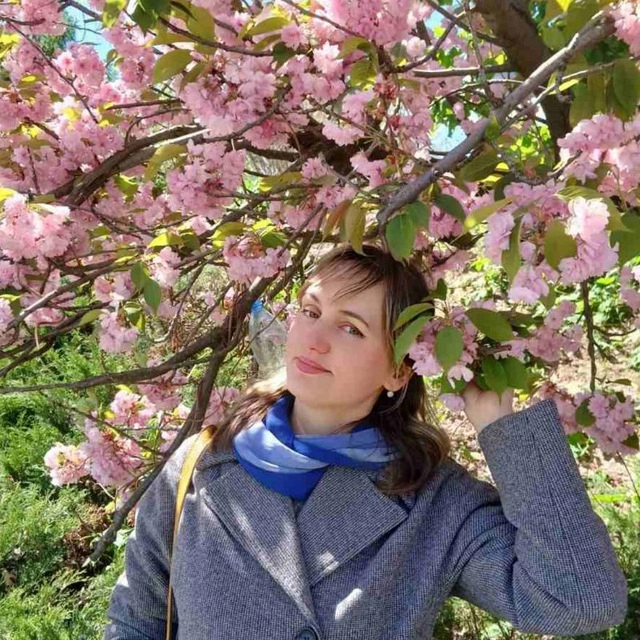
Language Lab Teacher Natalia Antonenko (Photo Language Lab)
The anecdote is funny, and Antonenko tells it with obvious warmth. But it also captures something real about what teaching Ukrainian has become since February 2022 – something that goes well beyond conjugations and vocabulary lists.
A different kind of classroom
The teachers at Language Lab are candid about how much their work has changed. Gone are lessons about airport check-ins or hotel bookings. In their place: words for types of missiles, tourniquet use, child abductions, post-traumatic stress disorder, how to ask for help during a shelling.
Despite deep public appreciation for President Volodymyr Zelensky’s wartime leadership, former Commander-in-Chief General Valerii Zaluzhnyi could win a potential head-to-head presidential runoff. How can this dynamic be compared to Winston Churchill’s shocking defeat in the July 1945 British elections, where a nation unified during wartime immediately sought a new policy direction once the conflict concluded.
“The war added several necessary topics for communication,” says teacher Oksana Matii. “Especially in extreme cases, during air raids, at the border. And for foreign military personnel, there are even requests for understanding foul language, which is necessary in stressful situations.”
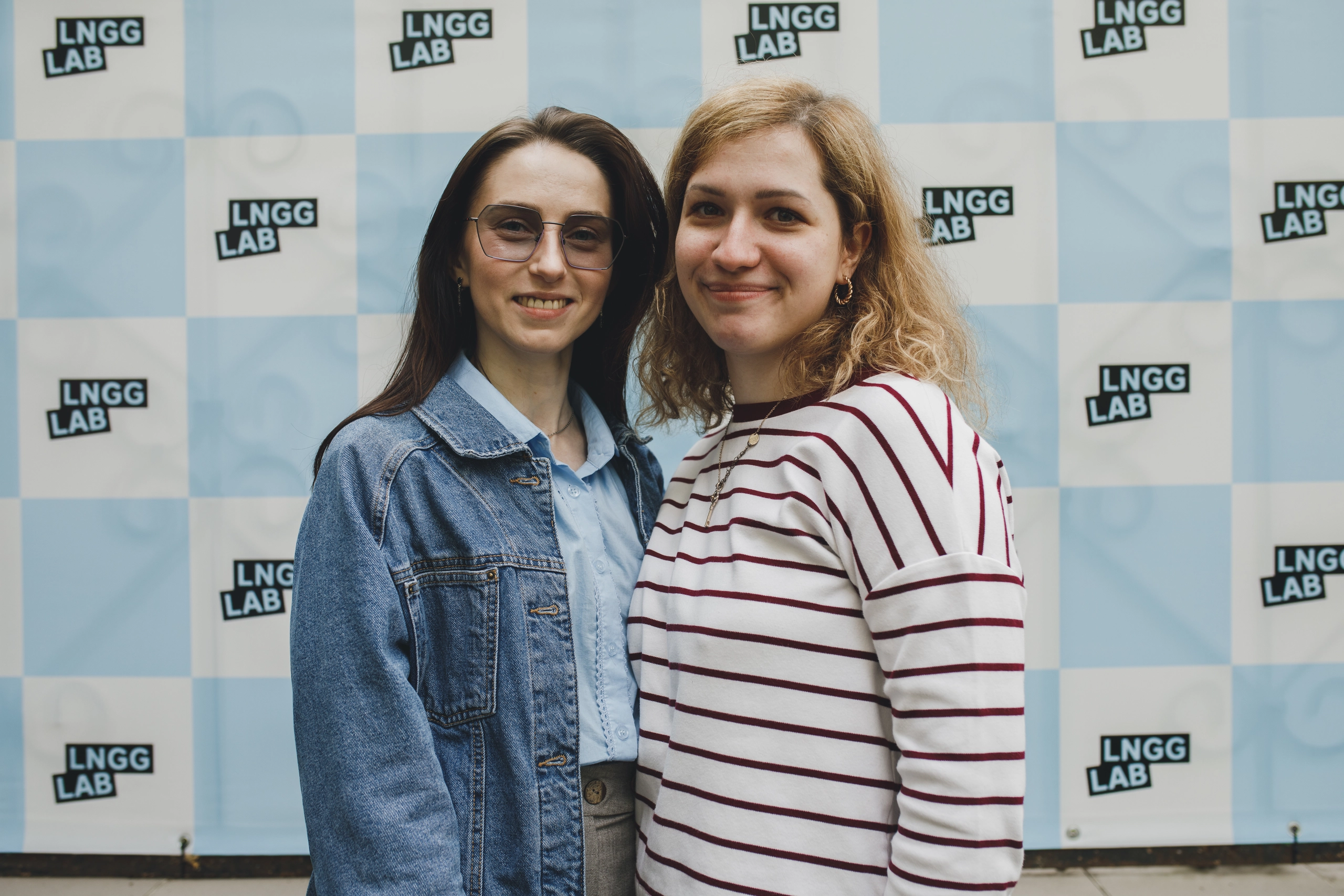
Language Lab Teacher Oksana Matii (Photo: Language Lab)
For Antonenko, the shift in curriculum reflects something deeper – a shift in who her students are, and why they are here.
“Almost all of our students, in one way or another, help Ukraine,” she says. “Journalists covering events in Ukraine for the world. Volunteers weaving camouflage nets or working in field kitchens. Military personnel who work alongside Ukrainian soldiers. Staff of international foundations and organizations such as the United Nations and the Red Cross.”
Switching to Ukrainian
One of the most striking trends the teachers describe is the number of students who have switched – or are switching – from Russian to Ukrainian since the full-scale invasion began.
“After the start of the full-scale invasion, we received another request from students – switching from Russian to Ukrainian,” says Antonenko. “As one of my students once said, ‘I now feel disgusted speaking Russian. Please teach me to speak Ukrainian.’ I think that now around 30% of my students are those who are transitioning from Russian to Ukrainian. And I am very happy to help them with that.”
Language Lab Head of Learning Olena Kovalenko (R) (Photo: Language Lab)
Head of learning Olena Kovalenko frames the shift in broadly: “Many people understand how important it is to support Ukraine, including through language, so they choose to switch to Ukrainian,” she says. “I see that more and more people are not only learning the language, but also getting deeper into the culture.”
What teachers learn from their students
Several of the teachers describe the classroom as a two-way exchange – one that has changed how they see their own language.
For teacher Lilia Strokach, those moments of mutual discovery can be linguistic surprises. She recalls a student describing a bathroom using the word “лазничка” – a dialectal term so unfamiliar that Strokach had to look it up herself. “But that’s interesting,” she says. “I learn a lot from my students.”
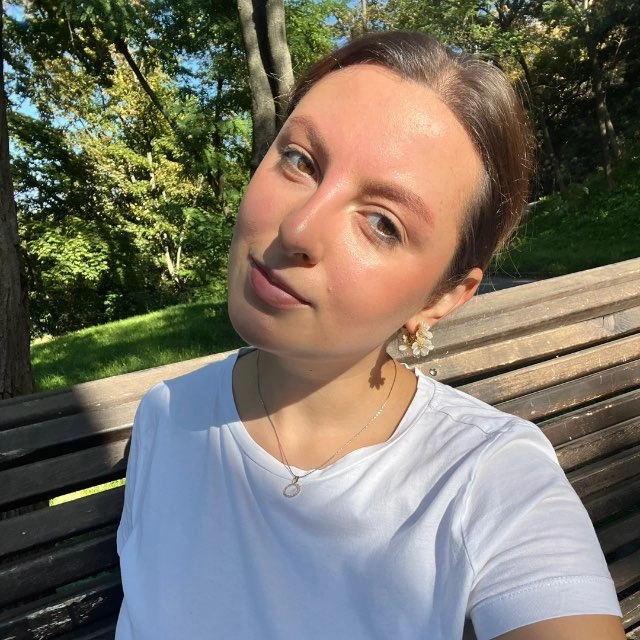
Language Lab Teacher Lilia Strokach (Photo: Language Lab)
Another student, working through verb aspects, noticed how prefixes and suffixes could generate entire new words – verbs, and sometimes even nouns – from a single root. “To be honest, I had not thought about it so deeply before,” Strokach admits.
Kovalenko recognizes the same phenomenon.
“Sometimes students ask questions that you wouldn’t even think about as a native speaker – for example, where a word comes from or what influenced it,” she says. “It really broadens your horizons.”
Anna Danylevska, the school’s head of client communications, came to Ukrainian teaching from an unexpected direction: she had spent years teaching Russian as a foreign language before the war. Returning to Ukraine after a period in Germany, she began teaching Ukrainian instead.
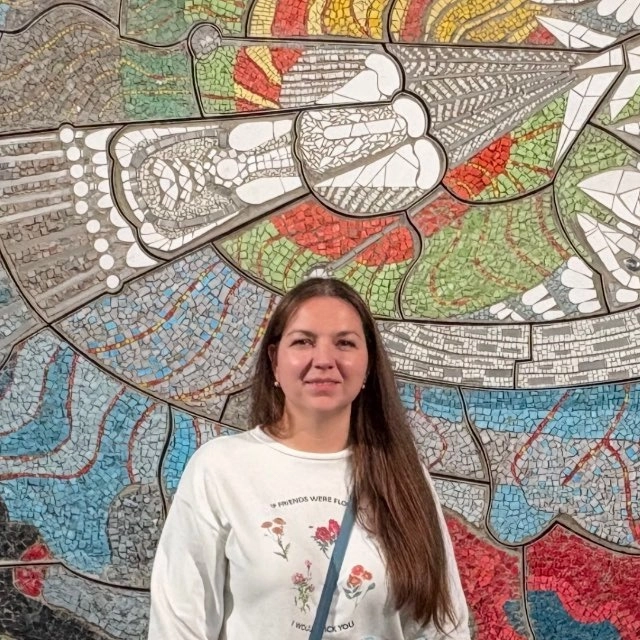
Language Lab Head of Client Communications Anna Danylevska (L) (Photo: Language Lab)
Among Danylevska’s current students is Owen, a seven-year-old from Ecuador whose native language is Spanish. “Little by little, he is learning Ukrainian through games, communication, and spending time with my son. And he is doing really well.”
On the same wavelength
Antonenko draws a distinction between the foreigners who are physically present in Ukraine and those following events from abroad. The former, she says, often understand the situation with striking clarity.
“I feel that foreigners who are here are truly on the same wavelength with us,” she says. “They work with Ukrainians, communicate with them, and understand the situation around us surprisingly well.”
Those outside Ukraine, she notes, sometimes imagine conditions as more dire than they are. “They are sincerely surprised that after a night of shelling, I can be at work 30 minutes later, with stable internet and electricity. And often with hot coffee.”
For Matii, that presence and curiosity matter beyond logistics. “It is very nice to hear from students that everyone likes Ukrainian food, culture, people – and most of them even want to stay here to live, despite the war,” she says.
Kovalenko puts it simply: “I really appreciate how much support foreigners give to Ukraine, and I’m happy that I can contribute by helping them understand the language, Ukrainian people, and our culture.”