A Vision of Drones in Every Soldier’s Backpack – Black Forest Systems CEO
Interview with Black Forest Systems CEO outlines the vision to change the battlefield with individual drones for the infantry and Special Forces units.
Kyiv Post
75
9 мин чтения
0 просмотров
In early March 2026, the Ukrainian-Estonian Defense Tech Firm Black Forest Systems (BFS), which develops unmanned systems and tactical drone platforms for infantry and Special Operation Forces, secured $400,000 in investments.
The Kyiv-based company announced in a statement that the investment from Front Ventures and Hede Capital Partners AB would “accelerate the development and industrialization of our infantry-first unmanned systems, designed based on the requests of Special Operation Forces and International Legion.”
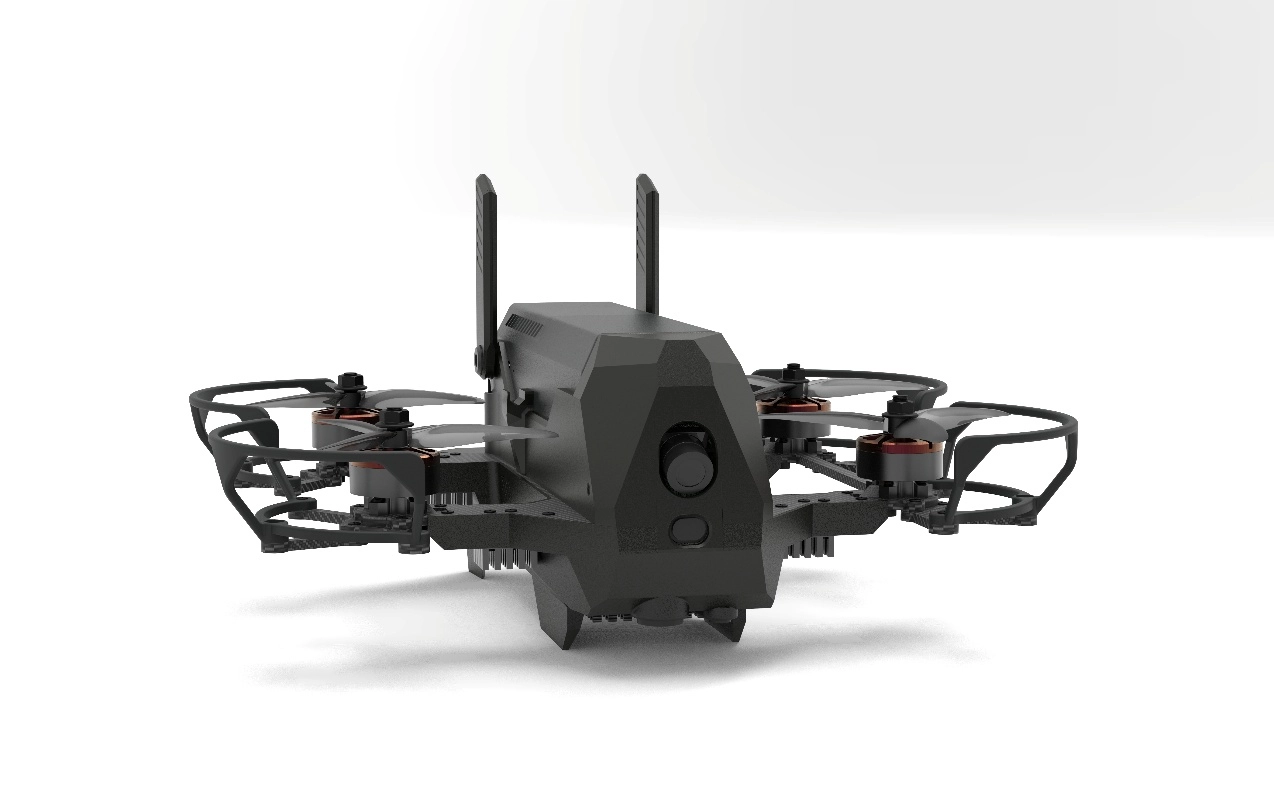
BFS’s new flagship product, SHADOX, is a compact reconnaissance complex designed for rapid deployment. According to BFS website, its protected-propeller design is specifically built for operations inside buildings and trenches, allowing soldiers with minimal training to operate the drone effectively without the need for specialized external pilots.
The concept could be considered as the future of infantry equipment.
Black Forest Systems flagship product SHADOX. Photo by Black Forest Systems
Thirty years ago, night vision goggles were exclusive equipment. However, at the time of the Falklands war in 1982, the allocation for British soldiers was extremely limited and mainly intended for snipers. For the standard infantry, their use was limited to a few specialized roles within a platoon.
Ukraine’s future may depend on whether those who fought for Ukraine’s survival – the veterans – are given a meaningful share in the tech-driven prosperity that is now beginning to flourish.
During the 1991 Gulf war, the development for night vision goggles went further, and it was common for at least 1-2 soldiers in a squad (approx. 9-10 soldiers) or several per platoon to have night vision goggles. Today, night vision goggles are standard and almost universally issued to every individual soldier. The same applies to radio communication and other equipment.
That journey through the decades, from company to platoon, via squad to soldier, may now be repeated, but faster, where drones could be the next step on a more transparent battlefield where every soldier could have their own drone.
Speaking to Kyiv Post, Black Forest Systems CEO Oleksandr Davydenko, and a key investor, Front Ventures CEO Jonas Malmgren, talk about the vision for the new technology, their belief in “one man, one drone,” and why Front Ventures has chosen to invest in BFS.
Huge difference
As Davydenko explains to Kyiv Post, there is a huge difference between existing first-person view (FPV) drones and the new concept in terms of how a soldier will use it.
“The system is quick to deploy and quick to learn. You don’t need to have skills in acrobatics to operate your drone. You can control it with one finger,” Davydenko explains.
Another difference is the drone’s intended simplicity – not needing a whole team of people to handle it.
“We believe in autonomy”, Davydenko says, comparing the SHADOX drone with FPV systems where a team of five people is usually needed to keep one FPV in the air. Under the Black Forest concept, Davydenko explains that only one person is needed to press two buttons, and in 30 seconds a soldier will be able to apply the drone and see what is going on around the without any piloting skills being required.
The system us based on one operator in combination with minimal requirements to operate the drone – “an eight-year-old could fly the system” – that’s what makes it unique, he says.
However, Black Forest Systems do not seek to compete with FPVs the CEO adds, clarifying that the FPV is intended for different types of operations than BFS drones are intended for.
A tactical drone
“This is a drone for tactical purposes, created primarily for the needs of Special Forces and infantry where a quick start and ease of use are important”, Davydenko emphasizes.
The drone is intended to be used over short distances, either as a reconnaissance drone or an attack drone with a warhead weighing 330 grams. The drone range is up to three kilometers in open fields and around two kilometers in mixed vegetation, but mostly it is a system that will allow the operator to engage the enemy over 500-1,000 meters.
The Investor’s view
Jonas Malmgren is CEO of Front Ventures – a Sweden-based defense-focused investment firm backing early-stage companies developing deployable, frontline-proven technologies for a European security environment, according to the company’s website.
Malmgren tells Kyiv Post that there are many reasons why BFS is seen as a good investment. Firstly, he identifies a strong advantage in having a self-developed control system and electronics which make it more difficult to disrupt, compared to many FPV drones that are built with standard components.
Another advantage, he says, is the perceived wider need for a new concept.
“It’s a drone that you can take straight out of your backpack, and within 25-30 seconds it’s flying”, Malmgren explains.
Firstly, there will only be two devices – the drone and the touchpad – instead of three with the FPV, which makes it easier to operate and reduces training time. Secondly, and perhaps more importantly, soldiers at the front aren’t very keen on using goggles, the investor says.
“You want to be able to perceive what is happening around you, and that is easier without the goggles.”
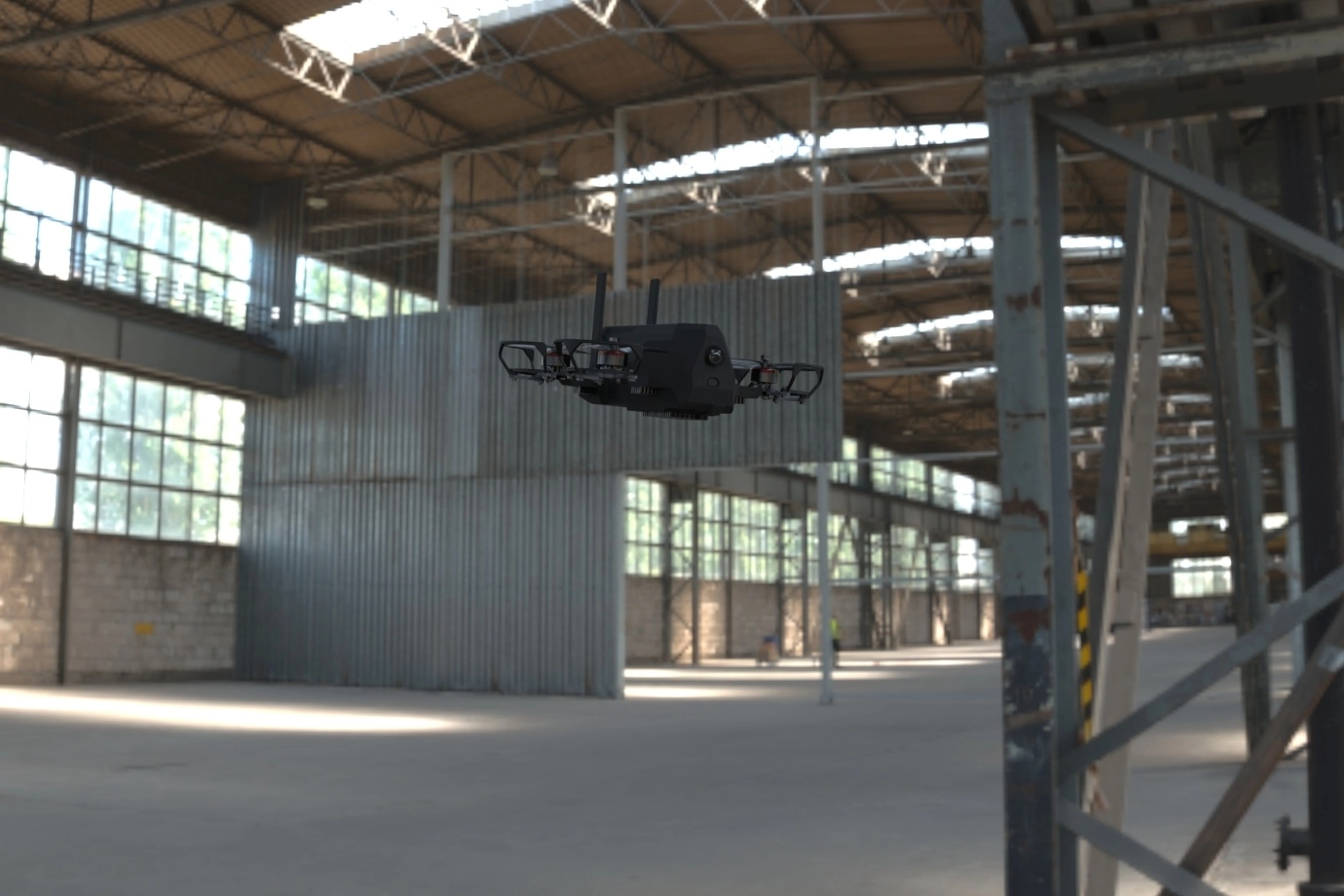
Test flight with Black Forest Systems SHADOX. Photo by Black Forest Systems
One man – one drone
However, the “one man – one drone” vision is not quite there yet.
“At this stage, not everyone can have a drone as part of their personal equipment” Davydenko says, adding that it will only be a few soldiers in a group having access to the systems. He makes a comparison with two soldiers in a group operating the mortar, but instead two soldiers will be involved in operating and flying the drones.
Inspiration
Davydenko recalls that the original idea for the system came from special operation and infantry units that were fighting at the front, several of which came from other countries fighting for Ukraine. Those fighters approached the developers with ideas for improving the concept, and since then there has been constant communication with frontline soldiers. This feedback directly from the front line has acted as Black Forest’s validation process for its system concept.
This is also why Black Forest has initially targeted production of 500 drones per month, supported by funding from investors.
The goal is to build capacity and continuously redesign the system to be able to manufacture much more every month. But it starts with 500, Davydenko notes, adding that money is needed to manufacture at scale.
“Initially we test the concept for the military, we get the feedback, we change the system. And then we will build the system based on the feedback, reaching a manufacturable military system”.
He explains that it is not a problem to build 500, but the problem is pushing a complex product to the stage where it can be manufactured in substantial quantities.
The plan is to sell these drones to the Armed Forces of Ukraine, but Davydenko hopes that the tool at some point could be standard for any Special Operation Forces or any infantry unit in Europe.
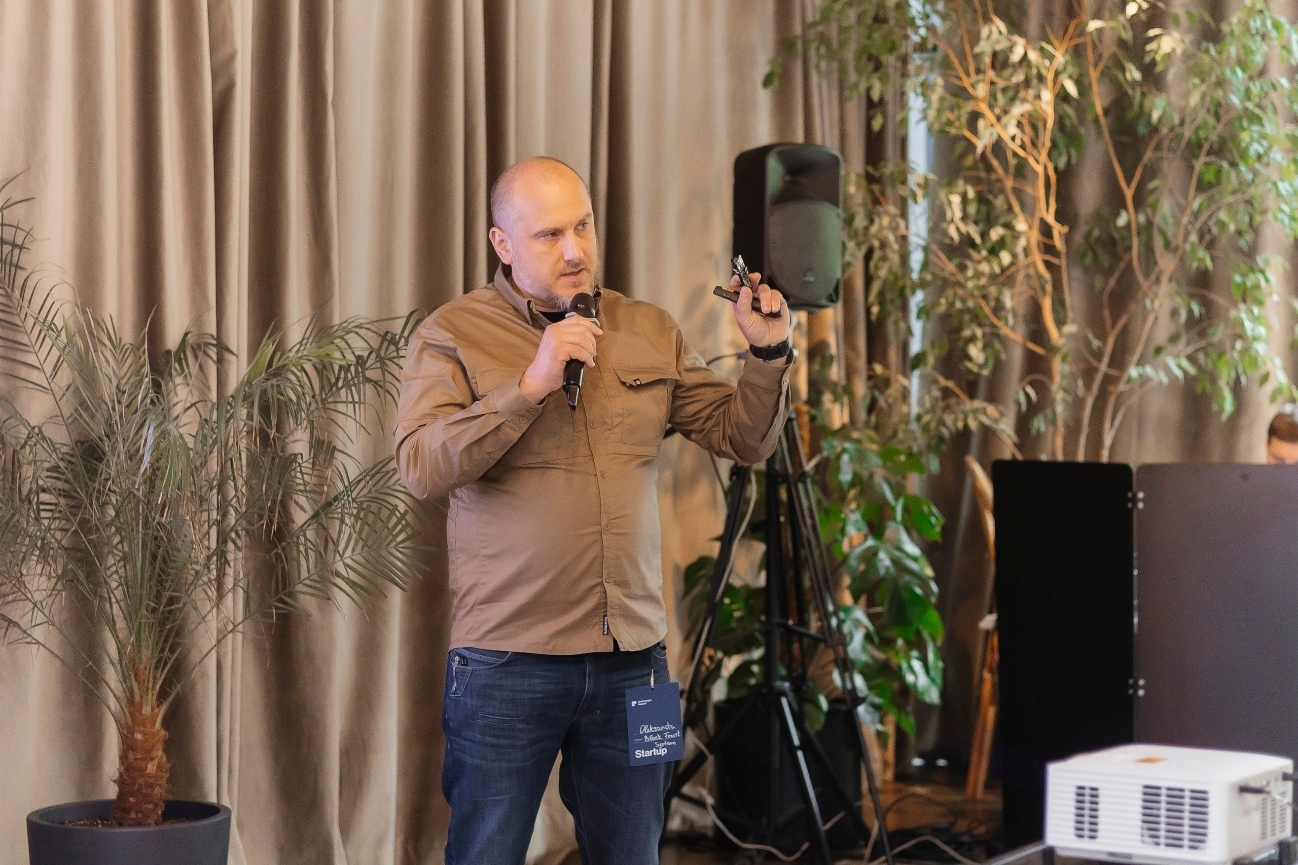
Black Forest Systems CEO Oleksandr Davydenko. Photo by Black Forest Systems
Price point for one drone
According to Davydenko, the cost for one drone is likely to be $1,000, with the suggestion being to reduce the price as production scales. However, the $1,000 price tag will be the cost for Ukraine – a price that is achievable in terms of Ukraine’s regulation, certification and go-to-market. In Europe, it will probably be higher.
One reason why Black Forest seeks investors from Europe, and especially from Sweden and Finland, stems from a belief that those countries have developed a defense sector with multiple contractors and start-ups – a partnership which could therefore eventually help Black Forest to access the European market, Davydenko says.
What’s in it for Front Ventures?
Kyiv Post asks Malmgren why Front Ventures has chosen to invest in technology that is relatively untested and can quickly change – notably that the war could end, resulting in large stockpiles.
Malmgren says that even if the war ends, drones will remain the dominant weapon system for many years to come. He adds that not investing in drones right now would equate to not investing in the future of defense.
In the case of Black Forest, Front Ventures was initially attracted by the concept of non-standard components – and the uniqueness of the SHADOX drone being a fully integrated drone built with local components. Malmgren explains.
“That, in combination with the company’s internal expertise, was a major advantage when we joined as investors,” he adds.
When asked if Front Ventures is linking the investment to Sweden’s support packages to Ukraine, Malmgren confirms that the drones in partnership with Black Forest are not part of aid package discussions.
“We have done this as a direct investment… where we follow their recommendations on which areas they want to see investments”, Malmgren says.
Having production in Ukraine provides advantages in that the product will be “combat proven”, but there are also other benefits when it comes to the issue of permits and lead times compared to other European countries.
Malmgren explains that production in Ukraine shortens lead times enormously. To produce drones in Sweden, a number of different parallel permits for the weapon system would be required. The processes have been much faster in Ukraine, both in terms of production itself but also testing, with the possibility of testing the next day at test firing sites, Malmgren says.
“In Ukraine, you have the possibility to have a new version every month and can test it at once. You don’t have time to wait seven months.”