Ageing and Alone in a Bomb-Scarred Ukrainian Highrise
The 79-year-old Grygory Gladysh, the sole resident of a housing bloc in Kharkiv, has witnessed the exodus of his family and neighbours from his industrial hometown.
Kyiv Post
75
4 мин чтения
0 просмотров
Grygory Gladysh, a pensioner and the last occupant of a shelled Soviet-era residential building in northeastern Ukraine, has witnessed the exodus of his family and neighbours from his industrial hometown.
The 79-year-old holed up as Russian troops encircled his northeastern city of Kharkiv in 2022, pummelling it with artillery early in the invasion. He stayed put through three gruelling winters -- largely alone.
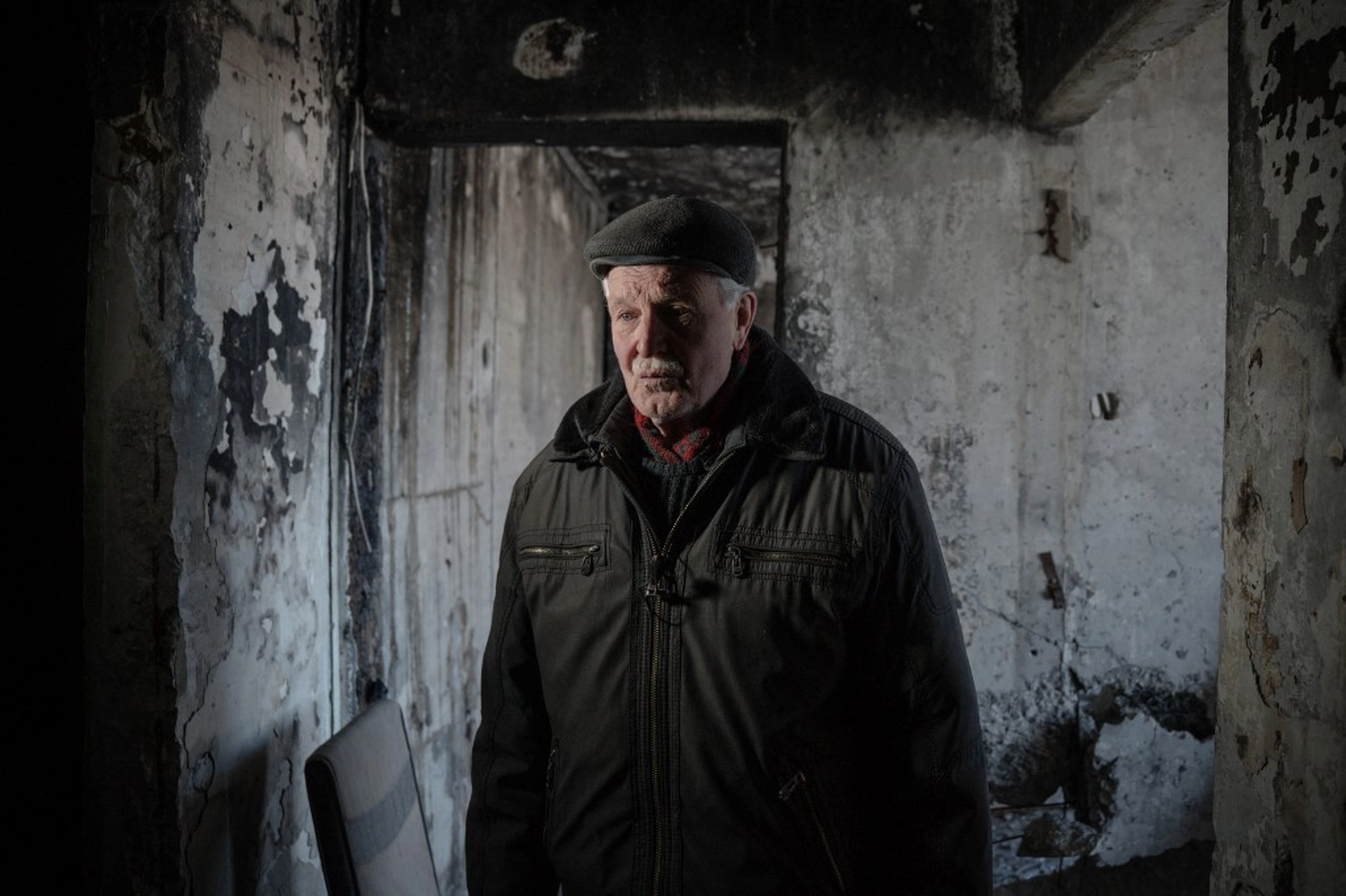
Grygory Gladysh, 79, the sole remaining resident of a heavily damaged 16-storey apartment building on the outskirts of Kharkiv, stands at his damaged apartment where he has been living despite the lack of heating and water supply, on February 27, 2026, amid the Russian invasion of Ukraine. (Photo by Ivan SAMOILOV / AFP)
Four years into the war, he is the sole resident of a towering housing bloc in the city’s northern district, dotted with the charred husks of buildings rendered unliveable by Russian attacks.
He lives off food rations, has no heating or access to running water -- or any motivation to seek refuge elsewhere.
“And where would I go?” he told AFP from his apartment, surrounded by jars and kitchen utensils.
Millions of Ukrainians have been displaced internally or sought refuge abroad since Russian invaded Ukraine in February 2022, sparking the bloodiest war in Europe since World War II.
Half of Ukrainian refugees have already secured or plan to obtain alternative residency documents, 23% intending to return home if current temporary protection status expires.
Gladysh’s own wife and daughter fled Kharkiv -- Ukraine’s second-largest city that lies near the border with Russia -- moving to Netherlands when the war began.
But many in frontline areas are staying put, particularly elderly residents who believe they lack the means to begin a new life elsewhere.
“I don’t know what to take from here or how to transport it,” Gladysh said.
Many of his relatives from the village where he grew up in western Ukraine have passed away.
“If I were to leave, I’d have to go to the village.”
- ‘A little bit of everything’ -
Life in Saltivka, the northern suburb of Kharkiv, was chaotic and deafening when Russian troops rolled over the border in Ukraine.
“They drove up in armoured vehicles... And then the defence began,” Gladysh said.
For more than two months, Ukrainian forces held off the Russian assault on Kharkiv, taking up positions on his building’s roof, which collapsed in the fighting.
People began to leave after the battle, which had left many without electricity, he said.“The elevator stopped working because shells had burst and hit the elevator shaft,” he added. “Now there are no motors, nothing.”
Life since his family and neighbours left has been lonely.
The former painter now relies on visits from neighbours for support.
“We say hello, hug each other, and chat.”
Sometimes they will bring him water, other times he has to go with a bucket and get it himself. He also gets food rations.
One day before he spoke with AFP, he received pasta, cereal, sunflower oil, and a little condensed milk -- “A little bit of everything.”
- ‘What is there to do?’ -
On a typical day, he will go to his room, and look at his smartphone. He said he reads but avoids the television.
“What is there to do? At our age, there’s nothing to do.”
His wife Natasha tried to persuade him to join her in the Netherlands, where she and their daughter live as refugees, but he refused.
“You don’t know the language, and you’ll just wander around like a sheep and never learn it,” he said.
Gladysh grew up in a farming village in Ukraine’s western Khmelnytsky region and trained to be a tractor driver.
He was instead drafted into the Soviet army and ended up at a factory in Kharkiv assembling tanks. He later got a job working as a house painter until he retired aged 60.
He does not know when the war will end or what will come next.
“There’s no end in sight. Look at what’s happening. No one has said anything intelligent yet -- neither Russia nor Ukraine. No one.”