The TWZ Newsletter
Weekly insights and analysis on the latest developments in military technology, strategy, and foreign policy.
While it is initially replacing the F-15C, more F-15EXs will provide a ready successor to aging F-15E Strike Eagles and possibly other types. The post F-15EX Buy Was Just Doubled By The USAF, Which Makes Perfect Sense appeared first on The War Zone.

The TWZ Newsletter
Weekly insights and analysis on the latest developments in military technology, strategy, and foreign policy.
The U.S. Air Force’s budget for the 2027 Fiscal Year looks like it will bring a massive boost for the F-15EX program, with the planned buy now reportedly standing at 267 jets. TWZ was the first to report on the existence of what was then known as the F-15X, and has repeatedly argued in the past that investing in the Eagle II is a very logical decision for the Air Force. This is especially the case as the service looks to a future without its F-15E Strike Eagles, which have borne the brunt of combat operations for decades.
According to Breaking Defense, the Air Force’s fiscal 2027 budget, revealed yesterday, looks to buy another 24 F-15EXs at a cost of $3 billion, but this is just the start, according to the new plan. Ultimately, the service wants to more than double its previous Eagle II buy, which previously stood at 129 jets, with the total having fluctuated in recent years.
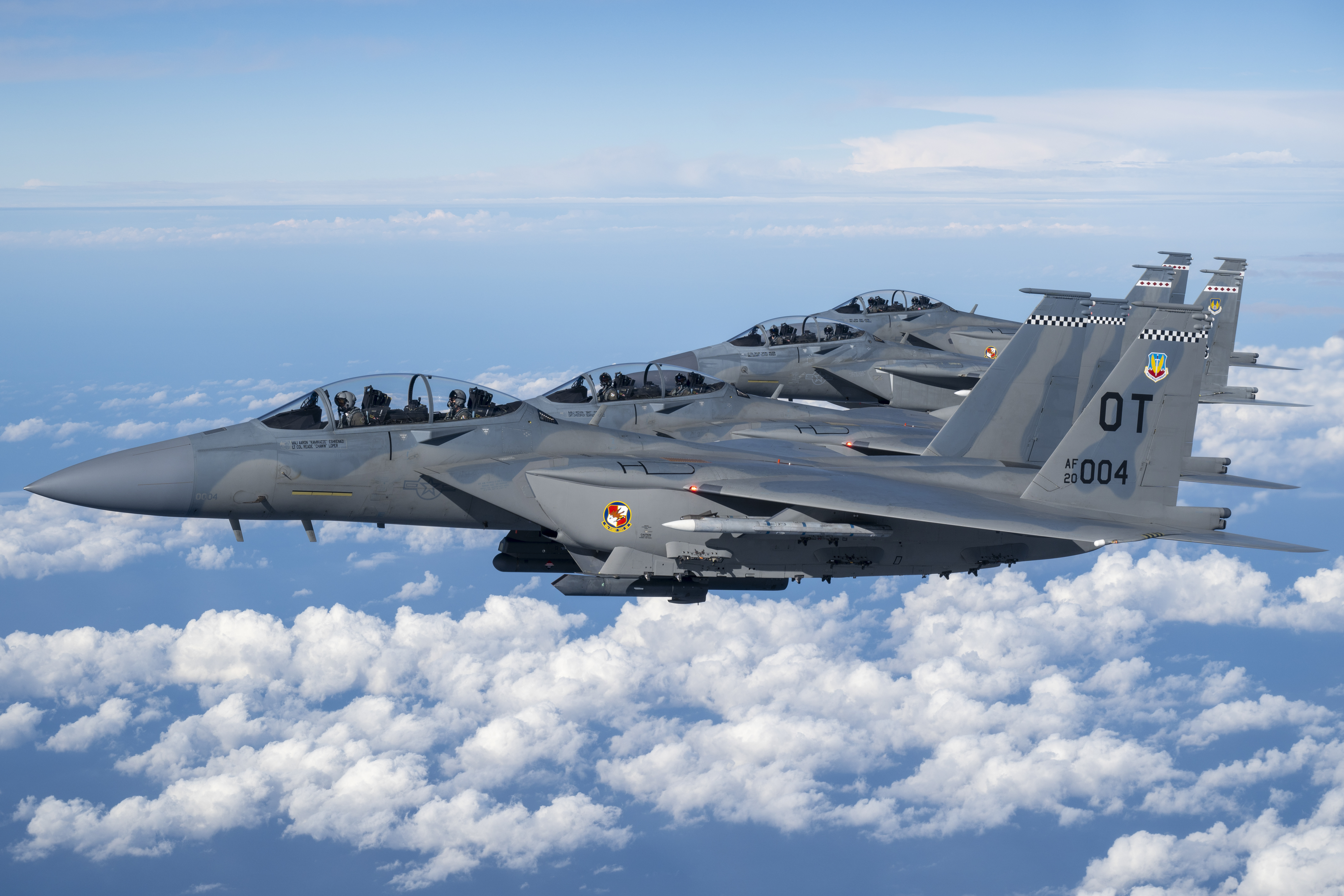
The new move is primarily a response to the need to “begin to recapitalize the aging F-15E fleet,” an Air Force spokesperson told Breaking Defense.
The plan will be supported by the Trump administration’s gargantuan defense budget for fiscal 2027, which requests approximately $1.5 trillion in total funding. You can read more about this development in our previous coverage of the budget, which includes munitions, missile defense, shipbuilding, and other programs, as well as aircraft. It’s important to note that this controversial proposal still has to pass through Congress, and some changes to it will be made, at the very least.
When the budget was first rolled out, it included funding sought for another 24 F-15EXs, but didn’t include details on the dramatic change to the planned total fleet size for the aircraft.
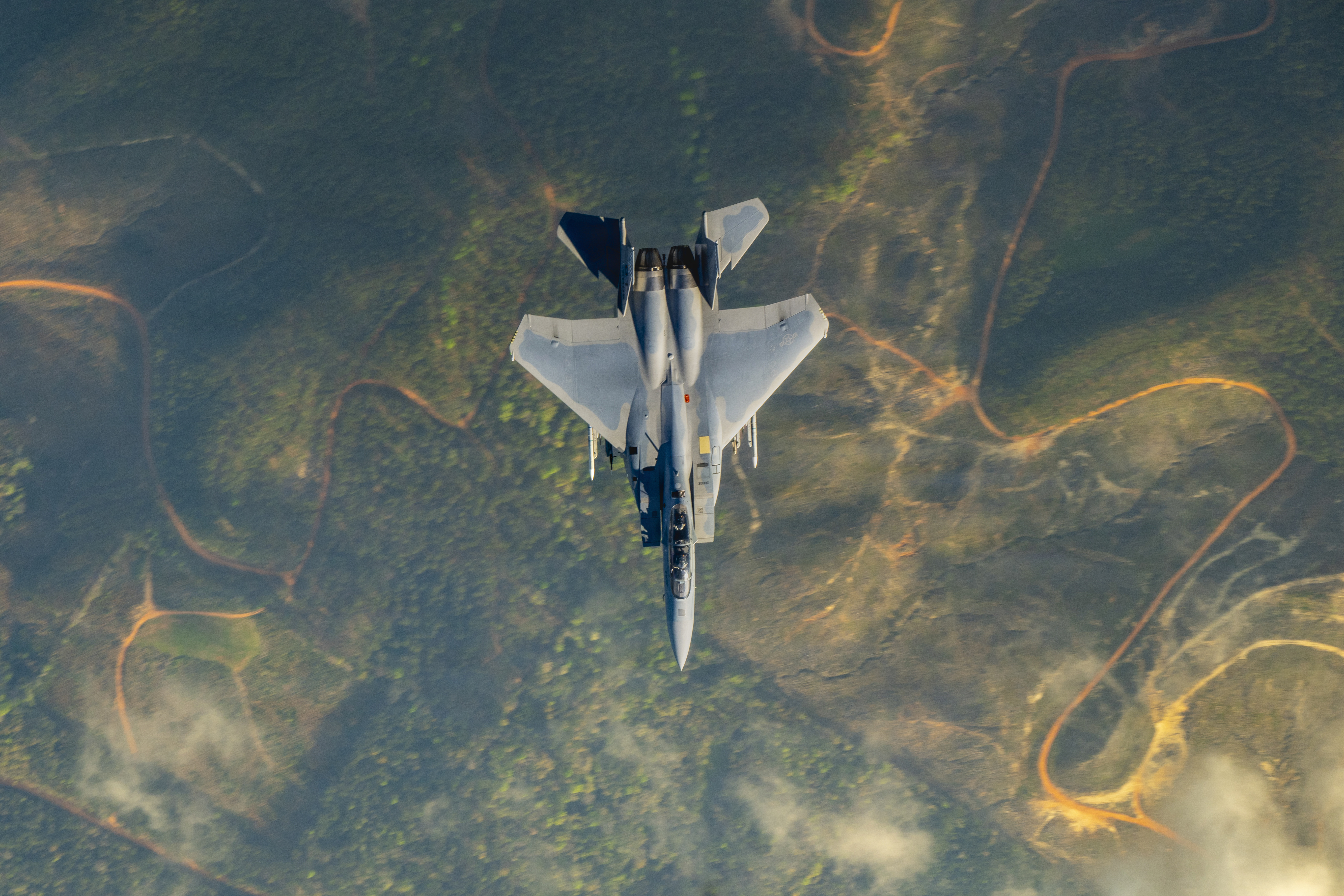
Now, the Air Force has made clear that it wants to keep the F-15EX production line open for longer, ensuring that it will receive both fifth-generation F-35As and F-15EXs — the latest iteration of the F-15 that first entered service with the Air Force in 1976. Ultimately, a third line will spin up once the sixth-generation F-47 combat jet enters series production. As for the F-35, these are still being bought in the latest budget request, and they also get a boost, but they are not currently being delivered with radar, as the Block 4 upgrade is in limbo.
The Pentagon in its budget request says it can speed up fielding of the F-35's Block 4 by a year, to 2030, as it increases spending on the program. This is reliant on reconciliation approvalhttps://t.co/F5NdnDxpKT
— Brian Everstine (@beverstine) April 22, 2026Overall, the Air Force expects to see its budget increase by around a whopping 38 percent compared to fiscal 2026, to $338.8 billion. Of those funds, a significant proportion will go into procurement, driving this up by around 30 percent, although that covers all assets, and not just new fighters.
The budget also includes significant increases for weapon system sustainment and flying hours.
At the same time, the Air Force budget includes requests to retire a number of aging aircraft, something that the increased F-15EX numbers will help address.
In particular, for fiscal 2027, the Air Force wants to get rid of 20 F-15Es. These would be the oldest examples, which include the aircraft fitted with the less powerful Pratt & Whitney F100-PW-220 engines.
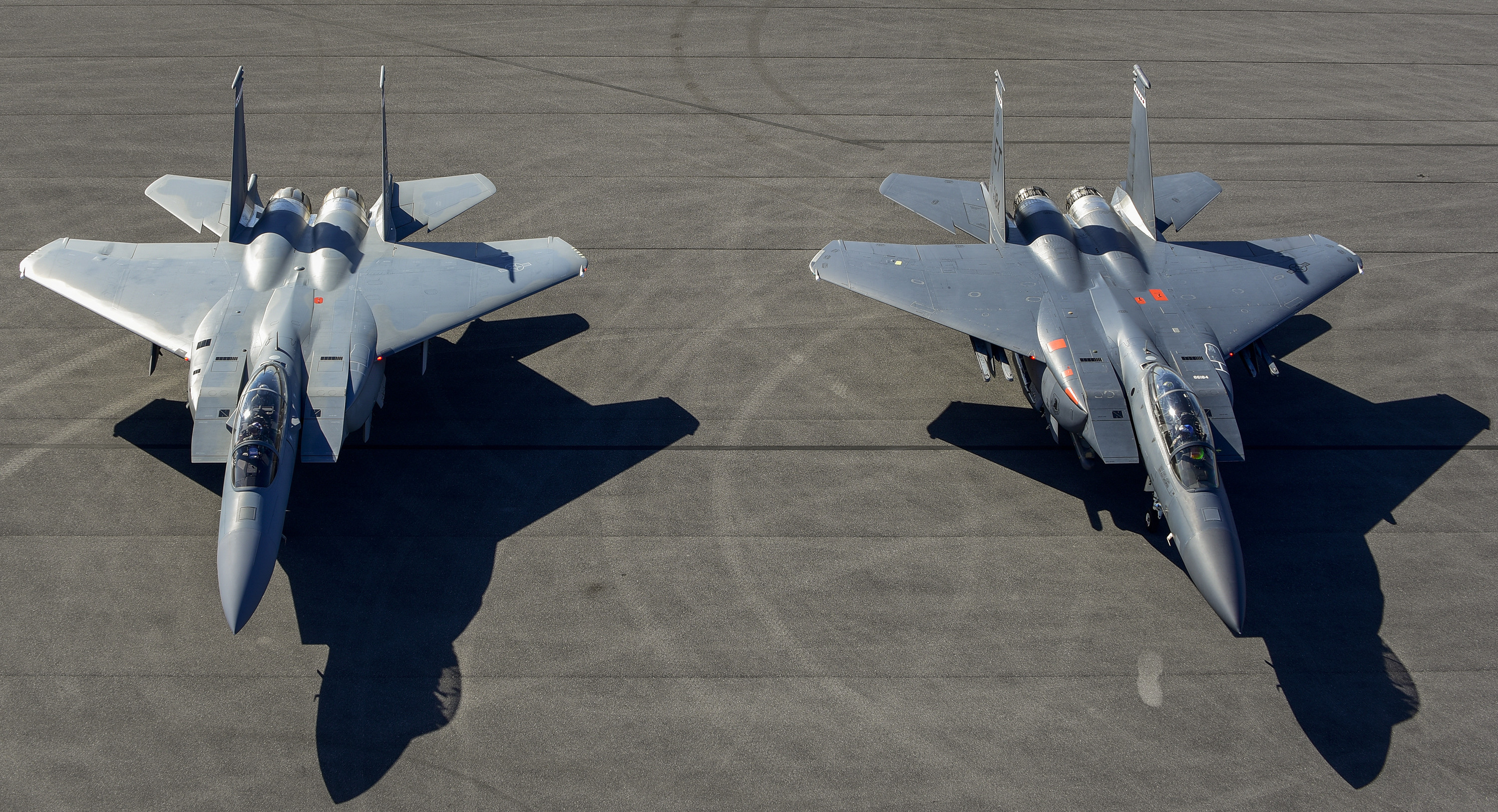
Of course, it remains possible that lawmakers will block such a move, although having more F-15EXs to replace these jets should make it a more acceptable proposal.
Additional F-15EXs means more capability for the Air Force.
While the F-15EX will almost certainly take on a multirole mission once it’s more established in service, the air-to-air mission is currently the priority due to the Air National Guard getting the first of these jets. These units are tasked with the homeland air sovereignty mission, which focuses on intercepting aircraft and shooting down potential barrages of cruise missiles and, now, long-range one-way attack drones. As we have outlined in the past, the F-15EX is ideal for this role, especially, and a much more reasonable proposition for this mission than a more complex fifth-generation platform:
In the homeland defense role, which is the bread and butter of the F-15C/D ANG units, the F-15EX’s payload, range, open architecture, very advanced electronic surveillance and warfare suite, and overall adaptability will be of incredible use over many decades of service. You do not need a stealth fighter to do this mission. In fact, much of what is traded in terms of reliability, performance, and sustainment cost for low observability hinders the homeland defense mission. This includes raw kinematic performance. The F-15 can get places very fast when it needs to and still has fuel left over to do something once it is there, which is critical for quick reaction alert missions.
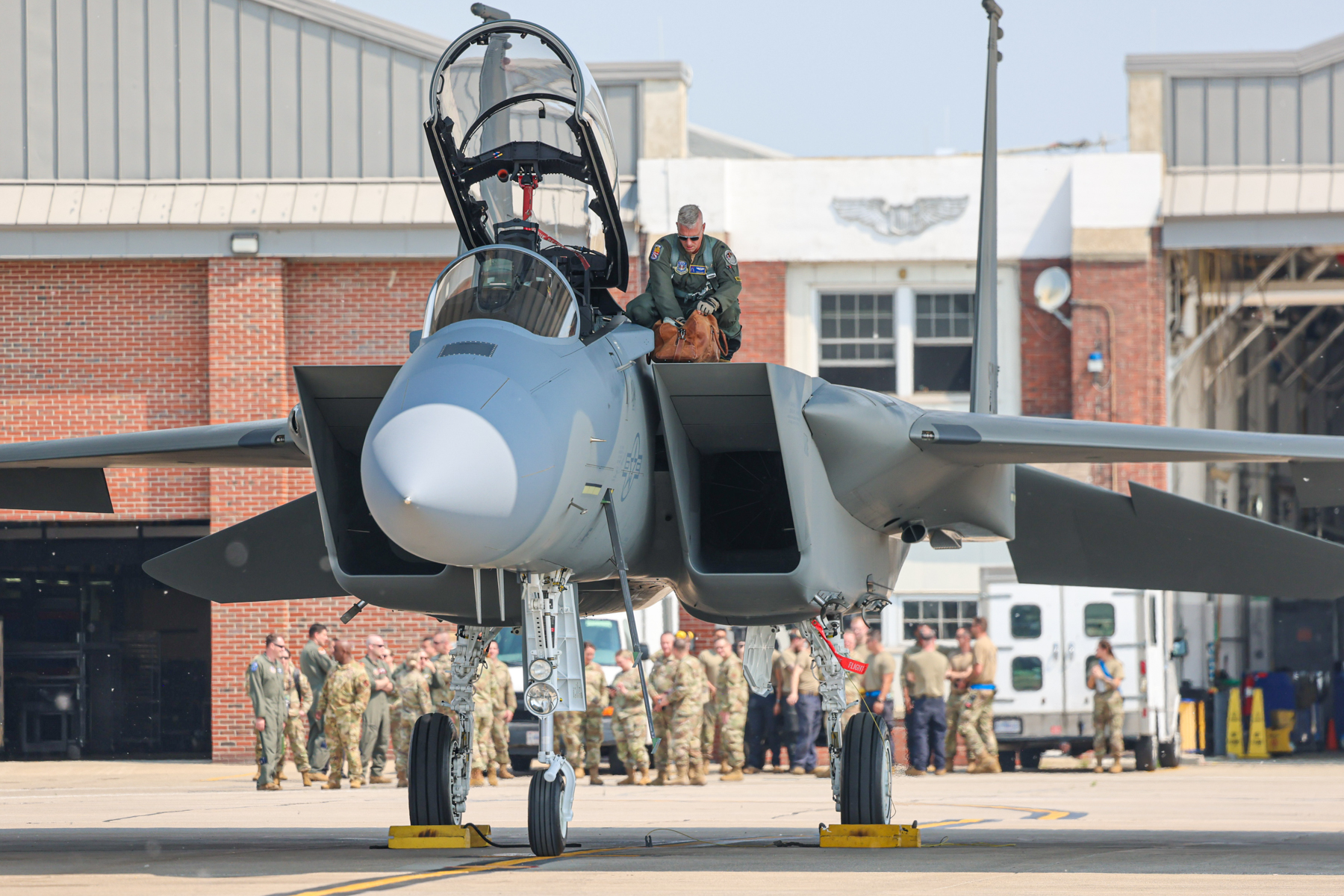
The customer also seems very happy with the jets.
In its 2025 annual report, the Office of the Director, Operational Test & Evaluation (DOT&E) provided an absolutely glowing assessment of the F-15EX, as you can read about here.
In terms of the air-to-air mission set, the report noted:
“Against the level of threat tested, the F-15EX is operationally effective in all its air superiority roles, including defensive and offensive counter-air against surrogate fifth-generation adversary aircraft, as well as basic air-to-ground capability against the tested threats.”
The reference to the F-15EX’s effectiveness against fifth-generation threats is especially notable. While it’s unclear exactly what kinds of threats are being referred to, a fifth-generation fighter will typically have a low-observable design, advanced ‘sensor-fused’ avionics, and generally high performance, among other attributes. In fact, very much the kind of threat that the Air Force would expect to face in a potential conflict with China.
Once the F-15EX takes on more offensive missions, it becomes even more relevant, especially as an F-15E successor, including carrying outsized payloads, among them hypersonic missiles, over long distances, which would likely be critical in a conflict in the Pacific.
But even without these offensive attributes, the Eagle II offers capabilities that are unique in the Air Force.
The F-15EX can efficiently carry 12 AIM-120s today, but that number could be nearly doubled in the future. Smaller air-to-air weapons could expand the F-15EX’s air-to-air magazine depth, too. Laser-guided rockets, now established as an F-15E weapon, would be another obvious candidate to arm the F-15EX, especially for counter-drone work.
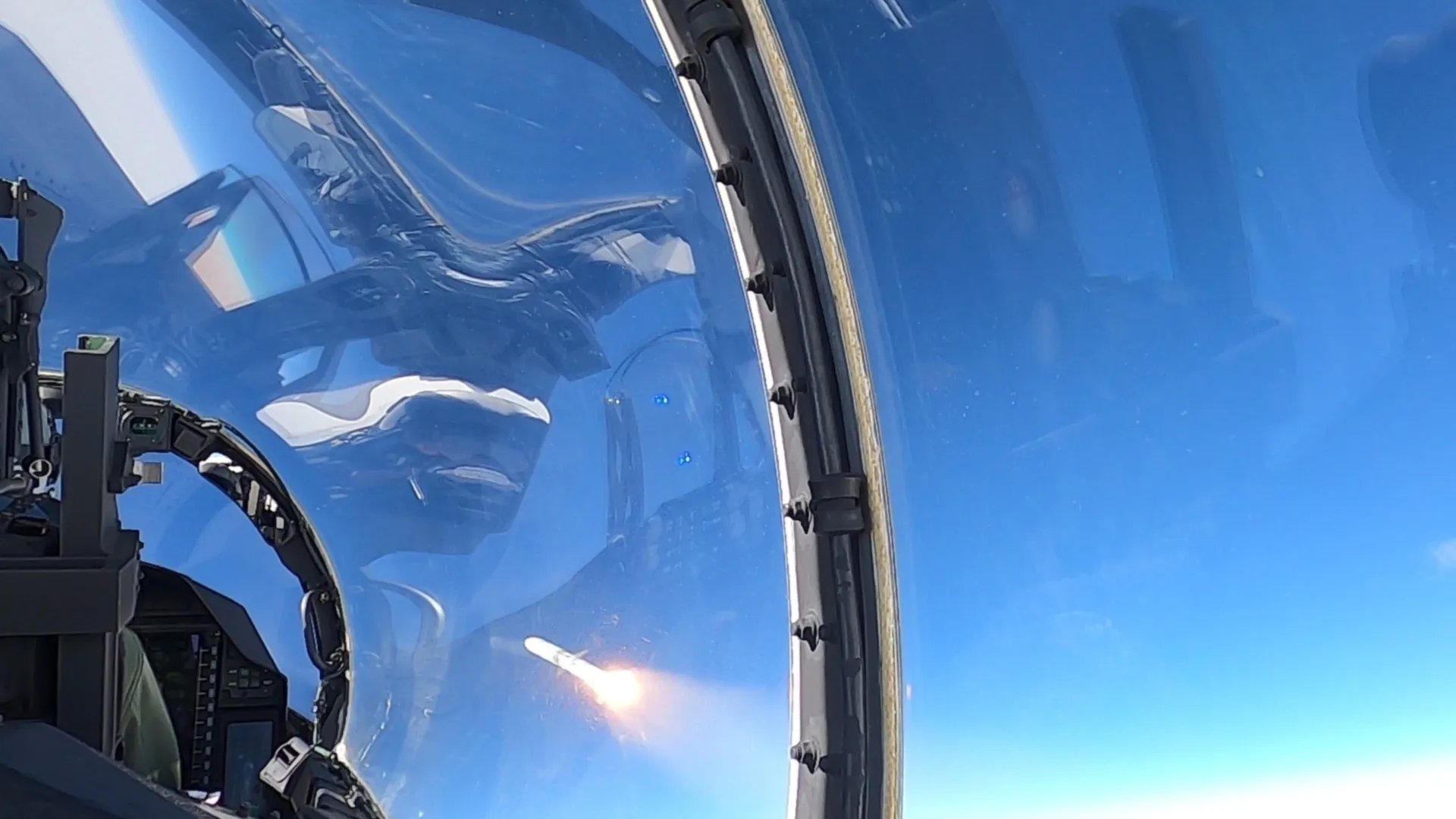
Using the F-15EX as an arsenal ship of sorts, especially when equipped with long-range missiles, in cooperation with its stealthy counterparts operating silently and forward, is a tactic, among others, we have long discussed. Equally compelling is the case for the two-seat Eagle II serving as a ‘drone controller’ for the Air Force’s forthcoming Collaborative Combat Aircraft (CCA).
Beyond all this, the F-15EX can carry a lot of payload over a long distance, to include traditional air-to-ground weapons. If the F-15EXs replace F-15Es, they will certainly have a focus on air-to-ground missions, as well.
Just as important as its capabilities and its proven airframe, the F-15EX promises to deliver a lot on the investment. The jets should provide lower operational and sustainment costs compared to both legacy and fifth-generation types, and over many decades.
In the past, Boeing told TWZ that the F-15EX has a 20,000-hour airframe service life. “This has been enabled by running a full-scale fatigue test long enough to show structure that is good beyond 20,000 hours, and structural redesigns purposely implemented by Boeing have addressed known fatigue-critical locations,” the company’s Rob Novotny explained. This is a major benefit of an extremely mature and evolved airframe. It will be able to serve for the better part of a century at common usage rates. When you amortize the unit cost over, in some cases, two and a half times the service life of most fast jets, it offers a very clear value proposition. The cost per flight hour is also well understood after decades of Eagle operations, including years of service of similar advanced variants.
The airframe life alone is key here. 20k on these! Most tactical jets are roughly around 8k then SLEP to 10k. It's not just about the cost of acquisition, that is really a smaller factor. Operational and sustainment cost and longevity are critical factors.
— Tyler Rogoway (@Aviation_Intel) April 21, 2026This is not the first time that planned F-15EX numbers have been boosted, after dropping to a low of just 80 aircraft with the slashing of the procurement plan in 2023.
The program was then slated to grow from 98 aircraft to 129 in the Fiscal Year 2026 budget proposal.
That decision came only weeks after President Trump made the surprise announcement that the Michigan Air National Guard, which is losing its A-10 attack jets, will be reequipped with the F-15EX.
At that point, Portland, Fresno, New Orleans, and two squadrons at Kadena Air Base in Okinawa, Japan, were slated to get the F-15EX. This plan would have required some 90 jets out of the 98-aircraft inventory. Adding Michigan, and based on those squadrons expanding to 21 jets, would require 126 aircraft. That would have left just three aircraft to satisfy test, evaluation, and training requirements.
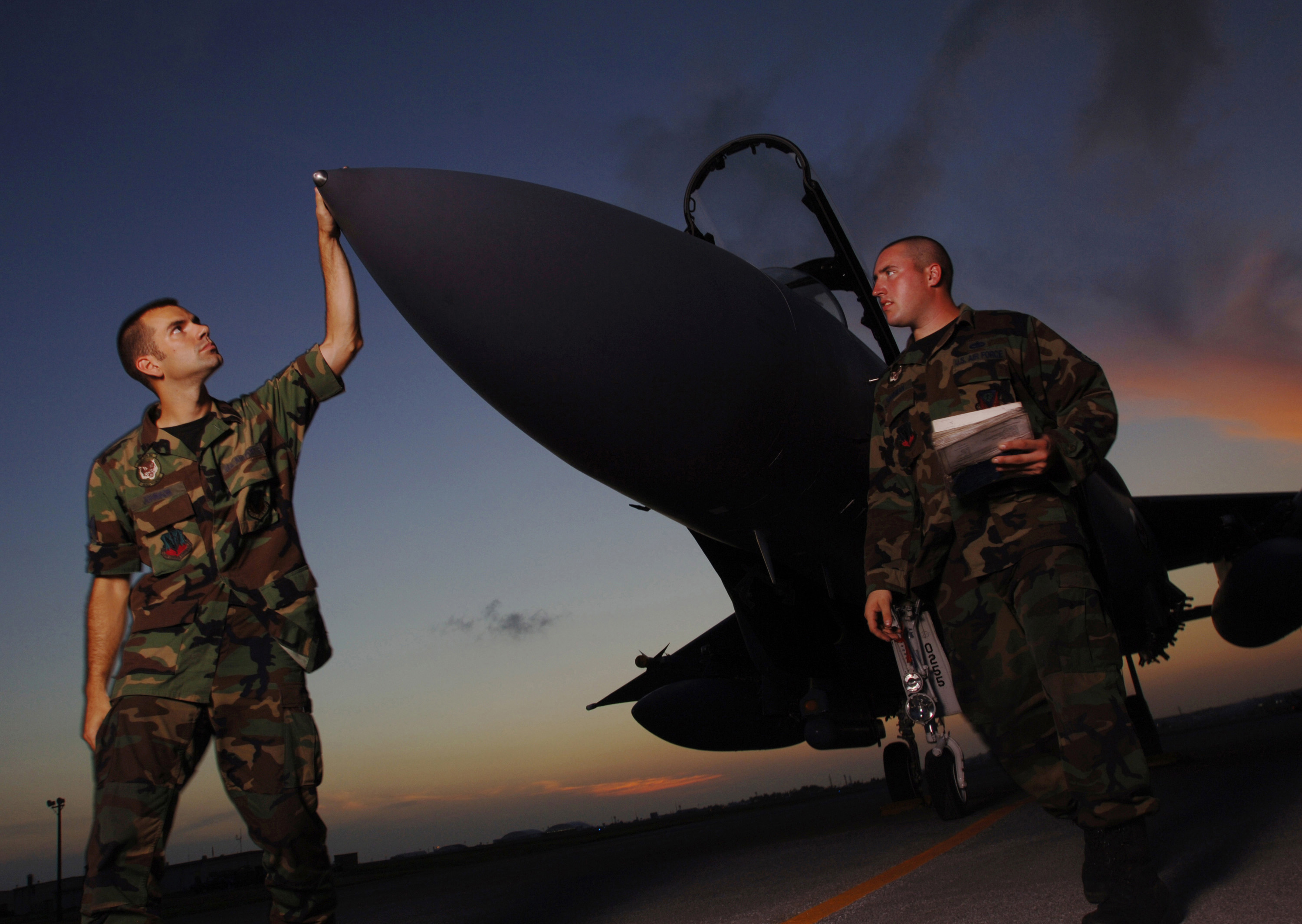
Increasing the planned buy to 267 jets opens up the possibility of creating 13 squadrons of 21 jets, with three F-15EXs left over. Exactly what final balance the Air Force decides upon remains to be seen, but whichever way you look at it, it’s a major boon for the Combat Air Forces.
It seems almost inevitable that at least some of the additional F-15EXs will be used to replace aging F-15Es.
The possibility of swapping out F-15Es for F-15EXs is something we discussed back in 2020.
In an official Justification and Approval document at the time, the Air Force stated:
“The objective of this program is to rapidly develop, integrate, and field the F-15EX weapon system to refresh/replace aging F-15C/D aircraft. A decision to also refresh F-15E aircraft has not yet been made, but remains an option.”
After four losses in Operation Epic Fury, the relatively small 215-strong Strike Eagle fleet remains in high demand with an enduring commitment in the U.S. Central Command region that leverages many impressive niche capabilities. With just six frontline Strike Eagle squadrons, at least one is always deployed. The F-15E is also capable of delivering nuclear weapons and is the first jet certified to employ the newest variant of the B61 tactical nuclear bomb.
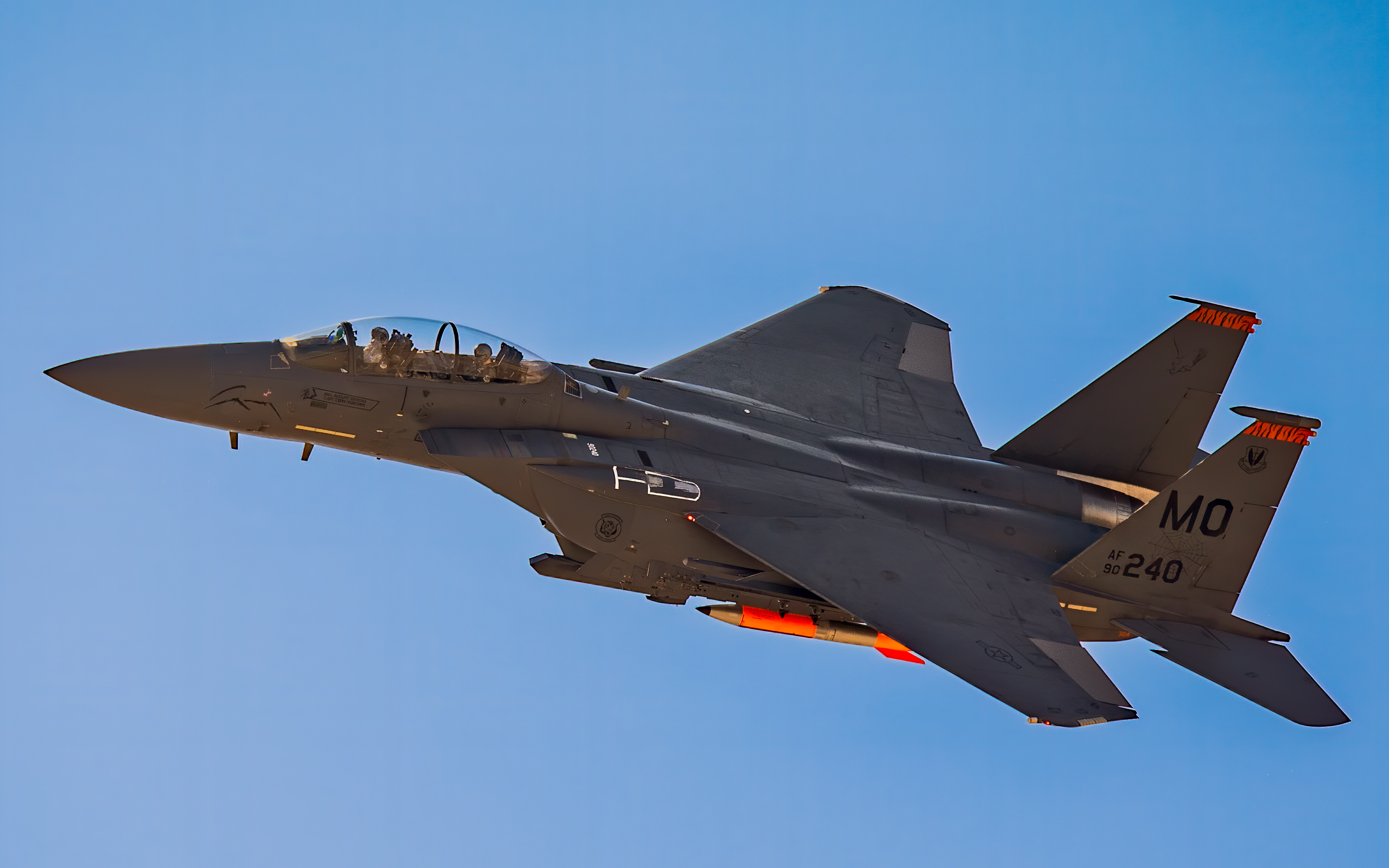
Replacing these critical jets is fast becoming a priority, and one that the F-15EX is uniquely suited to fulfil.
The F-15E shares similar cutting-edge technology as found in the F-15EX. It has been upgraded with the Raytheon AN/APG-82(V)1 active electronically scanned array (AESA) radar, the new Advanced Display Core Processor (ADCP) II, and it too is receiving the new Eagle Passive/Active Warning Survivability System, or EPAWSS, self-protection system.
With the F-15EX numbers outlined in its fiscal 2027 budget request, the Air Force would be well placed to replace a significant proportion of its Strike Eagle inventory.
As well as the F-15E, the Air Force needs to replace F-16s and A-10s. At least some of the planned retirements of these types could be covered by F-15EXs. Having the line healthy and warm could allow for more Eagle IIs to be bought to cover the F-15E fleet and some F-16 and A-10 retirements beyond the 267 F-15EXs currently planned. This may make even more sense as the F-16 ages and becomes more expensive to operate, in particular.
With the Air Force at large feeling the effects of years of underinvestment in new fighters, and with China presenting a massive pacing challenge, the Air National Guard is now pushing Congress to approve multiyear funding for the acquisition of between 72 and 100 new fighters each year. Again, the Eagle II could help meet this need, although there are limits to what the production line can support, especially with foreign orders.
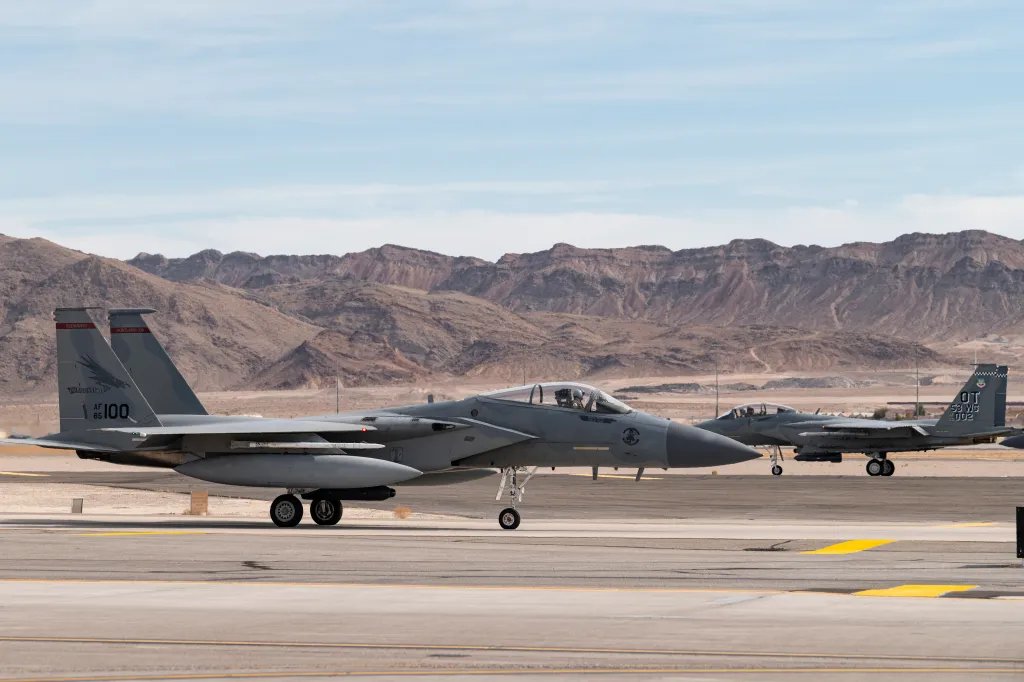
It remains to be seen exactly how the jets will be fielded and, as noted earlier, Congress will have to approve this budget request for it to be signed into law.
As it stands, however, the F-15EX appears to be going from strength to strength, with the Air Force increasingly enthusiastic about the latest iteration of the iconic Eagle.
Contact the author: thomas@thewarzone.com

Ukrainian President Volodymyr Zelensky has appointed the heads of the Security Service of Ukraine departments in Kyiv and the Kyiv region, as well as in the Kherson and Kharkiv regions.

Intercept released by Ukraine´s Intelligence suggests Russian commanders threaten and beat foreign recruits to force them into near-suicidal assaults.

A woman suspected of poisoning a soldier on behalf of Russian intelligence agencies has been detained in the Zakarpattia region.

Polish fintech company ZEN.com, which acquired 100% of the shares of insolvent JSC First Investment Bank (PINbank), does not plan to enter the Ukrainian banking market with lending services in the near future.