
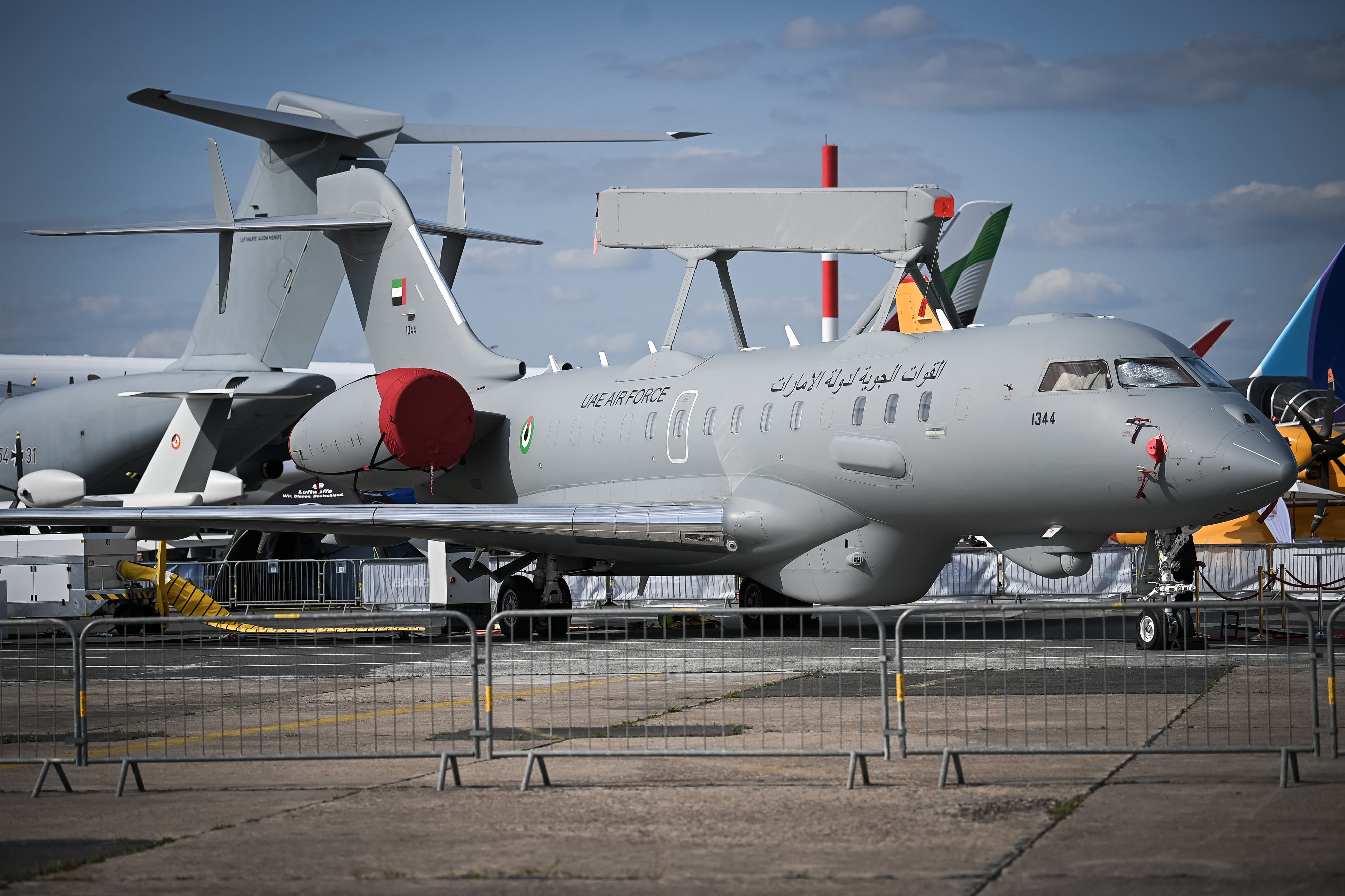
VIENNA — NATO’s Support and Procurement Agency has selected Sweden’s Saab and Canada’s Bombardier to replace the alliance’s aging fleet of Boeing E-3A Sentry airborne warning and control system aircraft with the GlobalEye platform, according to French defense publication La Lettre and confirmed independently by the German press agency DPA.
The decision, if formally announced, marks the first time since 1982 that a non-Boeing aircraft will serve as NATO’s common airborne surveillance backbone, and caps a procurement saga defined by American industrial dysfunction and growing European appetite for strategic autonomy.
The outcome was far from inevitable. As recently as November 2023, NATO had awarded the replacement contract to Boeing’s E-7A Wedgetail − without a competitive tender − on the grounds that it was the only available system meeting operational requirements in time. Saab CEO Micael Johansson publicly complained that the process had been “rushed” and that the alliance had already made up its mind before the GlobalEye offer even landed on NATO desks.
Washington’s own disengagement unraveled those plans. The U.S. Air Force dropped the E-7 from its fiscal 2026 spending plan in June 2025, citing delays, cost overruns, and survivability doubts in contested environments, and opting instead for space-based surveillance and additional E-2D Hawkeye aircraft. By November 2025, the Netherlands and the remaining European partners announced they were scrapping the six-aircraft Wedgetail buy, with Dutch State Secretary for Defense Gijs Tuinman explicitly noting that the U.S. withdrawal underscored “the importance of investing as much as possible in European industry.”
The GlobalEye, built around Saab’s Erieye Extended Range active electronically scanned array radar mounted on a Bombardier Global 6000 or 6500 airframe, offers detection ranges exceeding 550 kilometers across air, sea, and land domains. NATO’s NSPA is reported to be eyeing between 10 and 12 aircraft at roughly €550 million ($643 million) per unit, a total acquisition value likely exceeding €5 billion ($5.84 billion) before sustainment, training, and infrastructure costs. Saab has claimed the platform can meet NATO’s 2031 operational target, or earlier.
The political momentum behind the GlobalEye had been building for a while. France signed a contract for two aircraft with options for two more in December 2025, and Johansson reported strong interest from Poland and Germany during Saab’s first-quarter 2026 earnings call. Canada is also weighing up to six GlobalEyes.
Still, the deal is not yet signed. Saab’s head of media relations, Mattias Rådström, told AeroTime that no contract had been formally concluded and that the award remained NATO’s to announce. Whether that changes the outcome at this stage seems unlikely.
Rudy Ruitenberg in Paris contributed to this report.
Linus Höller is Defense News' Europe correspondent and OSINT investigator. He reports on the arms deals, sanctions, and geopolitics shaping Europe and the world. He holds master’s degrees in WMD nonproliferation, terrorism studies, and international relations, and works in four languages: English, German, Russian, and Spanish.

