Return No. 7 From Ukraine – The Rational Power of a Great Nation
The Inevitable Demise of a Pathetic Country: Russia
Kyiv Post
75
15 мин чтения
0 просмотров
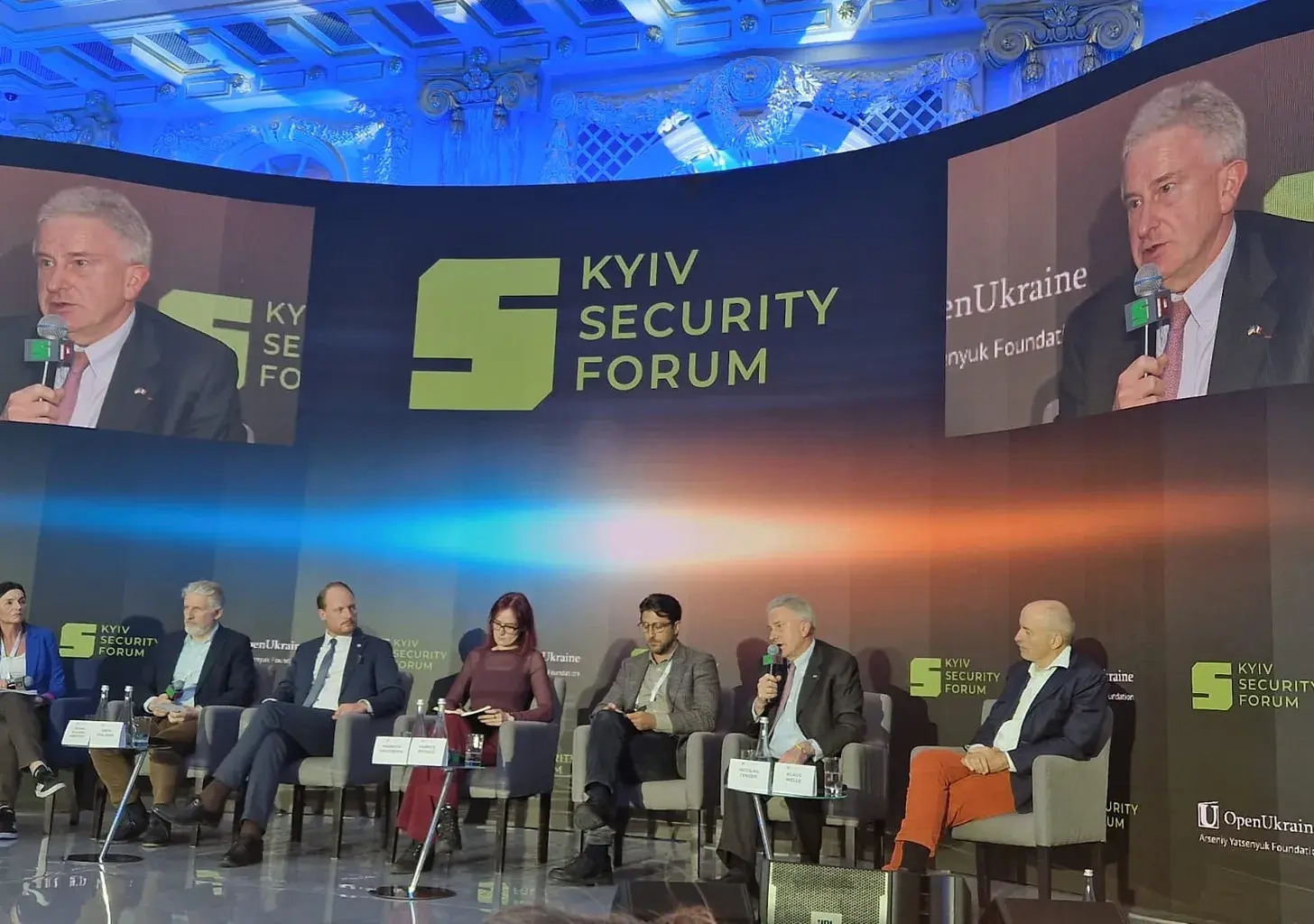
For the seventh time since the start of Russia’s full-scale war against Ukraine on Feb. 24, 2022, I returned to this country fighting for our freedom. I was there for four days, from April 22 to 25, to speak at the Kyiv Security Forum – the leading international security conference – as I have done for the past ten years, to give a few interviews to the press, and to participate in three events related to the release of my book Our War. Crime and Oblivion in Ukrainian. As always, I met many Ukrainians there, from all walks of life.
While the Ukrainians’ conviction that they will win the war has always seemed genuine to me, even in the worst moments, I have never found this certainty as strong as it is today. Emerging from an extremely harsh winter – particularly in the cities, due to the Russians’ systematic targeting of energy infrastructure – and despite the dramatic increase since Trump took office in missile and drone strikes against civilian populations, sowing, as always, death and devastation, Ukrainians increasingly feel that the tide has definitively turned.
The growing weakness of the Russian economy – including, in part, its war economy – the slight regaining of ground by Ukrainian forces – though still far from sufficient – Ukraine’s development of new weapons, and Kyiv’s improved diplomatic position thanks to President Volodymyr Zelensky’s strategic acumen, are the sources of growing confidence in victory. This is, if I may say so, a perfectly rational belief.
Acclaimed Ukrainian photographer Grom tells Kyiv Post about her multimedia project “Pietà,” children shaped by war, and ethical responsibility of photography in an age of profound pain.
Admittedly, this victory will not come immediately, which is in itself tragic, for we know that Ukraine will lose thousands more of its children, primarily due to the fault of the West. I also fear that Russia will not collapse immediately, as Putin will prefer to embark on the irreversible destruction of his country rather than abandon his plan to annihilate the Ukrainians.
But the path to Ukraine’s victory is beginning to take shape. It is by no means a utopia. It is the realization of a logic – the one Ukraine has implemented in the realms of industry, technological innovation, and strategic intelligence. All the predictions by the geopolitical know-it-alls regarding the impossibility of a Russian defeat will be completely contradicted.
But in the meantime, Ukraine must hold on – morally, psychologically, and socially – and it will do so, though it must also be said that this comes at a terrible, traumatic cost for the future.
More than ever, Ukrainians are today resolved to hold a position that has, in reality, always been theirs and rightly so: there is no question of ceding even the smallest parcel of their territory. The very idea of a compromise with Russia is clearly rejected by an overwhelming majority. It is no coincidence that Kyrylo Budanov, the head of the President’s Office, beyond all the other reasons I have repeatedly mentioned, reiterated during a speech at the Kyiv Security Forum that accepting the cession of territories would shatter national unity.
The statement by Friedrich Merz, which I discovered upon my return from Ukraine, suggesting that this could be a condition for Ukraine’s entry into the European Union, constitutes a major blunder. It is all the more inconsistent given that Germany is the primary provider of military aid to Kyiv in terms of volume and that its leaders have made no secret of the direct Russian threat to their own country.
Not only would it hang a sword of Damocles over Ukraine and amount to a betrayal of the Ukrainian people living there, but it would also pose a major danger to the nations of Europe. Such statements should never be uttered, let alone even thought.
Where are Ukraine’s allies?
As far as the United States is concerned, the verdict is in: every Ukrainian I’ve met or heard from considers them no longer allies, but adversaries – if not worse. President Zelensky himself is becoming increasingly outspoken on this point, not hesitating to denounce the pro-Russian leanings of Trump, Vance, and their cronies, and what remains of a semblance of politeness fools no one.
As I also pointed out during my speech at the Kyiv Security Forum, disappointment – to put it mildly – toward Washington is nothing new. We recall the old joke about the second most hated man in Ukraine: in 2023 and 2024, the answer was: Jake Sullivan. Today, we have moved from contempt and anger to outright hostility. I do not know a single Ukrainian who does not believe that the Trump administration should be considered an enemy.
Ukrainians also understand perfectly well that, even if the far-right MAGA movement is defeated in the 2028 presidential and congressional elections, the US will not return as a true ally.
Europeans are beginning to understand this as well, albeit more slowly. Some Americans present – Democrats or anti-Trump Republicans – were not convincing when they claimed that better days are ahead. Perhaps things will be less bad, but the US will never stand alongside Ukraine to enable it to defeat Moscow militarily. A few Americans, though rarer, have the clarity to understand this.
We can perhaps hope for a policy less abominable than that of the worst president in American history, but not a policy of total support. Old-school Americans still struggle to fully accept this, as evidenced by some of the criticisms they have directed at me. It is understandable that this is a source of anguish. But Ukraine, like Europe, must face this reality with clarity.
As for Europe specifically, opinions are more mixed. While I was in Kyiv, the €90 billion loan was finally released following Orbán’s defeat. This is a welcome breath of fresh air that will help finance Ukraine’s day-to-day operations. The 20th sanctions package, even if we can and certainly must go further, is also welcome.
But the issue of Ukraine’s financing will arise again in the second half of 2027 before the implementation of the 2028–2034 multiannual financial plan. The debate among member states could be complicated by the arrival of new far-right governments.
The issue of transferring frozen Russian assets held in Euroclear had faced opposition primarily from Belgium, whose Prime Minister, Bart de Wever, subsequently made conciliatory remarks toward Moscow. However, this transfer—which is, after all, merely a small down payment on the reparations Russia will have to pay – approximately 210 billion euros for damages most often estimated at over 1 trillion, if not double that – is not only legitimate but also indispensable
While most European countries provide direct military aid to Ukraine or contribute through European instruments, the differences, relative to GDP, are considerable among member states. Many are not making sufficient efforts, and there is too much delay on the part of manufacturers – due to financing issues and the lack of state guarantees—to supply all the weapons Ukraine needs.
Arms co-production is certainly a major step forward and is, in fact, as beneficial to the countries involved as it is to Ukraine, but it should be further expanded. We can commend the initiatives of several states in the production of long-range missiles and anti-missile systems, but time is running out. Although not always openly expressed, there is reluctance in some states regarding the supply of weapons that would allow for direct strikes on the aggressor’s territory.
Today, Europe certainly faces a mortal danger: failing to acquire quickly enough the weapons systems it lacks for its own defense – very long-range missiles (over 1,000 km), advanced and pre-positioned radar systems to detect enemy fire in particular or not having enough of them (especially anti-missile missiles).
It also needs to have stockpiles of all types of ammunition considerably larger than what it currently possesses. It also knows that it can no longer rely on the US – which could lock down its systems or contractually prevent Europeans from intervening in a given situation – nor can it count on them. Some arms deliveries have been delayed due to the war against Iran.
As for the PURL (Prioritized Ukraine Requirements List) program, which allowed Europeans to purchase American weapons for Ukraine, it risks being put on hold: certain weapons that have already been paid for have, it seems, still not been delivered despite American denials. In any case, Washington has shown that not only does it no longer wish to directly aid Ukraine, but above all, it is suffering from increasingly depleted stockpiles.
The language itself, moreover, often reflects a failure to formulate a clear strategy among European Union member states. Some member states remain terrified by the idea of a confrontation with Russia. It is always fear that heralds the arrival of dark times.
Most European leaders thus remain stuck on the mantra “we will help Ukraine for as long as it takes,” but refuse to move on to “we will help Ukraine whatever the cost and until its final victory.” This has been said time and again, including in articles published here: in the absence of a strategy for Ukraine’s victory, we remain under the illusion – sometimes a feigned one – that some sort of agreement with Russia will have to be reached. It is the very idea of a possible peace with a Russia not defeated on the battlefield that must be rejected.
Another point of misunderstanding lies in the Coalition of the Willing. I will not revisit here its inherent limitations, which I have described at length and of which the Ukrainians are fully aware, but rather the fact that the Europeans are stopping there.
Let’s be blunt: today, this coalition serves no purpose; tomorrow, even in the highly unlikely event of a ceasefire, it could very quickly fall apart if specific commitments are not enshrined in a binding legal text. Even if not all EU member states are part of it and others outside the Union are included, a convention drafted by the EU and subsequently expanded could stipulate specific provisions, including rules of engagement and command.
For now, the member states of this Coalition could at the very least commit to a Sky Shield-type operation. This would send a clear signal to Moscow. For now, unfortunately, we are not yet there, as demonstrated by the British authorities’ denial following the announcement of a possible shoot-down of a Russian drone by a Typhoon. It is clear that the argument, stemming from Russian propaganda, of an “escalation” or a supposed direct confrontation with Russia if this were to occur, does not hold water for a second.
The roadmap and the question of time
The key issue for Ukraine today is planning for what comes next. Ukraine is methodically organizing this on the military front, where it is achieving increasing success: “long-range sanctions” – as its officials humorously put it – on Russian oil depots and refineries – which, for now, are far more effective than European sanctions – and which are even managing to offset the gains made from the rise in oil prices since the start of the war against Iran; strengthening its defense; development of missiles and other weapons capable of striking Russian territory more intensely than drones, and strengthening of partnerships with an ever-growing number of countries.
Let us pause for a moment on these partnerships. Not only is Ukraine the primary provider of security in Europe, if only because it holds the front line alone and prevents the Russian army from penetrating further into European territory, but it is also becoming so for the rest of the world.
It is not merely that Ukraine has become indispensable in certain sectors where it has achieved absolute preeminence – particularly in the interception of drones – but it is the only country in the world with total experience in high-intensity combat.
The Ukrainians are beginning to pass on this unique knowledge; moreover, any alliance that would welcome Ukraine into its ranks would be much stronger, highlighting the absurdity of certain countries’ reluctance to welcome Ukraine into NATO today.
So Ukraine is now on an upward trajectory that will undoubtedly lead it to victory. The question is not “if,” but “when” and, in part, “how.” In short, the problem for Ukraine is not the long-term, but the short- and medium-term.
In the long term, Kyiv will achieve what was already stated to me during my visit in July 2023: it will ultimately win on its own and defeat Russia. It will secure its strategic autonomy, and soon nearly all the weapons it needs will be Ukrainian – it has already far exceeded 55%. It is no coincidence that Ukraine has managed its forces so well that it is now in a position, as President Zelensky stated on April 29, 2026, to sell certain weapons it no longer needs.
It is increasingly demonstrating, and rightly so, that it is completely breaking free from the constraints that certain Western countries would like to impose on it: it is increasingly targeting Russian refineries, even though some of these countries, in a moment of audacity—as has often occurred since the start of the full-scale war—had asked it to suspend these strikes due to the relative oil shortage.
The Author speaking at the 18th Kyiv Security Forum, Kyiv, April 24, 2026. (Photo provided by the author)
It had already demonstrated such righteous resolve when it set out to strike Russian territory or even occupied Crimea. As for Crimea, moreover, as I suggested following certain discussions as early as late 2022, it could well be liberated first. Ukraine is methodically working to shatter all the red lines – the West’s sole mistake, which will forever mark history, is that it did not do so—and continues to refuse to do so.
But the entire history of Ukrainian resistance in the face of Russia’s war of extermination is ultimately marked by this question of time. For Ukraine, the passing of time has first and foremost been a time of endless tragedy: mass killings, massive destruction, and fighting whose intensity and atrocity cannot be fully grasped from the outside.
Ukrainians have long waited for weapons that never arrived, or arrived only sparingly, not in the promised numbers and with cruel delays; they saw the Allies skimp on their aid; they saw promises of aid postponed indefinitely, as with the Coalition of the Willing, which amounts to a kind of institutionalized procrastination; they watched as these same Westerners, ultimately, granting Russia time both to continue its crimes and to survive.
The Ukrainians’ entire struggle has ultimately been a battle to reclaim time and become its masters, and that is what they are in the process of accomplishing. The West has allowed itself to fall behind as time passed, through constant postponement, delay, hesitation, and a failure to think strategically. Unlike the Ukrainians, who had no time to spare – since every passing minute could mean the destruction of more lives by Russian criminals – they believed they could wait, see what happens next, assess, and gauge the situation, as if they didn’t already know, even though every passing minute weakened them further and strengthened their enemy.
Westerners generally respond to immediate crises with urgency, but as soon as medium- and long-term threats are involved, the sense of urgency disappears, even though the danger is already underway. Time could well leave them behind—and it certainly would have done so without the Ukrainians’ commitment.
Nevertheless, as I write these lines, the Ukrainians face a kind of temporal urgency. If they are to win in the long run, they will face a real “bridge” problem, as they say, between now and the end of the year. It will take them another nine months to a year to fully benefit from their new weapons systems, which will not be available before then. Until then, they must deploy air defense systems to protect civilian populations; they must receive more ammunition to hold the front lines; and it would be more than helpful for them to have more long-range weapons to strike deep into Russian territory. The West cannot respond to this with its customary slowness.
So far, on both the European and American sides under Joe Biden, there has been an incremental policy of support for Ukraine, not a strategy built with well-defined stages for implementing decisions—particularly regarding arms supplies—based on Ukraine’s needs and its immediate and vital requirements.
Some long-term commitments have also been made—notably France’s spectacular and welcome sale of 100 Rafale fighter jets, though delivery appears unlikely for the foreseeable future. For now, strategic planning dictated by the urgency of victory lies with the Ukrainians, not with the Europeans. This is the direct result of the sheer absence of a strategy. It requires a radical shift in European thinking.
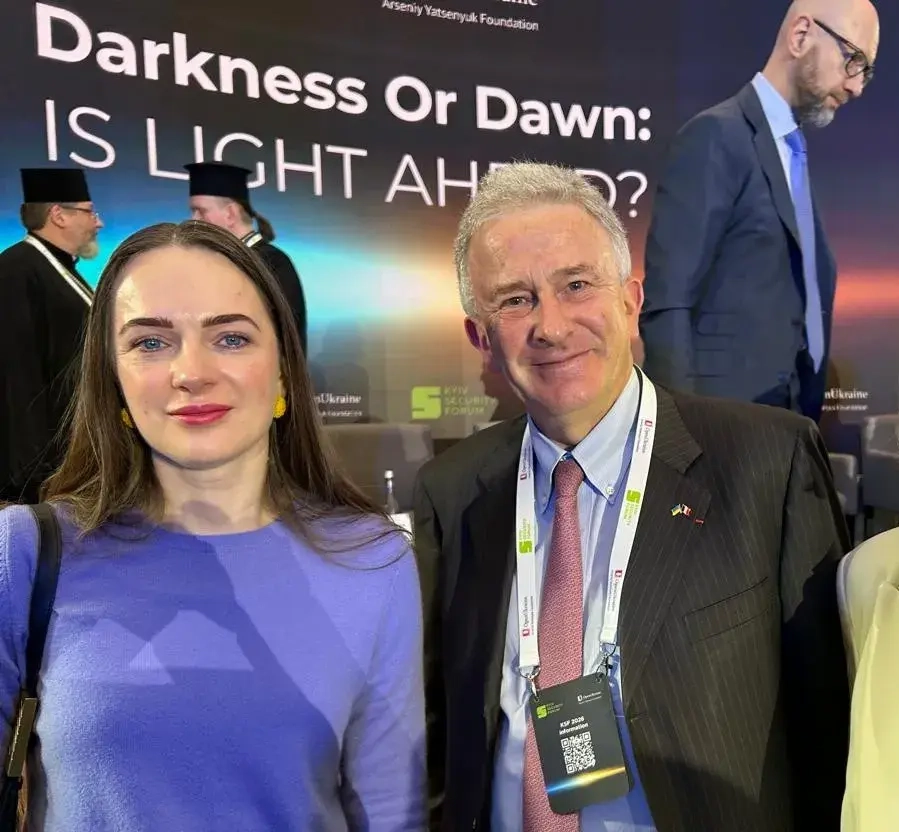
The author with Oleksandra Matviichuk at the Kyiv Security Forum, April 24, 2026. (Photo provided by the author)
This is an abridged version of an article from the author’s blog, Tenzer Strategics. See the original here.
The views expressed in this opinion article are the author’s and not necessarily those of Kyiv Post.