US substitutes ‘stand-off’ for ‘stand-in’ munitions against Iran
US forces will begin to transition to use Joint Direct Attack Munitions instead of its sophisticated stand-off missiles.
Air Force Technology
75
5 мин чтения
0 просмотров
The munition transition suggests a climbdown in capability, indicating little need to expend deep penetration weapons like the Tomahawk.
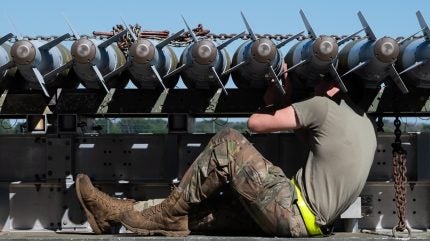
A US airman inspects GBU-38 JDAMs prior to being loaded into a B-2 Spirit bomber at Whiteman Air Force Base, Missouri, 28 August 2025. Credit: DVIDS.
US forces will expend JDAMs instead of its sophisticated stand-off missiles
Defense Secretary says they have a near endless supply of GPS and laser guided precision gravity bombs
There has been some consternation over the reduced number of standoff missiles after the opening days of the aerial campaign against Iran
American forces in the Middle East will begin to deploy less sophisticated albeit formidable “stand-in” weapons in their aerial campaign against Iran, now entering its sixth day.
From the outset of the conflict, the United States deployed “stand-off” deep precision strike missiles such as the Tomahawk Land Attack Missile (TLAMs) to strike from outside the range of the enemy’s ability to respond. But these far-reaching, advanced weapons systems will be shelved, according to the Chairman of the Joint Chiefs of Staff, General Dan Caine, in a press conference at the end of yesterday (4 March).
Discover B2B Marketing That Performs
Combine business intelligence and editorial excellence to reach engaged professionals across 36 leading media platforms.
Find out more
Caine noted the use of Joint Direct Attack Munitions (JDAMs) – essentially ‘dumb’ gravity bombs equipped with laser-guided precision kits – and AGM-114 Hellfire missiles, which are stand-off weapons in their own right but have a significantly shorter range (between seven to 11 km) than weapons like the TLAM (1,600 km).
However, the munition transition has sparked public consternation regarding the reduced numbers of these advanced missiles, with some reports such as Bloombergalluding to dwindling stockpiles of the coveted weapons. This is a reasonable concern given the revanchism of more powerful, strategic adversaries, mainly China, whom the US intend to keep in check on the world stage.
But beyond the speculation, it is equally feasible that the decision indicates the aerial supremacy achieved by the US and Israel, and the ability of their aircraft to enter deeper inside the Islamic Republic relatively unopposed by Iranian air defences.
GlobalData Strategic Intelligence
US Tariffs are shifting - will you react or anticipate?
Don’t let policy changes catch you off guard. Stay proactive with real-time data and expert analysis.
By GlobalData
“The enemy can no longer shoot the volume of missiles they once did,” said the US Defense Secretary Pete Hegseth, “not even close.”
In this case, US and Israeli forces are able to deploy less sophisticated weapons at a lower cost (a single JDAM tailkit comes to around $34,500) since they do not require the deep penetration capabilities of a stand-off arsenal.
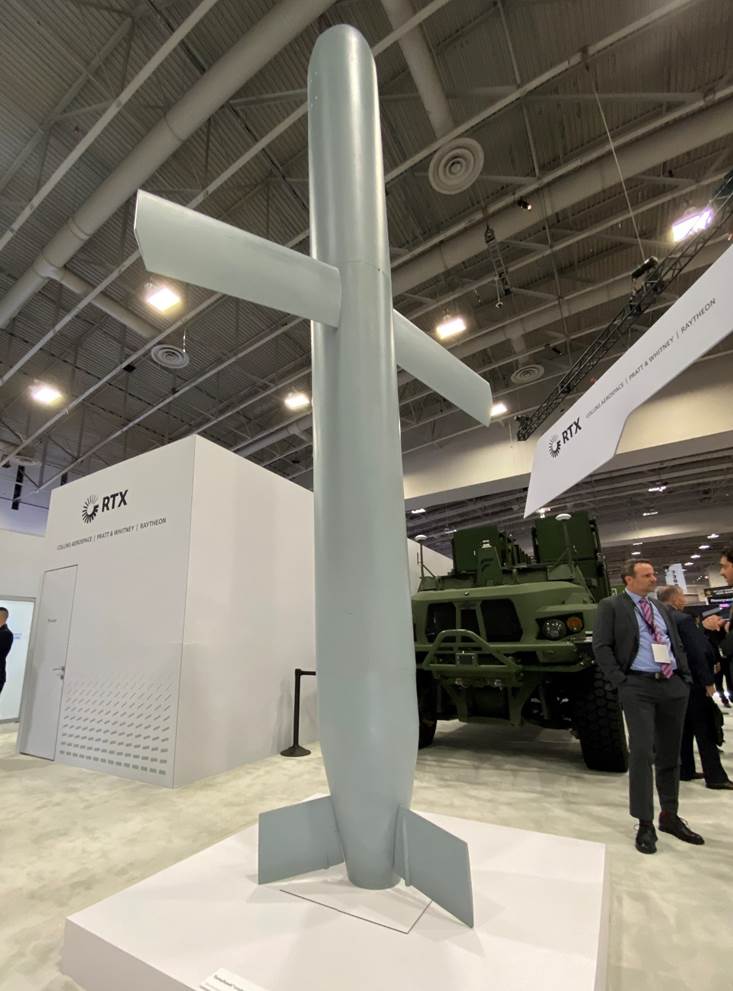
Pictured is a TLAM model at the RTX stand during AUSA 2025. Credit: John Hill.
“We used more exquisite stand-off munitions at the start [of the campaign] but no longer need to,” Hegseth assured. “Our stockpiles of those as well as Patriot [interceptors] remains extremely strong.”
If Hegseth is to be believed, the US boast “a nearly unlimited stockpile” of 500-, 1,000- and 2,000-pound GPS and laser-guided precision gravity bombs.
It may be worth noting that other allies such as the UK, though engaged in the conflict in a defensive capacity, intend to fire relatively cheaper Martlet Lightweight Multirole Missiles (with a range of six to eight km) from two Wildcat helicopters to shoot down Iranian drones and other aerial threats.
Have the US exhausted its stand-off stockpiles?
It would, of course, be wrong to take the Pentagon’s claims at face value, even if its assessment makes sense. While specific stockpile figures are not disclosed for operational security, it is worth exploring the ability of the US defence industrial base to produce stand-off capabilities.
“The defence industry has not been able to keep up with the expenditures of certain weapons and munitions such as Patriot missiles and even dumb artillery shells and industry is ramping up production,” said Mark Cancian, a former marine corps colonel and now senior fellow of the Center for Strategic and International Studies (CSIS), speaking with Airforce Technology.
“For example, total Patriot production has about doubled since 2022, from 300 to 600 missiles per year. However, many allies want Patriots also, so it will take years to get inventories to a level that the war planners are comfortable with.”
US President Donald Trump has castigated American defence primes in the last several months, accusing them of “being incentivized to prioritize investor returns over the Nation’s warfighters” and summarily forbidding contractors “to pay dividends or buy back stock, until such time as they are able to produce a superior product, on time and on budget.”
Yesterday, Reuters was the first to report that defence executives will meet Trump at the White House tomorrow (6 March) to discuss accelerating weapons production, as the pentagon works to replenish stockpiles.
However, in making the point that the US’ stocks are undeniably filled, it is telling that the spokesperson was quick to then point blame on the former Biden administration for depleting weapons stocks.
“We had a very stupid and incompetent leader in this White House for four years who gave away many of our best weapons for nothing, for free, to another country very far away by the name of Ukraine.”
The CSIS calculate there to be around 3,000 TLAMs and 3,500 Joint Air to Surface Standoff Missiles.