The TWZ Newsletter
Weekly insights and analysis on the latest developments in military technology, strategy, and foreign policy.
The missile aims to be a less expensive, but still survivable standoff weapon option that can be built in large numbers. The post Russia’s Stealthy S-71K Air-Launched Missile Seen In New Detail appeared first on The War Zone.

The TWZ Newsletter
Weekly insights and analysis on the latest developments in military technology, strategy, and foreign policy.
Ukraine has released more details of Russia’s S-71K Kovyor — translated as Carpet — an air-launched missile that Kyiv says has been used in combat since late last year. The continued development of weapons in this class highlights the fact that Russia is looking for alternatives to its more established — and more costly — legacy air-launched cruise missiles, with current production levels struggling to meet wartime needs.
The Ukrainian Ministry of Defense’s Main Directorate of Intelligence (GUR) today publicly released new information on the S-71K, including an interactive 3D model. The GUR had previously released details of companies involved in the manufacture of Russia’s Su-57 Felon fighter, and notes that the new missile was specifically developed for this platform.
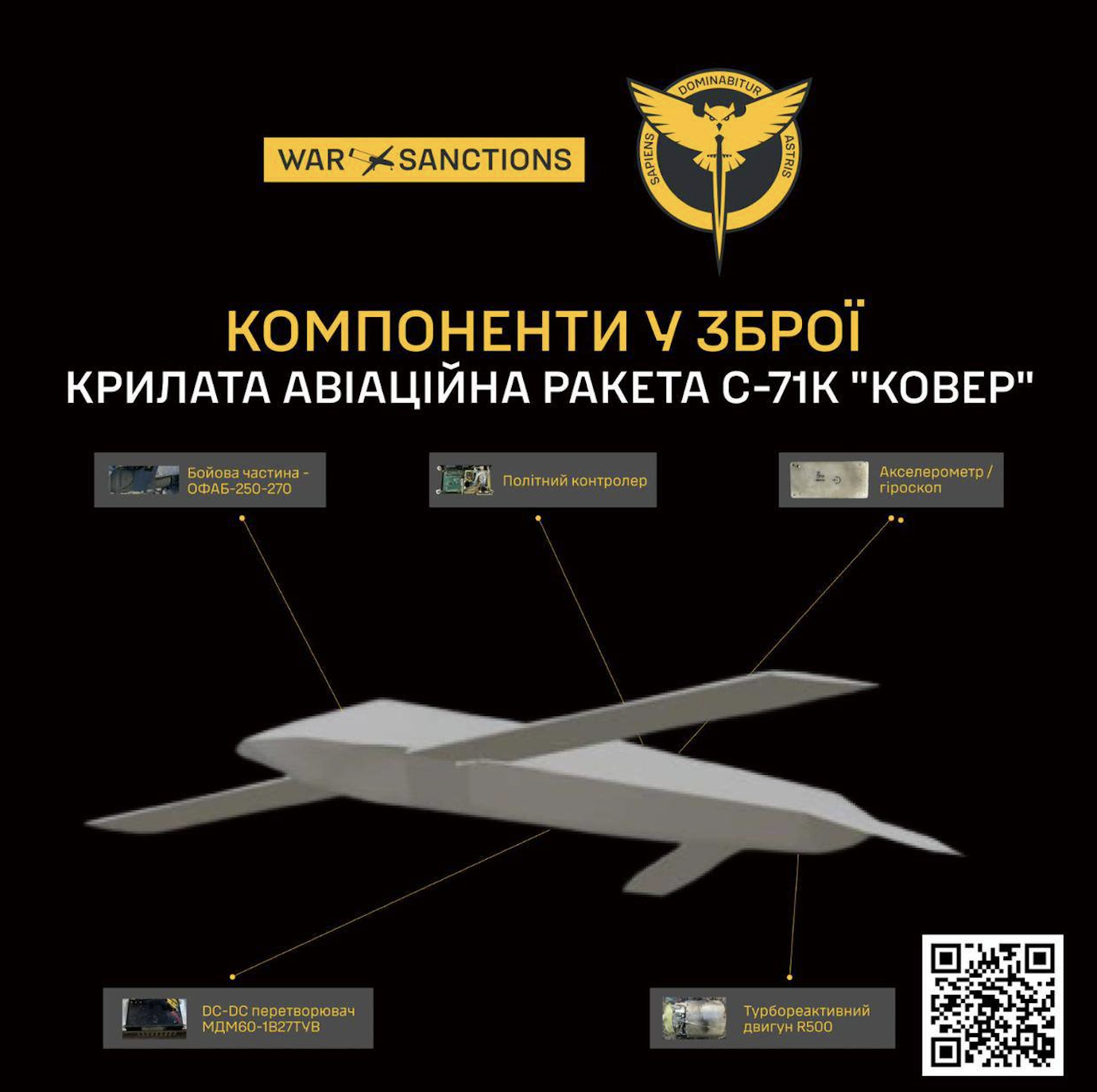
“The new missile was first deployed by the enemy late last year and appears to represent the United Aircraft Corporation’s (UAC) initial venture into missile manufacturing,” the GUR says.
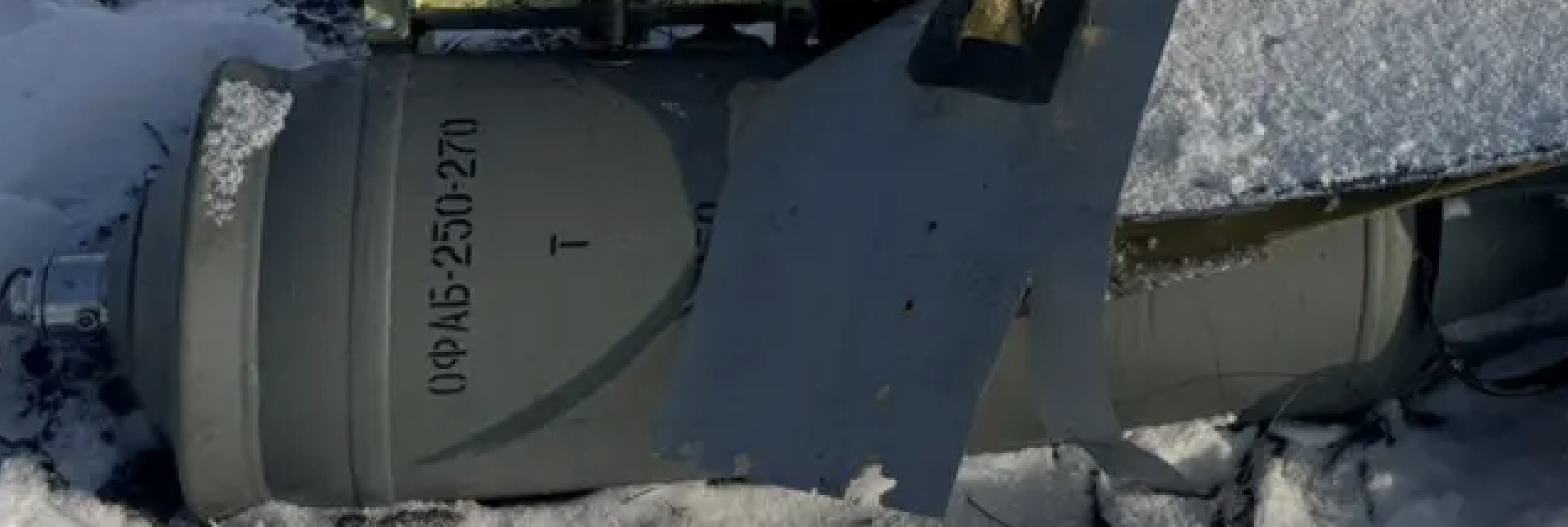
The GUR adds that the warhead of the S-71K utilizes a 551-pound OFAB-250-270 high-explosive fragmentation bomb. This bomb, which was developed in the Cold War as a free-fall air-launched weapon, is integrated into the structure of the S-71K, which otherwise features a low-observable airframe.
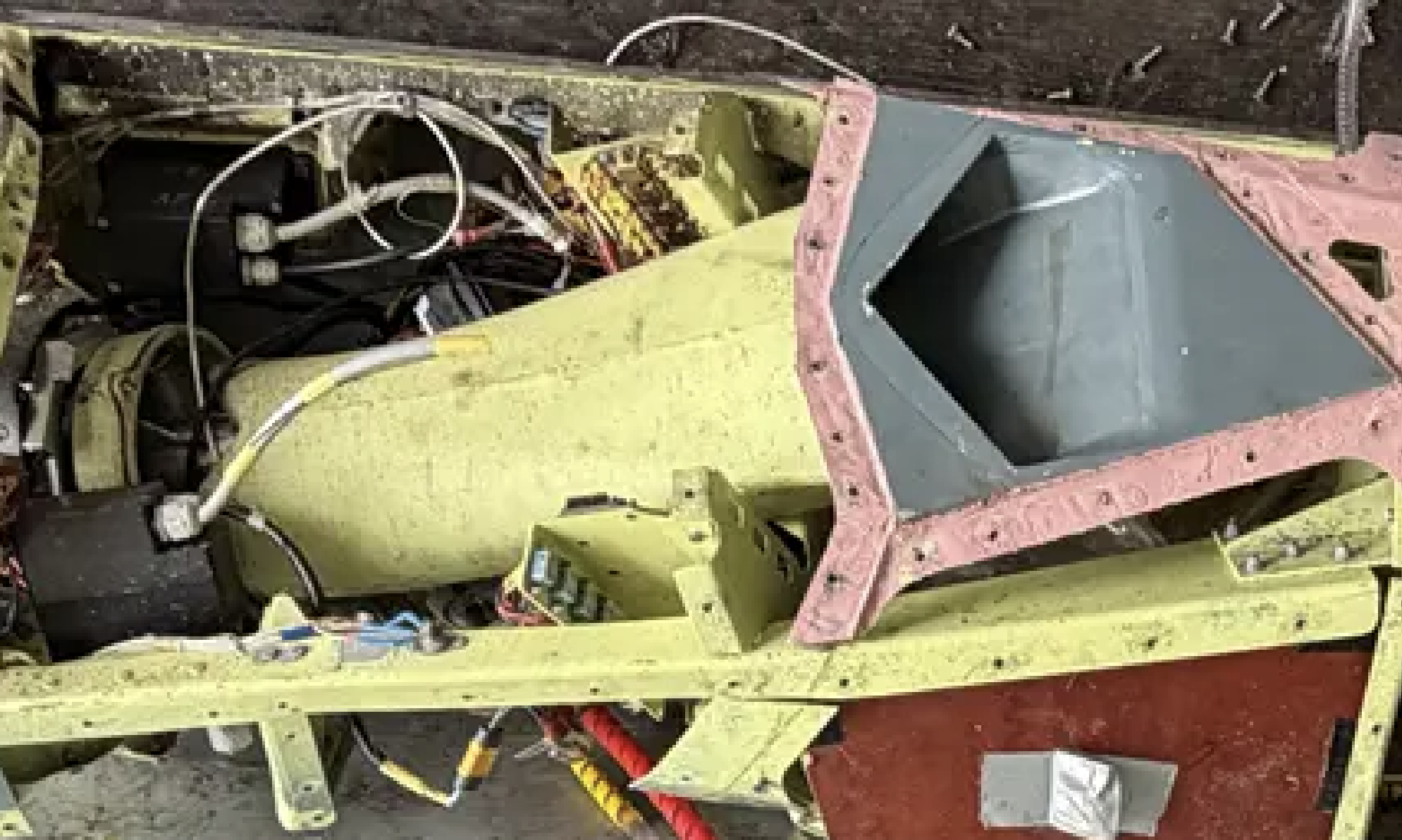
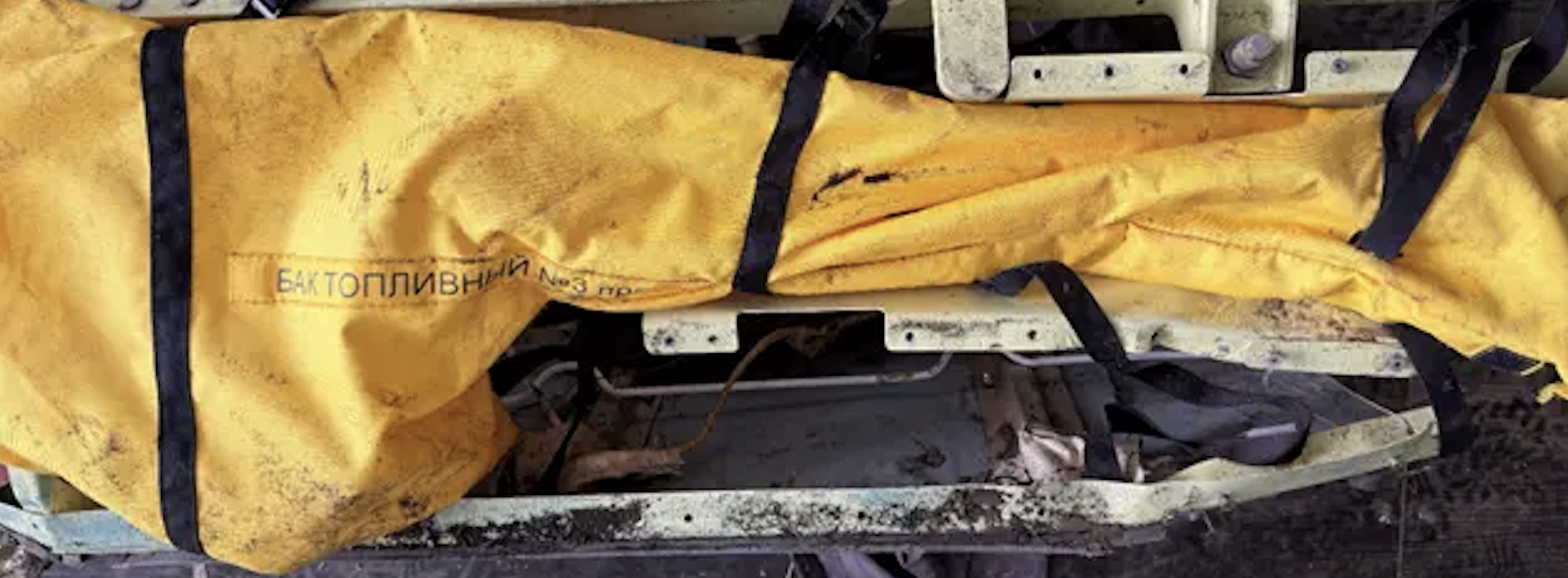
The S-71K’s airframe is made from “a multi-layer fiberglass material with additional reinforcement,” with other internal elements made of aluminum alloys. The airframe has a low-observable shape, with a trapezoidal cross section, chined nose, pop-out swept wings, and an inverted V-tail. Available imagery of the wreckage reveals details of the top-mounted conformal engine intake, feeding a pentagon-shaped intake duct. There are, however, no signs of any low-observable coatings, such as radar-absorbent material, likely to keep costs down.
The GUR also provides information on various electronic components, of which it says “the vast majority” are of foreign origin, including items manufactured in China, Germany, Ireland, Japan, Switzerland, Taiwan, and the United States. As the GUR says, “Continued access to foreign technologies and components allows the aggressor state to develop new weapons and scale their use in the war against Ukraine.”
This makes it one of many Russian weapons relying on foreign parts. For instance, a Russian Shahed-136 strike drone obtained by the GUR contained numerous components from the U.S. as well as parts from Iran, Taiwan, and other nations. Previously, we noted that the GUR found multiple foreign components in a Russian S-70 Okhotnik-B (Hunter-B) flying-wing uncrewed combat air vehicle (UCAV) downed in a case of friendly fire.
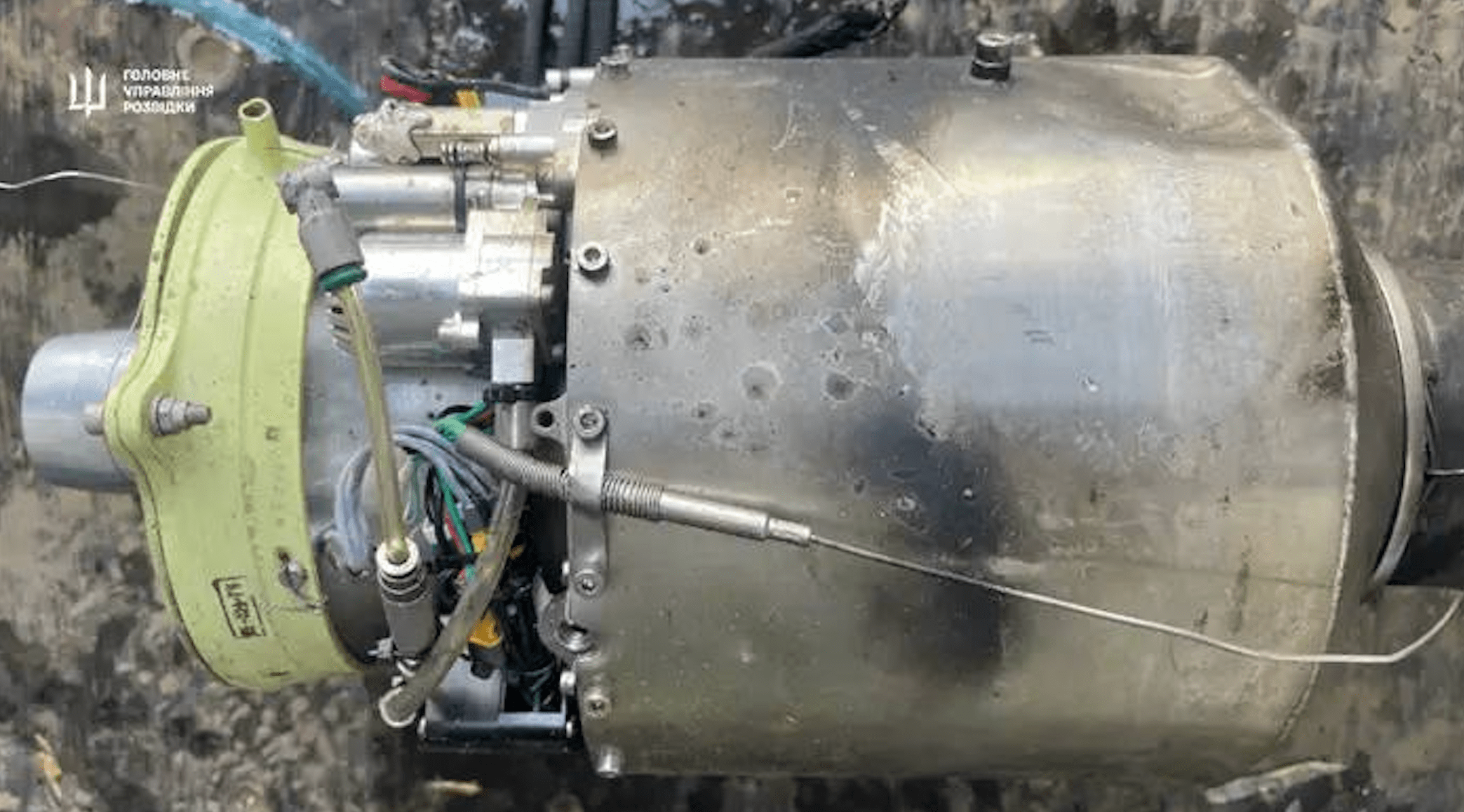
The S-71K is powered by a compact R500 turbojet engine, also produced by UAC, and features what the GUR describes as “an inertial navigation system based on simple sensors.”
With three separate internal fuel tanks, Ukraine assesses that the S-71K has an operational range of up to 186 miles. Earlier reports suggest that the missile flies at a speed of Mach 0.6 and at altitudes of up to 27,000 feet.
In 2024, it was reported that Sukhoi had received approval from the Russian Defense Ministry to begin producing the S-71, after it underwent “significant design changes” based on lessons from the Ukraine conflict.
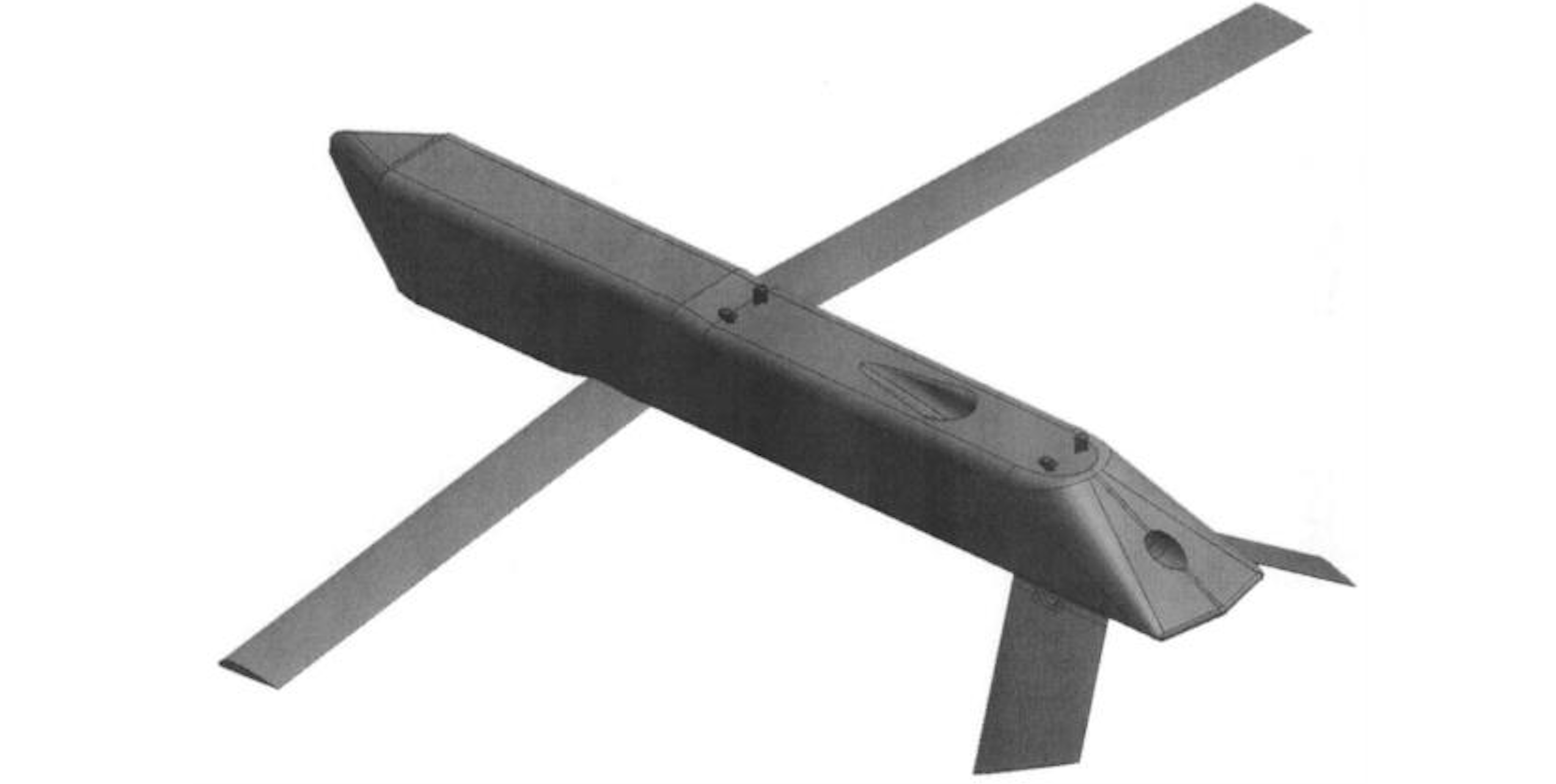
These changes apparently included increasing the range and reducing the radar cross-section to improve survivability against air defenses.
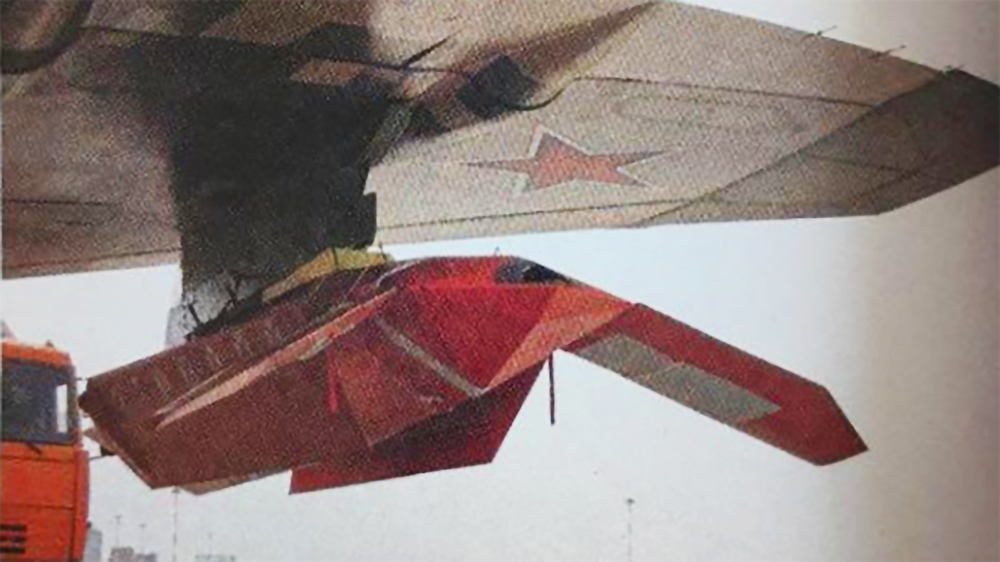
The GUR has not said what platform or platforms are understood to have employed the S-71K in the war in Ukraine. As mentioned, the S-71K is known to have been developed with the Su-57 in mind and has at least been tested on this aircraft, with captive-carry trials in April 2024 at the Russian flight research center in Zhukovsky. There is no reason that it couldn’t also be carried by other Russian tactical jets; this would be necessary for large-volume employment, if significant production numbers are actually realized.
It is also expected that Russia will explore the integration of the S-71K with its S-70 Okhotnik UCAV.
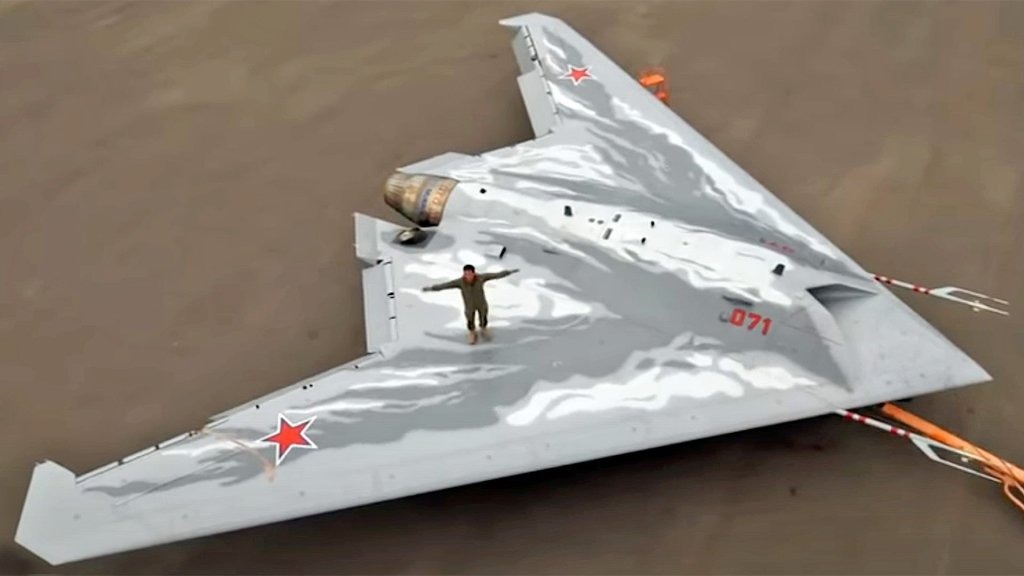
Interestingly, there have also been reports that the S-71K may be complemented by a more advanced weapon, known as the S-71M Monokhrom. While described as a kamikaze drone, this is essentially an air-to-ground missile expected to have a “human-in-the-loop” capability, to allow dynamic targeting, including against moving targets, via a controller on the ground. In this way, it differs from the S-71K, which apparently features a fairly basic inertial guidance system, likely backed up by satellite navigation. The S-71M is also said to feature electro-optical sensors for day and night operations, and multiple warhead options, including high-explosive and shaped charges.
While the S-71K is externally carried by launch aircraft, the S-71M can reportedly also be accommodated in the weapons bay of a Su-57 or S-70 UCAV. So far, we have not seen S-71s with folding tailfins, which would be required for internal carriage.
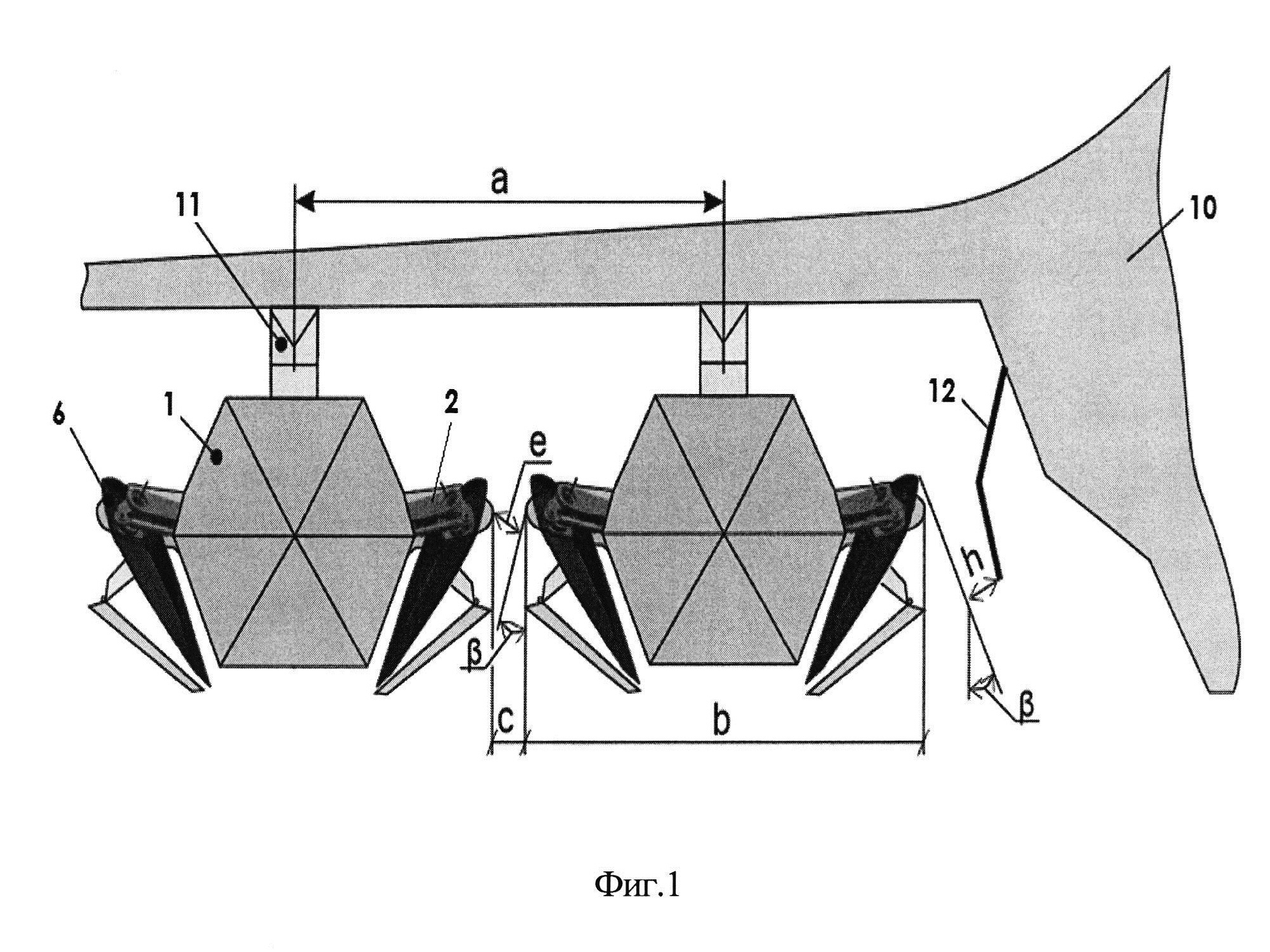
Earlier this year, unconfirmed reports from Russia suggested that the S-71M Monokhrom may have been used in an attack on a Ukrainian HIMARS launcher in the Chernihiv region, although the Russian military stressed that the target was destroyed by a Geran loitering munition. Images released of S-71M test rounds indicate a missile design that is notably less stealthy than the latest S-71K, but the M-version may also have been refined in the meantime.
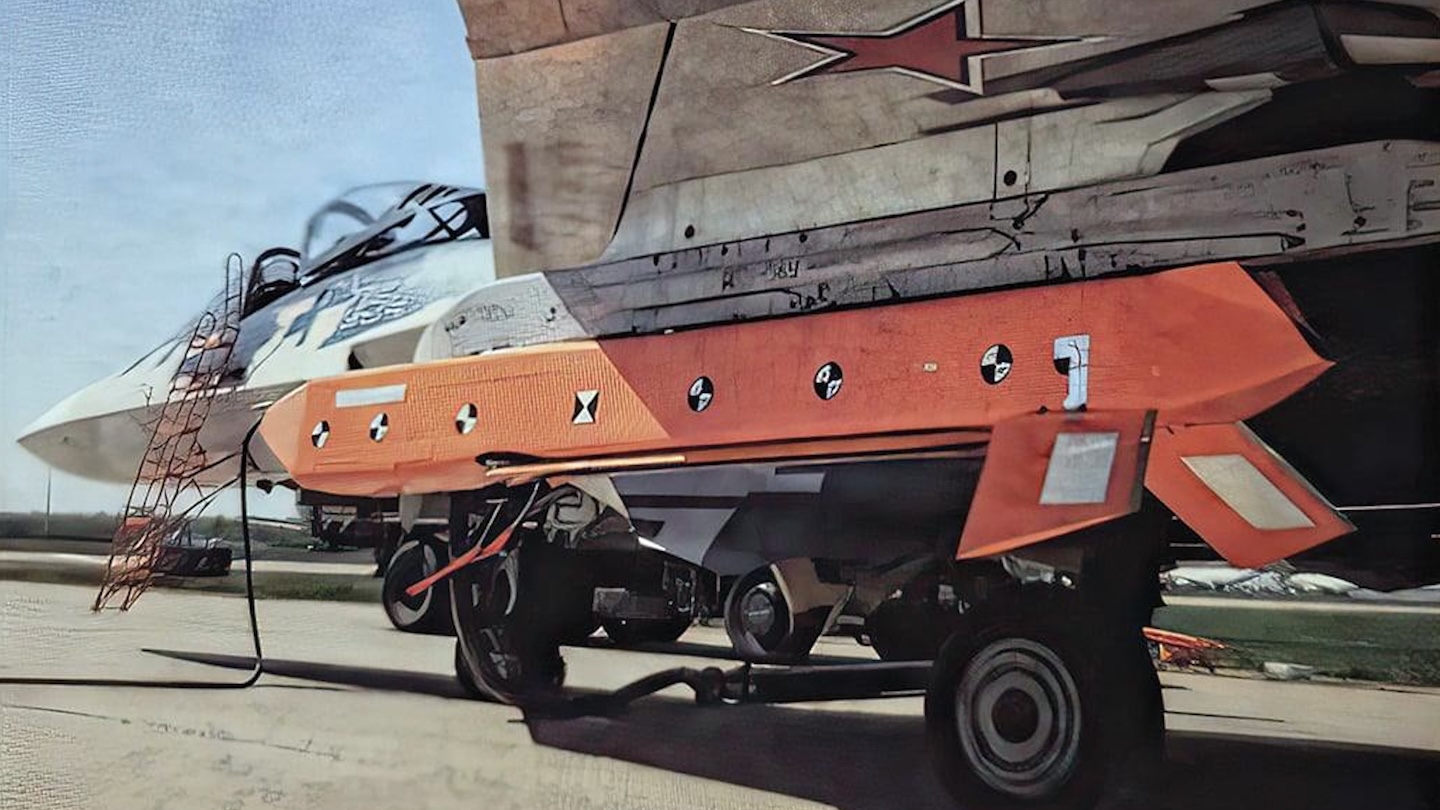
In March of this year, the GUR revealed details of another new Russian air-launched cruise missile, the Izdeliye 30, which you can read more about here.
The Defence Intelligence of Ukraine has published an interactive 3D model, the main assemblies, and components of the enemy’s new cruise missile “izdeliye-30,” as well as data on 20 enterprises involved in its production cooperation chain.
This missile also has folding wings, but offers a much longer range of at least 930 miles. It is similarly powered by a compact turbojet engine but does not have a stealthy airframe.
Various components in the Izdeliye 30 appear to have been reused from existing weapons, reducing cost and complexity and speeding development.
Based on its range, the Izdeliye is likely intended as a cheaper, simpler alternative to the air-launched cruise missiles otherwise used by Tu-95MS and Tu-160 bombers, namely the Kh-101 and Kh-555 (the Kh-55 carries a nuclear warhead).
Meanwhile, the S-71K appears to be tailored for tactical crewed and uncrewed aircraft, while its more limited range is partly compensated for by the fact that it has low-observable features (and is intended for launch from low-observable platforms).
The S-71K should also offer a cheaper alternative to the Kh-69, a weapon widely associated with the Su-57, although it can also be launched by ‘legacy’ Russian tactical aircraft. You can read about this air-to-surface missile here.
1/ TASS reports that KTRV will display (a mock-up of) its Kh-69 air-launched cruise missile (ALCM) at the upcoming "Army-2022" forum.
Specifications:
– Max range (km): 290
– Cruise speed (km/h): 700 – 1,000
– Warhead (kg): 300 – 310 (depending on configuration) pic.twitter.com/UD38MsNNpG
While it remains to be seen exactly how the S-71 series will be used in an operational context, it’s clear that Russia has a need for cheaper, easier-to-produce air-launched missiles for its combat aircraft fleet.
Just as the U.S. military is facing the challenge of limited munitions stocks as it prepares for a potential future conflict with China, Russia has a requirement today for strike weapons that can be manufactured cost-effectively and in large numbers.
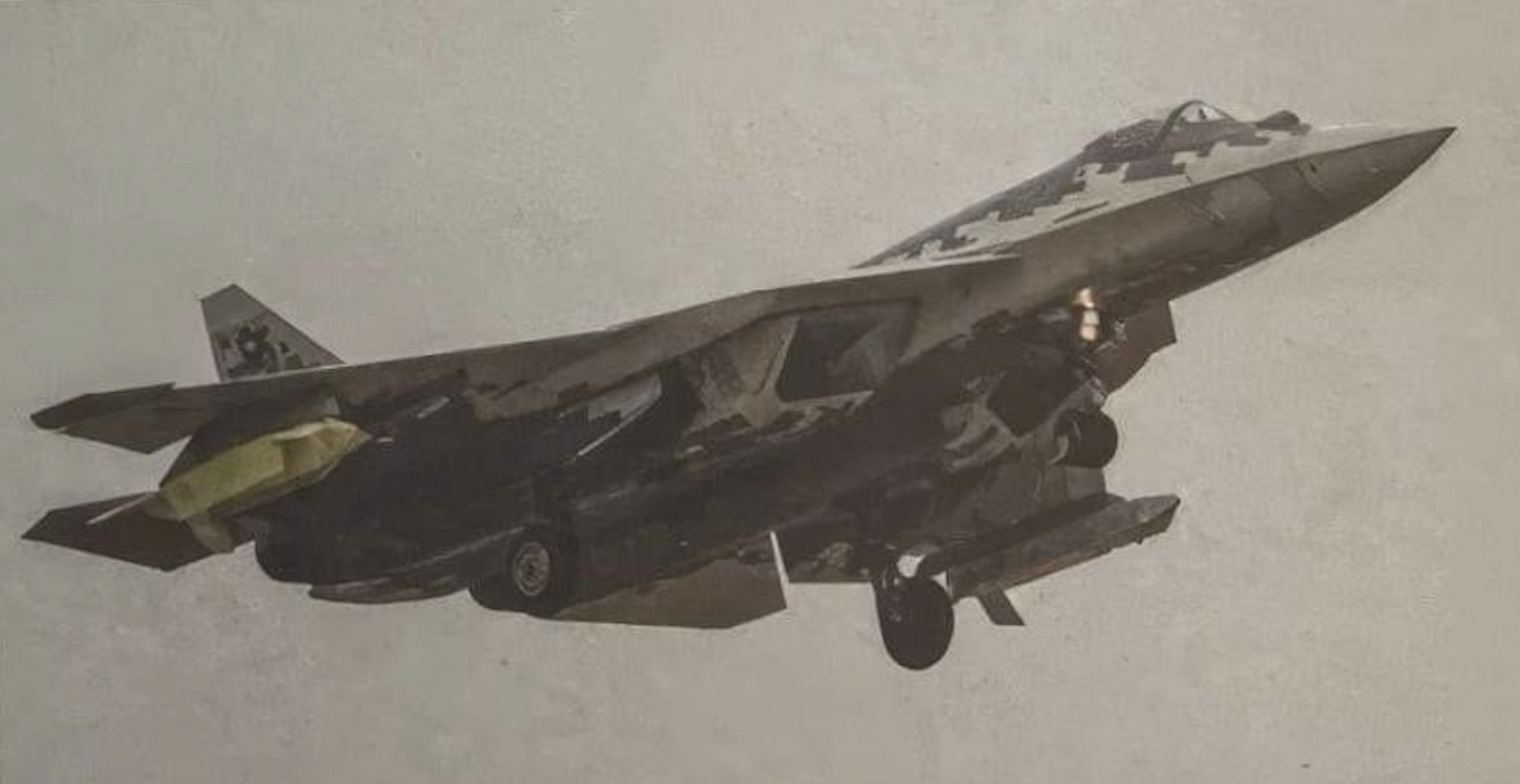
At minimum, the deployment of the S-71 poses an additional challenge for Ukraine’s already strained air defense forces, especially given the continued scarcity of Western-supplied ground-based air defense systems.
Contact the author: thomas@thewarzone.com

Estonian President Alar Karis stated that Europe missed the opportunity to begin peace talks with Moscow at the start of the full-scale war in Ukraine.

The visit comes amid strained US-UK relations after Trump repeatedly criticized British Prime Minister Keir Starmer’s refusal to provide military support for Washington’s war with Iran.

A Russian drone attacked Chuhuiv on 28 April: two people have been killed and another injured. Emergency services are working at the scene.

The Russians have attacked Kryvyi Rih for the second time this morning. An infrastructure facility has been hit again. One person is injured.