
The Fiscal Year 2027 Presidential budget Request includes a major overhaul for the U.S. Navy’s Strike Weapons inventory, with over $5.23 billion dollars in funds requested for strike munitions.
Major Tomahawk replenishment
A 785 strong buy of RGM/UGM-109 Tomahawks headlines the Navy’s requested strike weapons procurement, with an increase of 730 missiles to be funded compared to FY 2026 numbers, with the buy carrying a price tag of $3,008,909,000. Tomahawk Land Attack Cruise missiles (TLAMs) continue to serve as both the surface and submarine Navy’s deep strike backbone, with Naval News reporting on persistent usage throughout Operation Epic Fury.
New arrivals
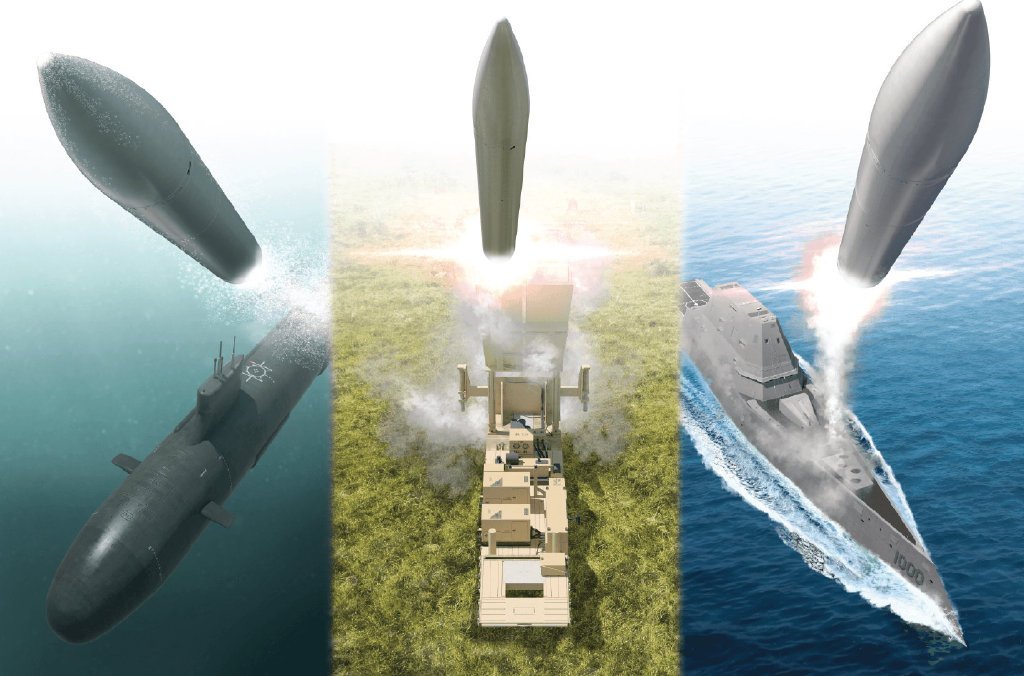
Within the $5.23 billion dollars in requested funding, there are two new additions arriving to the Navy’s inventory, being the Conventional Prompt Strike (CPS) missiles, and the Multi-mission Affordable Capacity Effector (MACE). CPS will serve as the Navy’s principle surface-to-surface hyper-sonic strike weapon, with the first 12 CPS rounds listed in this year’s budget request at a total of $750,387,000. Zumwalt-class destroyers will be the only current users amongst Navy, as CPS equipped Virginia-class submarines and the Trump-class of battleships will not enter service for a lengthy period of time.
MACE is the Navy’s miniature, low cost, air-to-ground, stand-off, and anti-ship missile, designed to fit inside of the weapons bays found on F-35A and F-35C variant Joint Strike fighters. Additionally, the miniature munition has been in development since 2026, with the Navy purchasing the first 353 for service on both the F-35C and F/A-18E/F Super Hornet, with the total buy priced at a requested $156,000,000.
Building bombs

Carrier based aircraft will receive a boon in their guided bomb inventory if the request for additional GBU-53/B Small Diameter Bomb IIs (SDB II) and Joint Direct Attack Munition guidance kits are met. 1,292 Joint Direct Attack Munition kits are listed for a total of $96,935,000, fielding a total increase of 494 kits over FY 2026 levels. Following the conflict with Iran, the JDAM conversion kits, which enable GPS guidance for standard “dumb” bombs dropped from fixed wing aircraft, continue to be one of the Navy’s weapons of choice.
GBU-53s are intended to be the successor to the vaunted GBU-39 Small Diameter bomb, which originally offered GPS and inertial guidance in tandem with extended range through installation of a wing/guidance kit. In addition to the original SDBs’ capability, GBU-53 adds a new seeker head that leverages Millimeter-Wave Radar and Laser Designation based guidance, allowing the prosecution of moving targets. Funds for 512 GBU-53s have been requested at a total of $166,688,000, representing a 267 unit increase over FY 2026 levels.
Additional anti-ship missiles and munitions

The AGM-158C LRASM currently serves as U.S. Naval Aviation’s most advanced air launched anti-ship missile with a range of roughly 500 nautical miles, from launch platforms including the F-35C, F/A-18E/F, and P-8 Poseidon Maritime patrol aircraft. The Navy seeks the funds to acquire 177 total AGM-158C rounds at a total of just over $900 million, representing a 23 missile decrease from FY 2026 levels for the stealthy cruise missiles.
A total of 32 Naval Strike Missiles (NSMs) are to be funded for Navy usage at a price of $75,972,000, representing a doubling of NSM procurement from FY 2026 levels. NSM is to serve as the replacement for aging AGM/RGM-84N Harpoon anti-ship missiles aboard U.S. Navy surface combatants and to supplement the AGM-158C in air-to-surface anti-ship efforts. Furthermore, NSM offers a range increase to 300 km in conjunction with enhanced terminal maneuverability and an updated seeker capable of improved target recognition.
Rounding out the request for munitions are the 282 AGM-179 Joint Air-to-Ground Missiles standing at $73,226,000, increasing total rounds to be funded by 5 from FY 2026. AGM-179s are to replace AGM-114 Hellfire variants used aboard U.S. Navy Aircraft and vessels, including MH-60S Seahawk helicopters (along with other Naval Blackhawk variants) and Marine Corps AH-1Z Viper Attack Helicopters. Subsequently, AGM-179 features both laser designated guidance as well as active-radar homing enabling fire-and-forget employment of the munition.

