Could a diamond wafer as wide as a basketball be China’s trump card in AI race?

When Harbin Institute of Technology (HIT) held its 11th group wedding for doctoral students on May 31, each of the 187 newlywed couples was presented with a one-carat diamond ring, with the diamonds grown in the university’s laboratory. The gems were developed by Zhu Jiaqi and his team from HIT’s Sc

South China Morning Post
75
2 хв читання
0 переглядів
Could a diamond wafer as wide as a basketball be China’s trump card in AI race?

When Harbin Institute of Technology (HIT) held its 11th group wedding for doctoral students on May 31, each of the 187 newlywed couples was presented with a one-carat diamond ring, with the diamonds grown in the university’s laboratory.

The gems were developed by Zhu Jiaqi and his team from HIT’s School of Astronautics using a technology that in theory could produce high-purity, single crystal diamonds of any shape and size – from wedding jewellery to a wafer as wide as a basketball.

Known as microwave plasma chemical vapour deposition (MPCVD), the process generates carbon atoms in an ultra-clean environment, depositing them layer by layer onto a diamond seed crystal.

As the global artificial intelligence race enters an era defined by computing power, China is emerging as a leading producer of ultra-large synthetic diamonds – increasingly viewed as critical to dissipating the heat generated by semiconductors.

With chip performance increasingly constrained by the more fundamental physical challenge of heat, a series of breakthroughs in the growing of large single-crystal diamonds could give China an unexpected advantage in next-generation AI hardware.
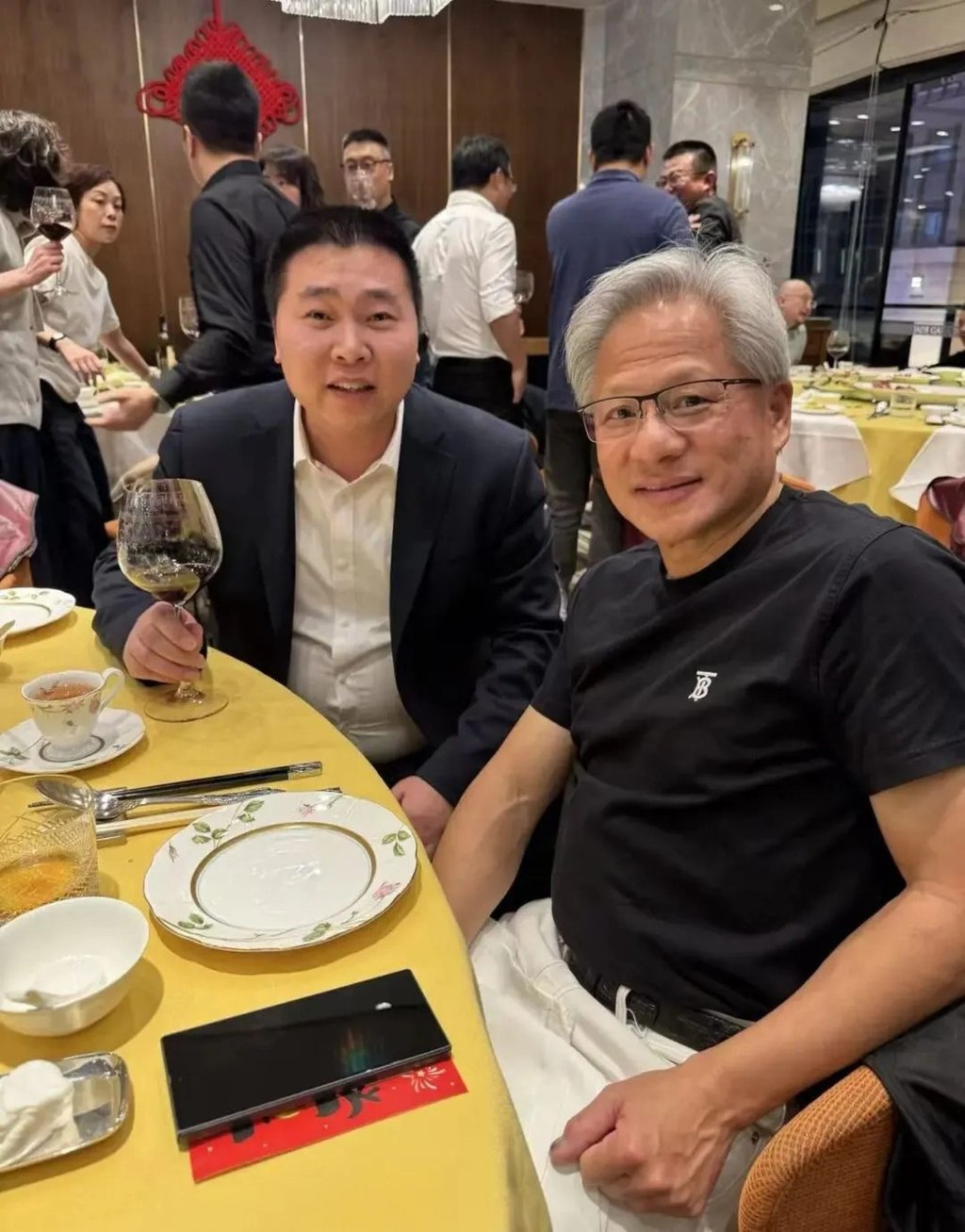
This picture of Zhu Yanhui (left) and Jensen Huang was posted to social media after their meeting in January in Beijing. Photo: WeChat

This picture of Zhu Yanhui (left) and Jensen Huang was posted to social media after their meeting in January in Beijing. Photo: WeChat

During a visit to Beijing in January, Nvidia chief executive Jensen Huang had a meeting with Zhu Yanhui, founder of Chaoying Diamond Technology, a supplier of diamond technology application materials.

Оригінальне джерело

South China Morning Post

Поділитися статтею

Схожі статті

Could AI algorithms hold China’s solution for global narrative on Tibet?
🇨🇳🇹🇼China vs Taiwan
South China Morning Post

Could AI algorithms hold China’s solution for global narrative on Tibet?

To win the global war of words over Tibet, China’s western autonomous region that repeatedly makes international headlines, Beijing must stop fighting the West’s algorithms and start adapting to them. That was the blunt assessment of Zachary Lundquist, an American media professional with the state-r

близько 4 годин тому2 min
Survivors of Myanmar’s Landmine Blasts Struggle With Severed Limbs and Shattered Lives
🇨🇳🇹🇼China vs Taiwan
The Diplomat

Survivors of Myanmar’s Landmine Blasts Struggle With Severed Limbs and Shattered Lives

The pain from their injuries hasn’t gone away. Meanwhile, they face challenges in earning a livelihood.

близько 4 годин тому11 min
Japan raids ice cream giants over price-fixing allegations
🇨🇳🇹🇼China vs Taiwan
BBC News - Asia

Japan raids ice cream giants over price-fixing allegations

The investigation on alleged cartel pricing of ice cream comes as Japan faces record summer temperatures.

близько 4 годин тому2 min
PLA’s plan to destroy US carriers; world’s largest whale graveyard: 7 science highlights
🇨🇳🇹🇼China vs Taiwan
South China Morning Post

PLA’s plan to destroy US carriers; world’s largest whale graveyard: 7 science highlights

We have put together stories from our coverage on science from the past two weeks to help you stay informed. If you would like to see more of our reporting, please consider subscribing. 1. PLA scientists propose a plan to destroy US carrier groups from 3,000km away As the United States quietly pulls

близько 4 годин тому1 min