European Powers Ready to Help Secure Strait of Hormuz Energy Chokepoint
European powers and Japan signal readiness to help secure the Strait of Hormuz after resisting US calls, as rising tensions and oil risks force a shift in allied positions.
Kyiv Post
75
4 хв читання
0 переглядів
European powers and Japan said on Thursday they would join “appropriate efforts” to open the Strait of Hormuz, in a major shift after they earlier rebuffed US President Donald Trump’s demands they help secure the Gulf’s energy chokepoint.
The European nations also said they would act to stabilize energy markets after tit-for-tat strikes on energy plants dramatically escalated the US-Israeli war on Iran.
With no end in sight almost three weeks into the conflict, and the threat of a global “oil shock” growing by the day, Britain, France, Germany, Italy, the Netherlands and Japan issued a joint statement expressing “our readiness to contribute to appropriate efforts to ensure safe passage through the Strait”.
The statement offered no details, but marked a key change after weeks of resistance by major US allies to Trump’s demands they help secure the strait, and therefore intervene in a conflict with unclear objectives that they did not seek and over which they have little control.
Polish Prime Minister Donald Tusk previously ruled out sending troops to Iran, saying on Tuesday that the escalating conflict does not directly affect Poland’s security.
“Warsaw has other tasks within NATO and our allies understand this,” Tusk said, adding: “This applies to our land, air and naval forces. What we have at our disposal must serve the security of the Baltic.”
A draft law submitted to the State Duma would allow the military to be used outside Russia if citizens are detained or prosecuted by courts that Moscow does not recognize.
Crucial waterway and tit-for-tat strikes
Israel’s bombing of a huge Iranian gas field on Wednesday, which Trump said the US had not known about, prompted retaliatory strikes from Tehran on key energy sites in Qatar and Saudi Arabia.
These demonstrated Iran’s continued ability to exact a heavy price for the US-Israeli campaign and were widely interpreted as a significant escalation of the conflict in the Middle East.
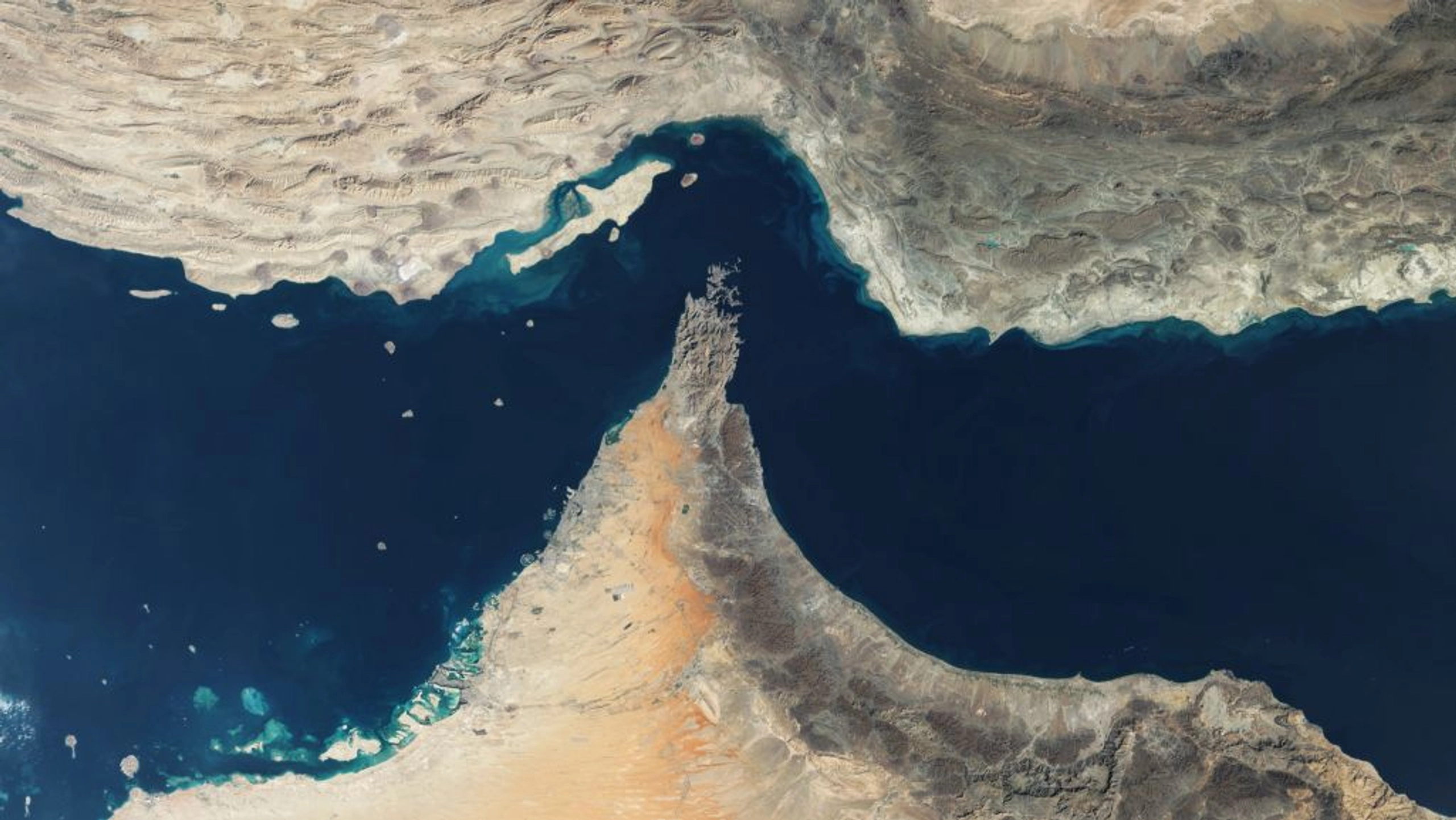
By launching attacks on merchant ships, Tehran had already blocked the Strait of Hormuz, a crucial waterway between Iran, the UAE and Oman through which around 20% of the world’s supply of oil and liquefied natural gas transits.
Trump has called on US allies to help secure the Strait of Hormuz with naval forces. Photo: Gallo Images/Orbital Horizon/Copernicus Sentinel Data 2025
The blockade has led to a surge in global oil prices, prompting governments around the world to release hundreds of millions of barrels of emergency oil reserves in an effort to soften the economic blow.
With the exception of defensive or evacuation operations, Washington’s NATO allies have nevertheless been reluctant to become involved in the conflict, citing lessons from the drawn-out wars in Iraq and Afghanistan as well as questions regarding the legality of the US-Israeli strikes on Iran in February which initiated the conflict.
Trump testing limits of NATO?
The US president warned on Sunday that a “negative response” from allies regarding his calls for international involvement could be “very bad for the future of NATO.”
His comments prompted fresh concerns about a crack within the military alliance, which has been the bedrock of Western security for decades.
Across Europe, governments have until now refused to be drawn into the conflict in Iran. But refusing carries its own risk, inviting Trump’s “we will remember” style of politics and raising concerns about how robust the American security guarantee in Europe remains in practice.
Trump has ushered in a far more transactional version of US power, one that makes demands regardless of alliance norms and expects allies to pay when it calls in what it sees as a debt.
Speaking during a visit to Washington by Japanese Prime Minister Sanae Takaichi on Thursday, Trump said Japan was “stepping up, unlike NATO”.
It was unclear whether he was aware of the declaration from US allies at the time he made the remarks.
“We’re defending the Strait for everyone else, then in the case of NATO, they don’t want to help us defend the Strait and they’re the ones that need it,” Trump said, adding: “Now they’re getting much nicer because they’re seeing my attitude but as far as I’m concerned it’s too late.”
The US president has often been critical of NATO, long accusing member states of not taking enough responsibility for their security. He prompted fears over the future of the alliance with his repeated threats to annex Greenland earlier this year.
TVP World is Poland's first English-language channel where you can find our guest interviews, world news from the Polish perspective and the latest news from the CEE region.