Exploring the impact of UK ‘ceding’ Type 26 frigates to Norway
The UK Government has confirmed that it will cede an unknown number of the first eight Type 26 frigates to Norway.
The post Exploring the impact of UK ‘ceding’ Type 26 frigates to Norway appeared first on Naval Technology.
Naval Technology
75
6 хв читання
0 переглядів
The decision to grant Norway Type 26 frigate slots previously given to the Royal Navy will have consequences.
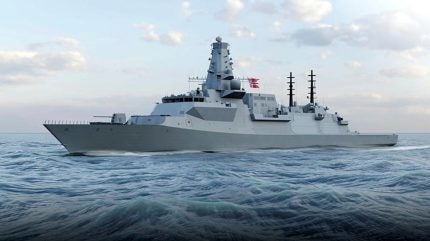
Norway has jumped the Type 26 production queue, at the expense of the Royal Navy. Credit: UK MoD/Crown copyright
UK has shifted some Type 26 build slots to Norway, risking fewer frigates for the Royal Navy (RN) unless more are ordered
Norway’s deliveries starting ~2029/30 could take several UK slots, potentially leaving the UK with only a small initial Type 26 fleet as Type 83 work ramps up
With Type 23s shrinking, the transfer could deepen the RN’s surface-ship shortfall past previous minimum targets
Recent UK Government confirmation that it has transferred Royal Navy Type 26 slots over to Norway will result in either the long-serving anti-submarine Type 23 frigate variants being asked to remain in service, or else enforce a further reduction in surface combatant numbers.
In a 22 April parliamentary written response, Minister for Defence Readiness Luke Pollard, said that “a number” of Type 26 build slots had been “ceded” as part of the Norwegian deal for the UK-designed frigates.
“The delta is yet to be made up through additional orders, and this will be a consideration of the Defence Investment Plan,” Pollard said.
The first of Norway’s Type 26 frigates is due in service by the 2029/30 timeframe, indicating that the current ship three of the programme, HMS Belfast, could be one of the slots transferred.
The two-year gap between ship three and ship four, HMS Birmingham, likely precludes the latter ship from being the first of Norway’s new frigates, although it is not certain which following slots are being transferred.
Norway intends to complete the acquisition of its five Type 26 frigates in the 2030s, indicating that most of hulls 4-8 could be transferred over en-mass from the Royal Navy, leaving the UK with three Type 26 frigates by the time it is expected to start the Type 83 air defence destroyer build to replace the in-service Type 45 class.
By the mid-2030s manufacture of the future Type 83 air defence destroyer is expected to get underway in order to enable the one-for-one replacement of the by then ageing Type 45 fleet.
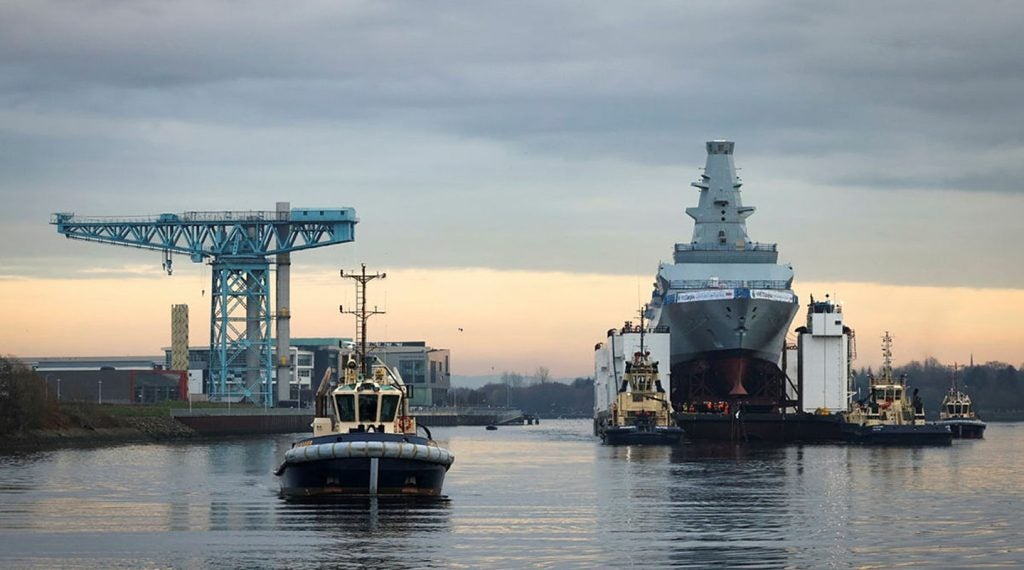
UK Royal Navy Type 26 frigate, HMS Glasgow, being moved grom Govan Shipyard to Scotsoun before entering water for the first time, 30 November 2022. Credit: Crown Copyright/UK Ministry of Defence.
In essence, the UK can build the Type 26 design for another decade, before it has to shift its limited warship manufacturing capacity to the Type 83 programme.
A spooling up of production capacity at BAE Systems’ Govan and Scoutstoun shipyards could provide the ability to concurrently manufacture the UK’s remaining five Type 26 frigates as well as the six Type 83 destroyers.
However, there is also the prospect that the UK could simply cut short the Type 26 programme, potentially down to six or fewer.
The reference by Pollard to a “consideration” that UK Type 26 numbers would be made up in the Defence Investment Plan (DIP) indicates that the planned acquisition of eight vessels is by no means a guarantee.
Indeed, Pollard has previously made mention of UK and Norway operating a combined fleet of Type 26 frigates, indicative of the UK Government potentially seeing no difference between vessels operating by the Royal Navy or its Norwegian counterpart, given their focus on the new Atlantic Bastion concept.
Much will depend on the outcome of the long-delayed DIP, which the UK Government originally planned to release in mid-2025 but has since stalled as internal power struggles and a defence funding crisis has prevented its publication.
Such is the extent of the UK Government’s defence funding shortfall that it is exploring the issuance of military war bonds, which sees the UK population and potentially foreign private enterprise, purchase government-backed bonds.
Any use of war bonds would bring with it unique difficulties, as they could be bought up by non-UK investors, tying defence spending to global capital markets.
Royal Navy frigates: in numbers
At present there are just seven old Type 23 frigates in service, having seen a rapid drawdown in hull numbers in recent years. All the vessels have been, or will be, upgraded under the PGMU programme intended to keep the class operational until they undertake a phased retirement plan, theoretically beginning from 2030 onwards.
However, one of the seven, HMS Richmond, which was slated to retire in 2030, is likely to be paid off in 2026 leaving the Royal Navy with just six Type 23 frigates.
In addition, HMS Iron Duke, the oldest remaining in service, is a general-purpose variant and as such, is due to be replaced not by the Type 26 frigate, but the Type 31 class being built by Babcock. It is probable that HMS Iron Duke will ‘replace’ HMS Richmond in taking the 2030 out-of-service date.
This means that there are in fact just five anti-submarine warfare variant Type 23 frigates, utilising the specialist Sonar 2087 system. This same system will be fielded by the Type 26 frigates.
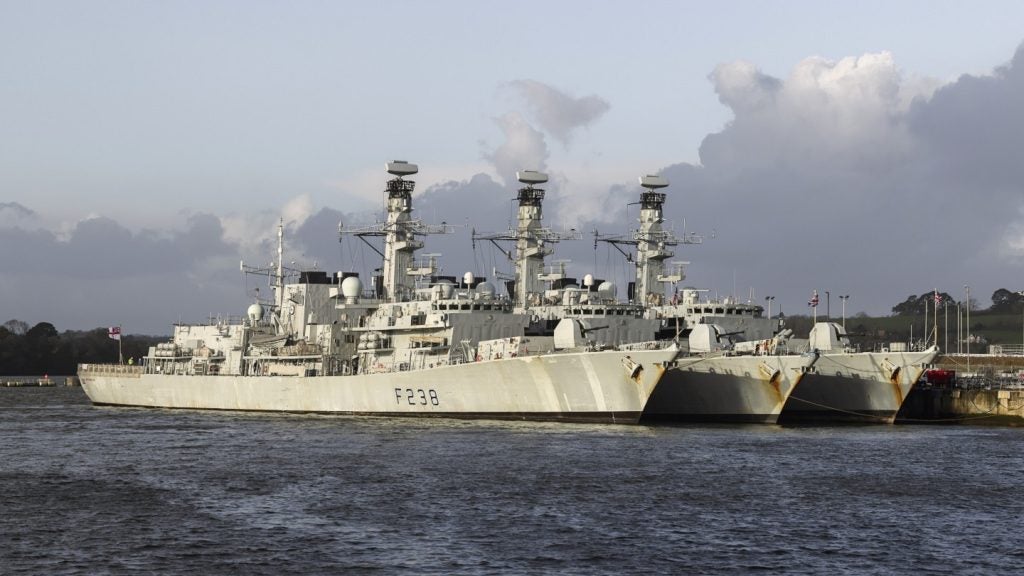
Two of the three Type 23 frigates in this 2023 image are no longer operational. Credit: UK MoD/Crown copyright
By 2030, it is probable that just two of the Type 26 frigates will have entered UK service (HMS Glasgow and HMS Cardiff), as the following hulls are directed to Norway.
In theory, should the Type 23 frigates begin the leave service – notwithstanding the departure of HMS Richmond – from 2030 (by which time HMS Iron Duke will have been in service for 37 years), Royal Navy frigate numbers will increase to between 8-10 hulls by the late 2020s, as the Type 31 class also come online.
This is still far below the previous bottom line of 19 major surface combatants (13 frigates and six destroyers) considered to be the minimum required to fulfil the UK’s naval requirements.
That said, simply removing requirements, such as the stationing of frigate ‘East-of-Suez’, would mean that fewer warships are needed to fulfil a reduced set of demands.