The TWZ Newsletter
Weekly insights and analysis on the latest developments in military technology, strategy, and foreign policy.
A loss of an E-3 would be a major blow for the dwindling fleet of increasingly rickety airframes and would point to other capability and defensive gaps. The post Images Purportedly Show E-3 Sentry Totally Destroyed From Iranian Strike appeared first on The War Zone.

The TWZ Newsletter
Weekly insights and analysis on the latest developments in military technology, strategy, and foreign policy.
Info is slowly dripping out as to the extent of the Iranian attack on Prince Sultan Air Base in Saudi Arabia that occurred on March 27th. Multiple U.S. military aircraft are reported to have been damaged. This is beyond the toll on U.S. service members, which sits at 10 injured, some of critically. While high-resolution commercial satellite imagery of the Middle East from U.S. companies remains delayed for weeks, foreign satellite images purport to show major damage on the base’s main apron. Now, photos from ground level appears to show one of the USAF’s prizedE-3 Airborne Warning and Control System (AWACS) aircraft totally destroyed.
The images were first posted on the Air Force amn/nco/snco Facebook page and has since spread across social media. The photos show E-3 serial #81-0005’s rear fuselage totally burned out and destroyed. There is debris all around the aircraft. It’s worth noting that a direct strike, while certainly possible here, is often not required to destroy an aircraft. The shrapnel from a nearby impact can and especially if a fire is ignited. The attack reportedly included long-range one-way attack drones and ballistic missiles.
It’s important to note that we cannot confirm the authenticity of the images at this time, but they appear, at least after a cursory examination, to look authentic. This assessment could change and we will update this post if it does.
Satellite imagery from prior to when major U.S. commercial providers, specifically Plant Labs, began delaying photos of the Middle East, shows aircraft parked across the main apron and other high-value assets, like the E-3s, parked on isolated taxiways around the airfield. This is clearly an attempt to minimize damage from Iranian long-range weapons by spreading out the aircraft. It’s very possible these aircraft were shuffled around in order to make targeting more challenging.
At least five other tankers were also damaged in a strike on Prince Sultan Air Base earlier in the conflict. The installation, which sits outside of Riyadh, has come under repeated attack. It is a major operating location for American aircraft supporting the war effort.
The loss of an E-3 Sentry is a major development. The aircraft are critical for spotting incoming barrages and coordinating the air war. The U.S. sent six to the Middle East prior to the war beginning and additional airborne early assets may be headed that way, if they are not already in theater now. The U.S. only had 16 E-3s remaining, with the rickety fleet nearly cut in half as it struggles to maintain readiness in its old age. With low availability, far fewer than the 16 that remain in service are ready to operate at any given time.
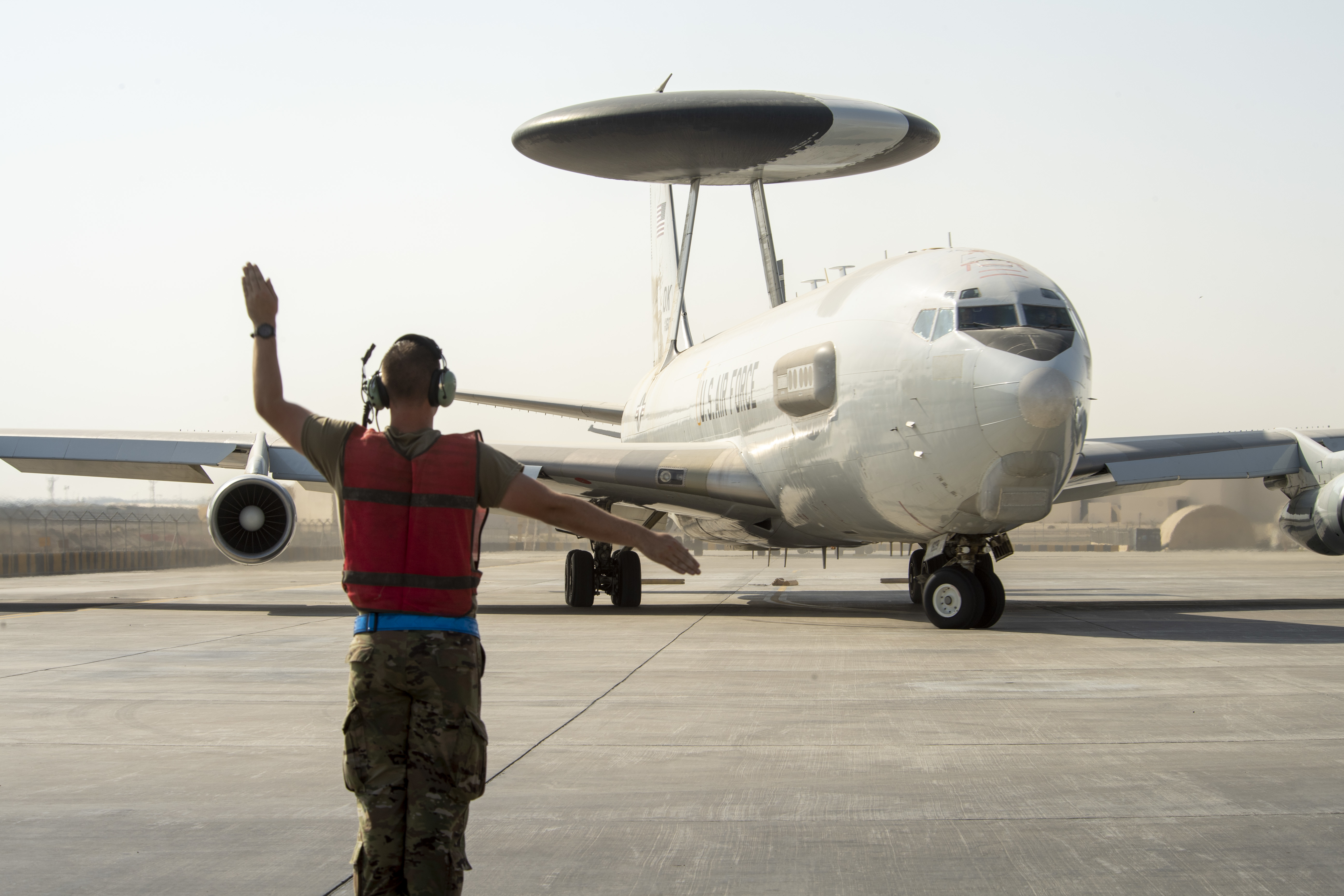
The USAF wanted to migrate much of the airborne early warning tracking duties to a new space sensing layer, but that technology is still years away from operational maturity. The E-7 Wedgetail was ordered to provide an interim bridge solution to augment the E-3s and eventually take their place until a space sensing layer can take on at least most of the mission. The USAF then tried to cut the E-7 in its last budget and procure a handful of E-2D Hawkeyes as a less expensive interim solution. This bizarre move, which would have led to massive capability gaps at a time of increasing airborne early warning and control demand, has since been heavily disputed by congress and now the USAF’s E-7 program appears that it could be headed back on track. Still, the loss of one of the E-3s in a dwindling fleet, and now a delay in the already late to the party E-7 program, puts the U.S. in an increasingly concerning predicament.
Iran has been somewhat successful at targeting key radar installations around the region that enable America and its allies’ air defenses. The fact that they would target an E-3 should come as absolutely no surprise. As for how they acquired the targeting data, satellite imagery is still available from China and Russia is likely providing them imagery as well. There are many other ways to obtain time critical info like where aircraft are parked on a base that is from far far lower tech sources, including classic human intelligence.
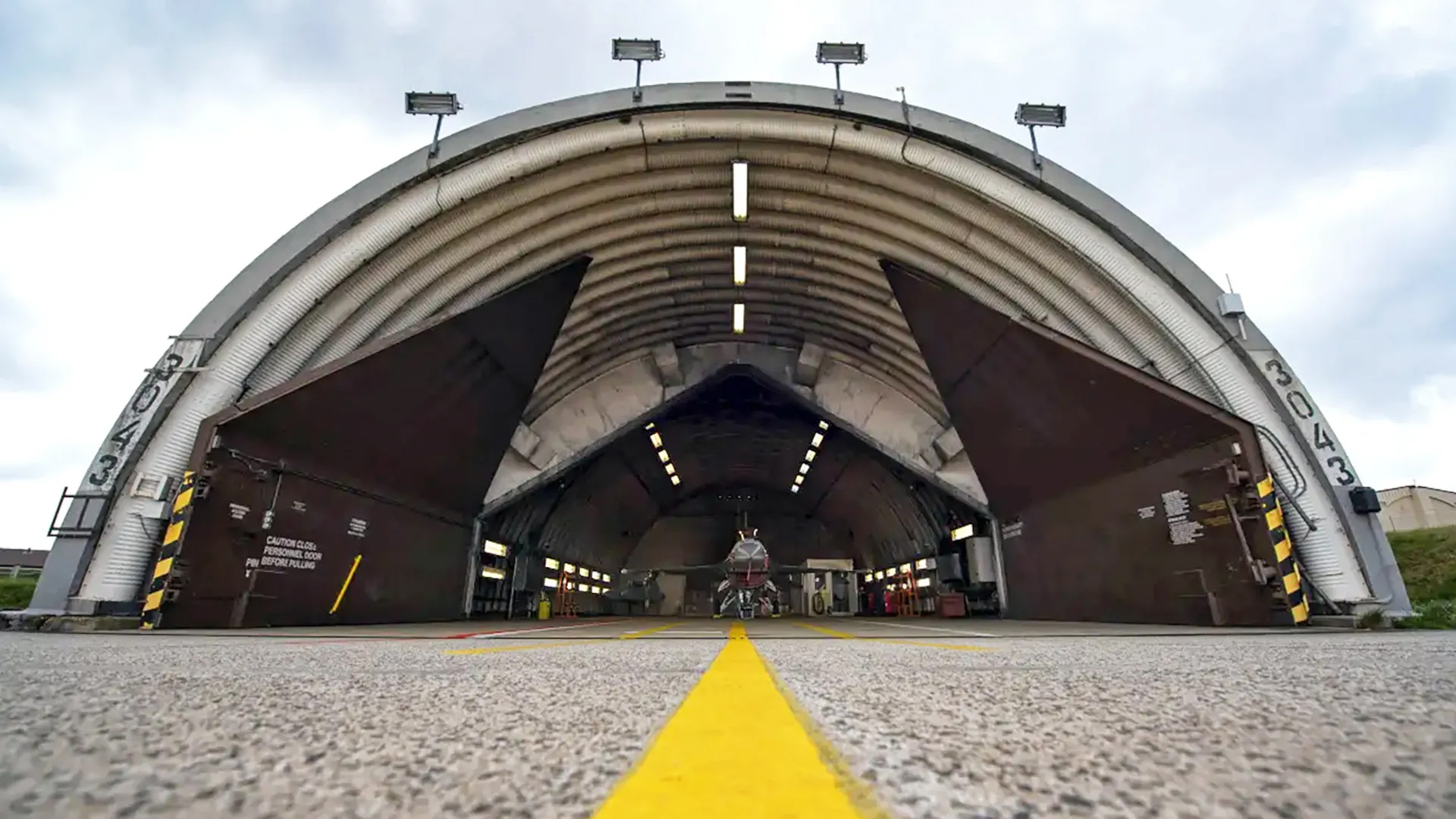
The potential loss of the E-3 and possibly other aircraft in this attack, as well as others that have occurred in the war, on top of very troubling events back here at home, highlight the dire need for hardened airbase infrastructure. The Pentagon continues to drag its feet and downplay the need to invest in hardened aircraft shelters, even as the risk to aircraft on the ground has been made glaringly apparent by recent conflicts. There are signs this could possibly change, even if to a small degree, but there doesn’t seem to be much urgency behind doing so.
It also comes at a time when America’s most capable adversaries are dumping large sums of money into protecting their aircraft on the ground. Even in the Pacific, where a major war could break out with a near-peer competitor that is armed to the teeth with long-range weaponry, these improvements have been nearly non-existent. Only now, after Al Udeid Air Base in Qatar, America’s largest in the region, has been repeatedly attacked during the war with Iran, has the Pentagon budged at exploring hardening some of its infrastructure there.
We will update this post when we find out more.
Contact the author: Tyler@twz.com
Russian forces attacked Ukrainian territory overnight into March 29 (from 6:00 p.m. on March 28) with one Kinzhal aeroballistic missile (launched from airspace over Ryazan Oblast) and 442 strike UAVs, according to the Ukrainian Air Force.

Overnight in the Odesa region, Russian forces attacked civilian infrastructure and an energy facility, resulting in power outages.
Russia has warned it will take “retaliatory measures” if South Korea supplies lethal weapons to Ukraine, Deputy Foreign Minister Andrei Rudenko said, according to Yonhap on March 28.

A drone strike triggered a fire at Russia’s Baltic port of Ust-Luga.