‘We Are Not Victims – We Are Fighters’: Oleksandra Matviichuk on War, Justice and Ukraine’s Fight for the Future
Nobel Prize winner Oleksandra Matviichuk, a human rights defender who works on issues in Ukraine, speaks to Lord Ashcroft about Ukraine’s future after the harrowing and tragic experiences of so many Ukrainians have irrevocably changed the society. At present she heads the human rights organization C
Kyiv Post
75
8 хв читання
0 переглядів
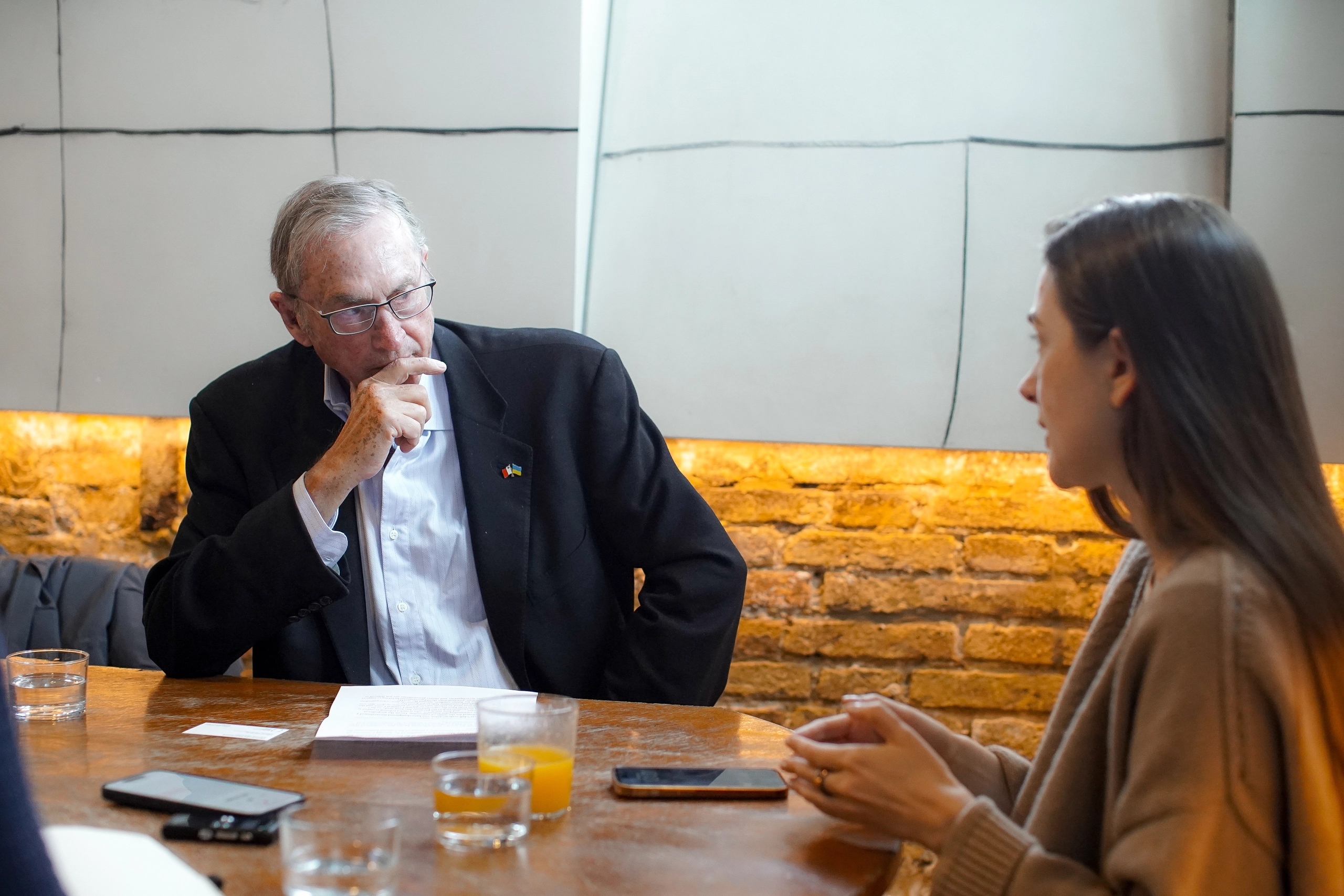
I meet Oleksandra Matviichuk in a modest café in central Kyiv, the kind of place where, in peacetime, conversations would drift lazily over coffee rather than be interrupted by the distant air raid sirens. She is finishing an avocado toast before setting off on yet another journey across Europe, where she continues her relentless advocacy for human rights and the preservation of the rules-based international order.
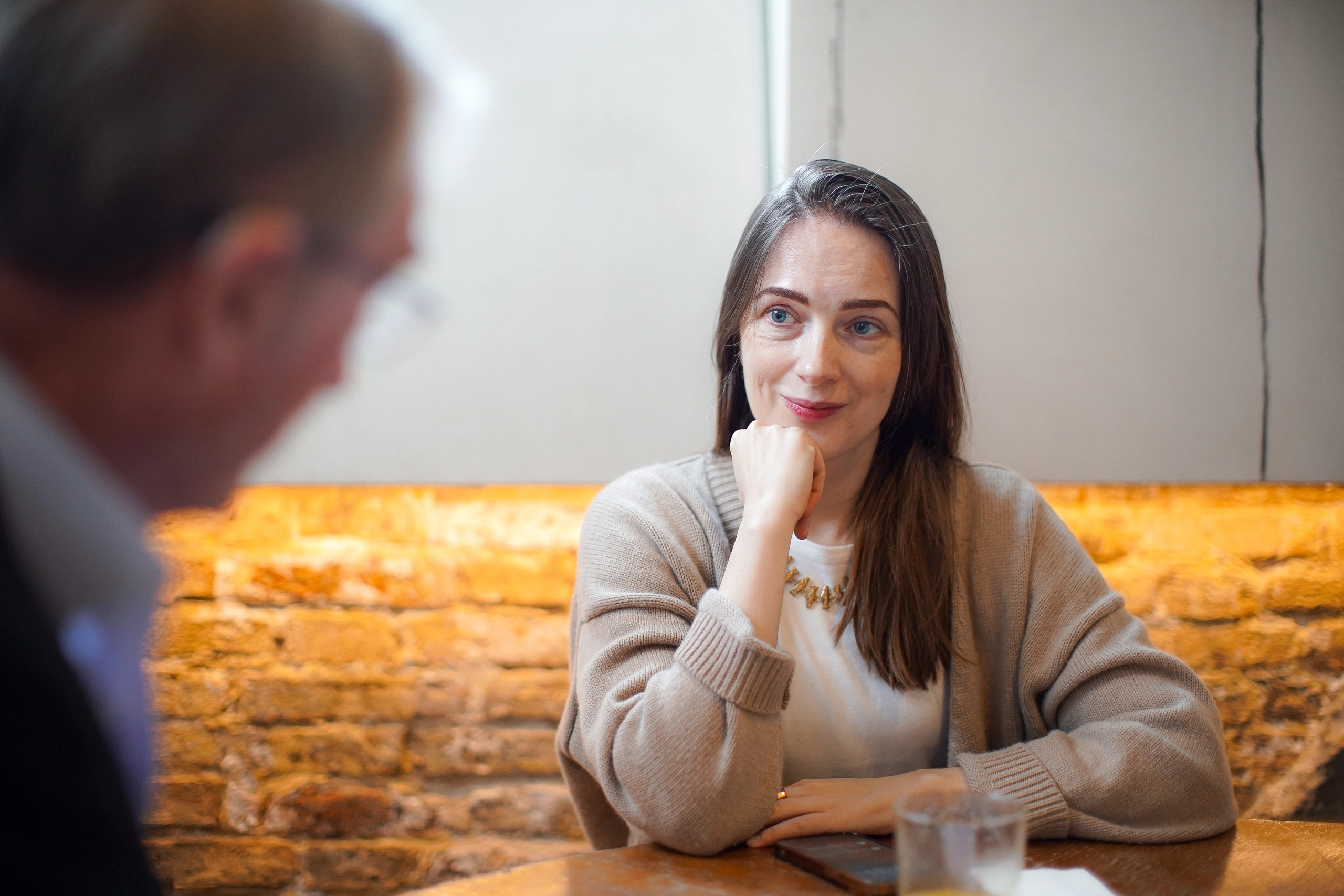
At first glance, there is something almost disarming about her presence. With long brown hair and sky-blue eyes, she carries herself with a quiet composure that hides the weight of what she has seen. One could never imagine that this delicate young woman has spent years listening to some of the most harrowing testimonies of our time – thousands of accounts of war crimes: torture, rape, executions.
As head of the Center for Civil Liberties, awarded the Nobel Peace Prize in the first year of Russia’s full-scale invasion, Matviichuk has become one of Ukraine’s most important chroniclers of both suffering and resilience.
Her journey, she tells me, began not with war, but with inspiration. As a child, she encountered former Soviet dissidents – individuals who had paid a heavy price for their refusal to submit. “I suddenly found myself among very noble people,” she recalls. “People who said what they thought and did what they said.” Many had been imprisoned, some killed, others broken by years of persecution. “But they did not give up,” she says simply.
Russia launched a mass overnight drone attack on Ukraine, triggering air alerts in Kyiv and several regions. Air defenses operated in the capital, where debris from a downed drone fell onto the roof of a 20-story residential building in Obolonskyi district. In Dnipro, officials reported damage to transport infrastructure, a fire and one injured person.
That was enough for her to choose law, determined to continue their fight for freedom and human dignity.
People describe being beaten, electrocuted, subjected to sexual violence… One woman told her how her eye had been gouged out with a spoon.
And yet, she did not imagine where that path would lead. As a student, she admits, she actively avoided criminal law. “I told myself I would never do this kind of work. I have too much empathy. I thought it would destroy me.”
Instead, that very empathy became her driving force. The turning point came during the Revolution of Dignity in 2014. What began as legal support for persecuted protesters quickly escalated into something far darker. On Feb. 20, Ukrainian security forces opened fire on demonstrators in Kyiv. “That day changed everything,” she says. Lawyers, she realized, could no longer protect the living. “When police are shooting people, legal instruments do not help.”
So they adapted. “If you cannot stop the violence, you must document it – for justice in the future.” Within days, her organization began dispatching teams beyond Kyiv – first to Crimea, then to the eastern regions of Donetsk and Luhansk. They were, by her own admission, entirely unprepared. But the need was urgent, and hesitation was not an option. What followed would become one of the most extensive efforts to document war crimes in modern history.
Over the years, Matviichuk has personally interviewed hundreds of survivors of Russian captivity. As she speaks about these encounters, her tone remains steady, but the content is anything but.
People describe being beaten, electrocuted, subjected to sexual violence. She mentions nails being torn out, bodies crammed into wooden boxes. One woman, she says quietly, told her how her eye had been gouged out with a spoon.
There is a brief pause. Even now, the enormity of such cruelty resists comprehension.
Yet for Matviichuk, these individual horrors point to something larger – a system, a decision, a chain of responsibility that leads upwards. It is why she has become one of the most vocal proponents of establishing a special tribunal to prosecute Russia’s leadership for the crime of aggression.
(Photos copyright Lord Ashcroft)
“There is no international court today that can hold them accountable for starting this war,” she explains. While the International Criminal Court has issued warrants and begun investigations into war crimes, it lacks jurisdiction over the act of aggression itself.
“And all these atrocities,” she adds, “are the result of that decision.” Without accountability at the highest level, she argues, justice remains incomplete. More dangerously, failure to act risks normalizing aggression. “If Putin remains unpunished, others will follow,” she warns. “We could find ourselves in a world that is dangerous for everyone.”
History offers a troubling precedent. The Nuremberg Trials established the principle that leaders could be held accountable for aggressive war – but only after victory had been secured. “In the past, justice was a privilege of the winners,” she says. “But in the 21st century, justice must not depend on how the war ends. It must be a basic human right.” That, she believes, is the real significance of the proposed tribunal. Not merely punishment, but precedent.
And yet, progress has been slow. Too slow, in her view. She does not conceal her frustration at the reluctance of some governments, including in the UK, to fully commit. The reason, she suggests, is not legal complexity but political hesitation. Supporting such a tribunal would make it difficult – perhaps impossible – to return to “business as usual” with Moscow.
“It requires courage,” she says.
These individual horrors point to something larger – a system, a decision, a chain of responsibility that leads upwards.
If there is one issue that captures the moral urgency of this war, it is the fate of Ukraine’s children. Thousands have been deported to Russia, their identities erased, their futures uncertain. Here, Matviichuk’s tone shifts – not to anger, but to something more resolute.
She recounts the story of a schoolboy in occupied territory, forced to sing the Russian national anthem each morning. When he refused, he was singled out and made to perform alone. Instead, he sang the Ukrainian anthem. “If children can resist like this,” she says with tears in her eyes, “we as adults have no excuse.”
Despite the scale of the challenge, she refuses to succumb to fatalism. “There are no guarantees in life,” she acknowledges. “But there is always a chance. And with that comes responsibility.”
The work of her organization reflects that belief. Since the start of the full-scale invasion, a nationwide network of volunteers has documented more than 98,000 instances of alleged war crimes – a figure she describes as “only the tip of the iceberg.” Each case is a fragment of a much larger truth. And yet, for all the suffering they represent, she is wary of allowing Ukraine to be defined by victimhood. “It is a dangerous position,” she says. “Victims wait for someone else to save them. But we cannot wait.” Instead, she speaks of resilience – not as a slogan, but as a necessity. Ukraine, she insists, is not a nation of victims. “We are fighters.”
What sustains that spirit is not optimism in the conventional sense. Indeed, she is clear-eyed about the challenges ahead – from geopolitical uncertainty to the erosion of international norms. “Pessimism is a luxury we cannot afford,” she says. “But optimism must not be based on illusions.”
(Photos copyright Lord Ashcroft)
Her critique of current international efforts is measured but pointed. Negotiations that focus solely on territory or resources, she argues, risk overlooking the human dimension of the conflict. “These are not empty spaces,” she says. “Millions of people live there.” To ignore them is not only morally wrong, but strategically short-sighted.
As our conversation draws to a close, I ask her what she hopes for when the war eventually ends. For a moment, the legal arguments and geopolitical analysis fall away. Her answer is unexpectedly simple.
“I want to have an ordinary morning,” she says. “To drink coffee slowly, to read a book, not to be in a hurry to save someone.” She pauses, then adds, almost wistfully: “I don’t remember the last time I had that.”
It is a modest wish, yet one that feels profoundly out of reach in a country still fighting for its survival.
As she leaves the café and steps back into the rhythm of a city at war, one is left with a striking impression: that in Oleksandra Matviichuk, Ukraine has found not only a witness to its suffering, but a voice articulating the stakes of a much larger struggle. For this is not merely a war over territory. It is, as she sees it, a defining contest between law and power, between dignity and domination. And in that contest, neutrality is not an option.
Lord Ashcroft KCMG PC is an international businessman, philanthropist, author and pollster. For more information on his work, visit lordashcroft.com. Follow him on X/Facebook @LordAshcroft.