There are moments in history when reality itself seems to fracture – when the familiar dissolves, and humanity is forced to confront the limits of fear, power, and hope. The story of the Exodus is on. It is often remembered as a sequence of divine miracles: plagues, liberation, and the splitting of the Red Sea.
But perhaps the deeper question is not what happened then, but what a miracle truly is.
The Israeli poet Yehuda Amichai offers a striking insight:
From a distance, everything looks like a miracle,
but up close, even a miracle does not appear so.
Even someone who crossed the Red Sea when it split
saw only the sweaty back of the one walking ahead of him
and the movement of his large legs.
Amichai reminds us that miracles, when lived from within, do not feel extraordinary. They feel like persistence. Like endurance. Like movement forward under pressure.
This insight invites us to reread the Exodus not only as a divine intervention, but as a deeply human story – one shaped by moral courage, resistance, and agency.
Beyond all this, we need spirit.
And it is here that we must return to the opening of the Book of Exodus. It is a book of transition: from family to nation, from slavery to freedom, from silence to voice. But it does not begin with solutions. It begins with a philosophical question: How is moral consciousness born within a reality of power, violence, and despair?
Philosophy of education is always born in such threshold moments. It asks how human beings – and especially educators – act within systems of power. How they exercise agency, responsibility, and moral courage.
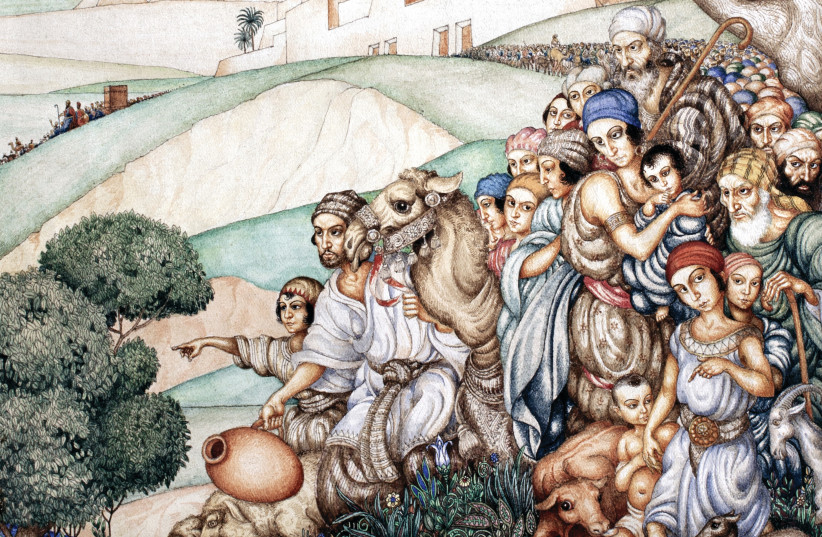
In this context, the women of Egypt emerge not as marginal figures, but as central agents of transformation. They do not hold formal authority. Yet they reshape history through thought, speech, and action.
This invites a feminist philosophical reading.
Three typologies of response
In my research on religious feminist agency, I have identified three typologies of response within patriarchal systems. The first is patriarchal feminism, characterized by outward compliance with authority. The second is bargaining feminism, in which women negotiate within the system, subtly reshaping it from within. The third, which I have conceptualized as a distinct theoretical contribution, is challenging feminism.
Challenging feminism does not break the system, nor does it passively accept it. It stretches it. It confronts power directly, speaks truth, and acts against unjust norms – while remaining within the social and moral framework.
This typology offers a powerful lens through which to understand the women of the Exodus.
The Hebrew midwives Shifra and Puah stand before Pharaoh – the ultimate embodiment of patriarchal authority – and refuse his command. Their resistance is not merely private; it is active, deliberate, and courageous. Miriam challenges her father’s despair, reframing reality through moral argument. The women of Israel sustain life itself under conditions designed to extinguish it.
These are not passive figures.
They are agents of what we may now call challenging feminism.
They do not wait for the sea to split.
They walk toward it.
And perhaps this is the true meaning of miracle: not only the moment when the waters part, but the human decision to keep moving forward.
In this sense, the Exodus is not only a story of divine salvation, but of human courage. A story in which women play a decisive and formative role.
Today, in Israel, we are living through our own threshold moment. A reality marked by uncertainty, danger, and moral urgency. And within this reality, a new understanding of miracle is emerging.
To continue daily life under threat is a miracle.
To prepare for Shabbat and for Passover amid instability is a miracle.
To sustain families, educate children, and maintain a sense of continuity – this, too, is a miracle.
Not because it suspends the laws of nature but because it transcends the logic of fear. And once again, women stand at the heart of this reality. Not as symbols, but as actors.
In homes, in classrooms, in hospitals, in fields of decision-making and responsibility, women are not waiting for history to unfold – they are shaping it. This is not merely resilience. It is agency.
It is the courage to act within constraint, to create meaning within chaos, and to stretch the boundaries of what is possible.
The feminist insight here is profound: Change does not always come from breaking systems; it also comes from challenging them from within – expanding their limits through moral clarity and action.
This was true in Egypt.
It is true today.
The miracle, then, is not only in the past. It is not only in the splitting of the sea. It is in the quiet, persistent, determined act of continuing forward. Step by step. Even when the waters have not yet fully parted.
The writer is the head of the Sal Van Gelder Center for Holocaust Instruction and Research at Bar-Ilan University.