ECB plans to redesign euro banknotes, replacing abstract bridges with cultural icons or nature themes – sparking debate over identity, symbolism, and what truly represents Europe.
Kyiv Post
75
6 min read
0 views
The EU is redesigning its single currency’s banknotes, and, in the process, stumbling into that most vexed of questions: what, exactly, is Europe?
After five years of work, the European Central Bank (ECB) is entering the final stretch of a makeover that will replace the current bridges and architectural styles that have defined the notes since its birth in 2002.
The current design was never meant to represent real places. Each note nods to a different architectural era, while the bridges were deliberately fictional to make it fair. Europe was represented as an idea, a connection without borders.
Now, the ECB wants something more tangible. And cash redesign may sound like an odd priority given that payments by tap or swipe keep increasing.
But the EU, true to form, has never been one to waste a good symbol. And if there is one thing Brussels can still produce something resembling confidence in, it is meaning.
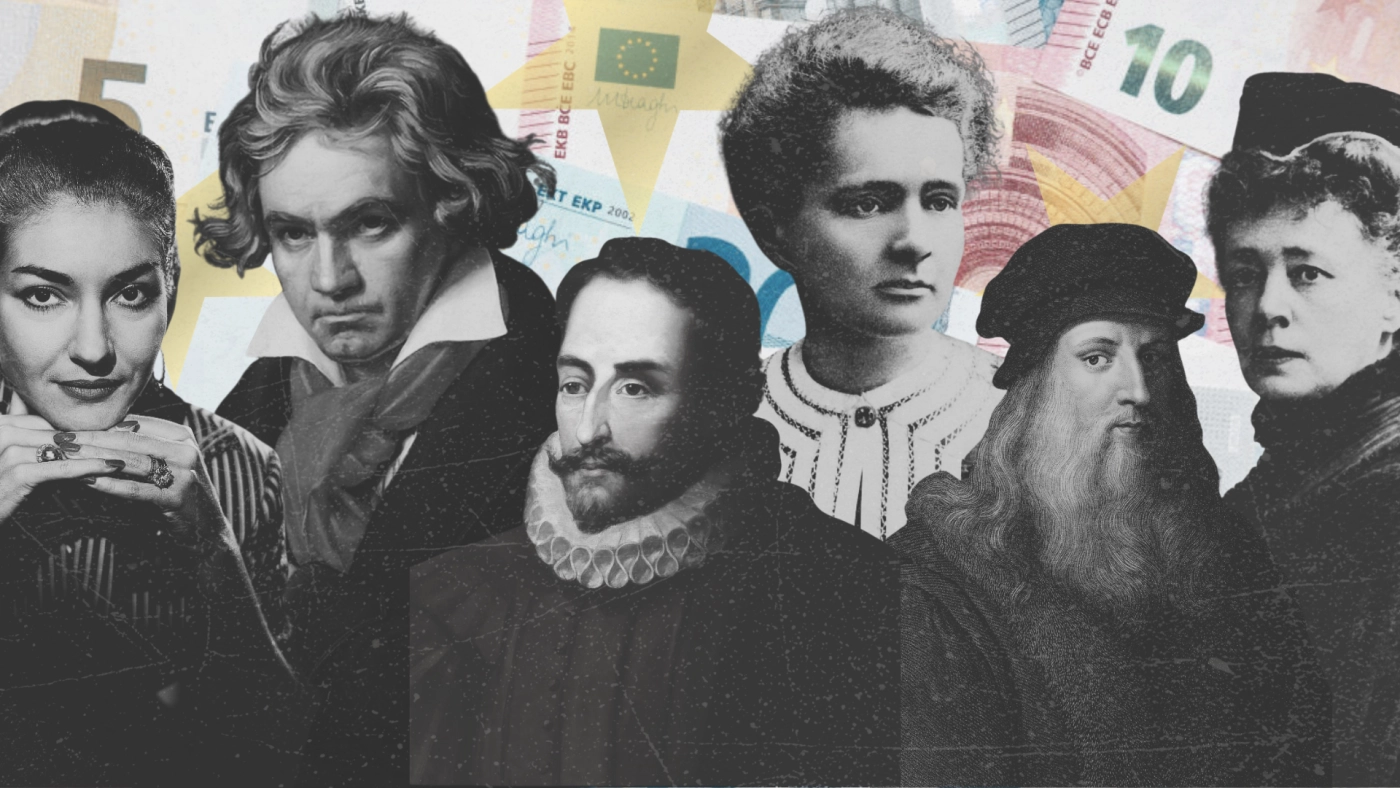
In April, a jury of designers and experts will select 10 design proposals and give their opinion on two competing visions for what will be printed next. One leans into culture and is unapologetically human in its chosen representation. The six notes could feature European figures alongside everyday scenes in public squares, libraries, and music.
The proposed front of the €10 features the German composer Ludwig van Beethoven, whose music became the EU anthem. On the €20, there is Polish-French physicist and Nobel Prize winner, Marie Curie, born Skłodowska.
The Hungarian election taking place this Sunday is of major significance for the EU as a whole.
Credit: Getty Images. Visual by Euractiv. The image does not represent the future design. In order: Maria Callas (€5), Ludwig van Beethoven (€10), Marie Curie (born Skłodowska) (€20), Miguel de Cervantes Saavedra (€50), Leonardo da Vinci (€100), Bertha von Suttner (€200).
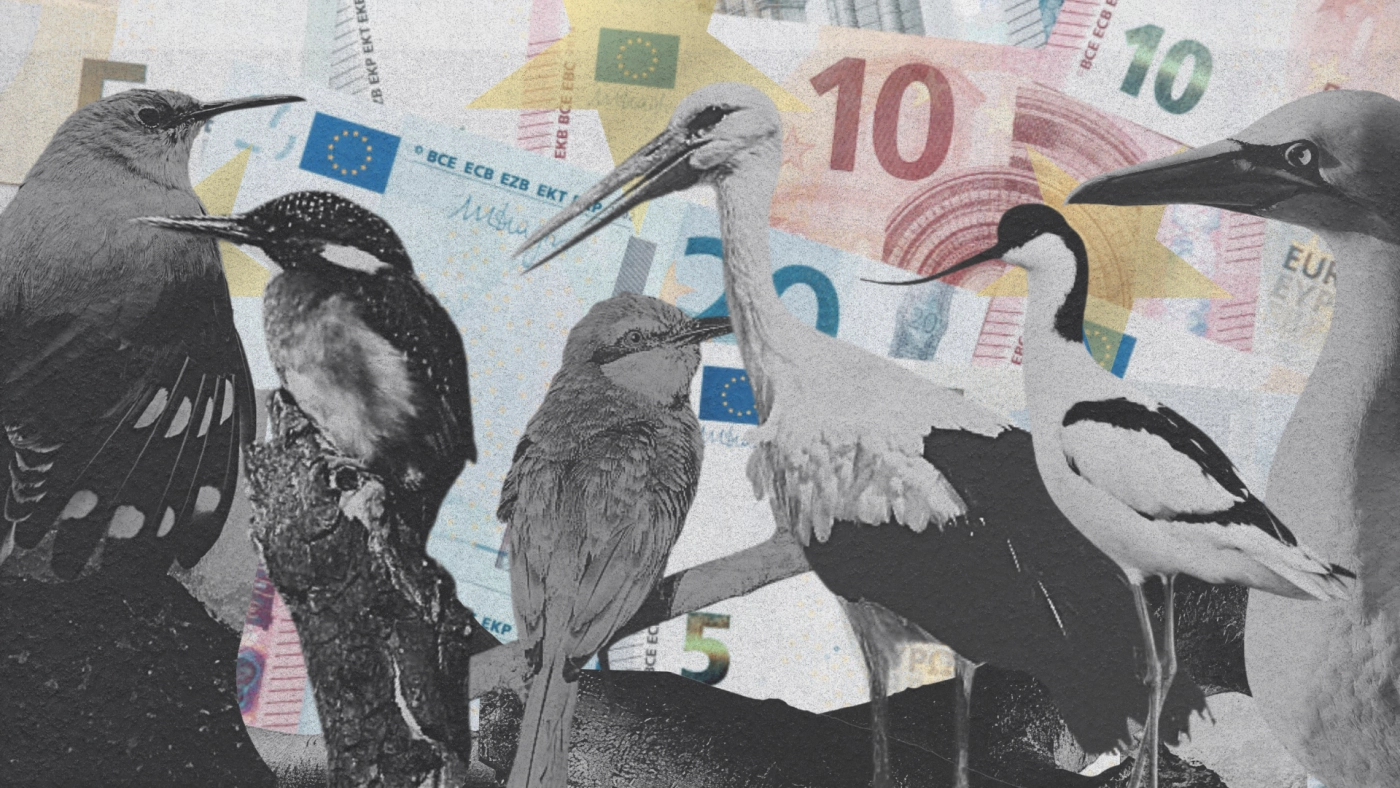
The other alternative, rivers and birds, turns to nature and institutions. Each note pairs a European landscape with a bird – a wallcreeper in the mountains, or a kingfisher by a waterfall – alongside one of the EU’s institutions.
Most of the birds and rivers will be unfamiliar to the average European reader, though arguably no more so than the institutions they are paired with. The €20 features the ECB itself, the €50 the EU’s Court of Justice, or the €100 the European Court of Auditors.
Credit: Getty Images. Visual by Euractiv. The image does not represent the future design. In order: Wallcreeper (€5), Kingfisher (€10), Bee-eater (€20), White stork (€50), Avocet (€100), Northern gannet (€200).
When the redesign was first announced in 2021, users on social media were quick to mock the ECB for focusing on aesthetics while households grapple with rising living costs and stagnant wages. Prettier banknotes, the argument went, will not make groceries cheaper.
But the ECB’s defence of the redesign reaches into an unlikely field: neuroscience, or how the brain affects your perceptions and beliefs.
Juan Lupiáñez Castillo, a jury member and professor of experimental psychology and cognitive neuroscience at the University of Granada, tells Euractiv that color, size, and texture tell you instantly what you are holding.
The snap recognition, he says, is what builds “trust.” Cash can regrettably end up in washing machines, but it is also handled, slipped into pockets, and exchanged across borders.
“Money is like a flag,” Lupiáñez says. And like any flag, the more you see it, the more it stands for something bigger, like value or a shared system.
The idea that a piece of paper can anchor trust in an entire Union may begin to sound like a self-help podcast insisting you can simply will your reality into existence. And yet, it works. By fine-tuning the technical details, designers are making cash “accessible” and inclusive,” Lupiáñez says, “especially for people with visual or cognitive impairments.” Or, arguably, for anyone who has ever hesitated a second too long at a checkout.
The euro already features these inclusive cues: a €5 note is smaller than a €200 note, colours shift, and textures change. But the redesign pushes them further, Lupiáñez adds.
Bridging gaps
The argument of tangibility also makes belonging feel physical. In 2011, a local project in Spijkenisse, a Dutch city just outside Rotterdam, set out to make the euro feel real, literally.
Artist Robin Stam took the fictional bridges currently printed on the banknotes and brought them to life, scattering scaled-down versions across the city’s canal network, each one painted in the colour of its note.
The thinking behind it was refreshingly down to earth. The project did not mean to recreate a past that never existed. The goal was to “add character where there was not much, to make neighbourhoods feel a bit warmer, a bit more alive”, deputy mayor Alderman Chris Hottentot told Euractiv.
The municipality also backed the project because it made the city better for the people who live there, and, as he put it, added a bit of “fun”.
Scale that logic up, and the redesign ambition becomes clearer, while still plunging the ECB straight back into the central dilemma.
Give the Eurozone and its 21 members a human face and you invite an argument. Which nationality and which histories get printed, and which are left out? After all, there are only six notes. The ECB argues that all the selected icons are truly European and part of a shared history, as their work has impacted the continent in one way or another.
Go for nature and institutions instead, and the politics recede. Birds and rivers do not lobby or complain. They cross borders effortlessly. They are, in many ways, the perfect Europeans going around and about the Schengen zone. But they may also feel distant and forgettable.
For now, the next step is a jury decision before summer, followed by a public consultation on citizens’ preferences, before the ECB’s governing body takes the final call at the end of 2026. One thing is sure: the redesign aims to reflect Europe, but also reveals how hard that still is.