The TWZ Newsletter
Weekly insights and analysis on the latest developments in military technology, strategy, and foreign policy.
The Pentagon had tried to cancel the E-7 and augment the E-2 fleet instead, then Operation Epic Fury happened. The post In An Ironic Turn Of Events, White House Wants To Raid Navy E-2 Account To Pay For USAF E-7s appeared first on TWZ.

The TWZ Newsletter
Weekly insights and analysis on the latest developments in military technology, strategy, and foreign policy.
The Pentagon and the U.S. Air Force have fully abandoned an attempt to axe the acquisition of E-7 Wedgetail airborne early warning and control aircraft, and to use E-2D Hawkeyes to help fill the resulting gap. In something of a twist, the Pentagon has proposed cutting U.S. Navy E-2D purchases, as well as raiding a classified Air Force account, to keep the E-7 program going. The House Appropriations Committee has now pushed back on the E-2D part of that plan. The back-and-forth underscores the critical importance of airborne early warning and control aircraft and the strain on existing U.S. fleets.
Defense News drew specific attention to the new jostling over funding for the E-7 in a report earlier today. Breaking Defense had been among the first to report the basic points yesterday. The House Appropriations Committee had released the details in a report accompanying a draft defense spending bill for the 2027 Fiscal Year, which we will come back to in a moment.

To recap quickly, roughly a year ago, the Pentagon and the Air Force disclosed their intention to axe the E-7 program, which had suffered delays and cost overruns, and acquire additional E-2Ds as an interim gap-filler. Questions about the future survivability of the Wedgetail were also raised. The Air Force’s long-term goal was then and still is now to eventually push most air moving-target indicator (AMTI) tasks into space, though that is still years away from truly becoming a reality. Congress subsequently intervened to save the Wedgetail, appropriating billions for the effort in Fiscal Year 2026. The E-7 was again missing from the Air Force’s proposed 2027 Fiscal Year budget, which raised the prospect of a new battle with Congress.
Top Pentagon and Air Force officials subsequently said that the viewpoint on the Wedgetail had fundamentally changed, and submitted an amendment to the budget request to include funding for the program. Per a memo earlier this month from Russell Vought, Director of the Office of Management and Budget (OMB) at the White House, this was done in two ways. $898,549,000 was taken from “Other Procurement, Air Force” section of that service’s budget proposal, while another $650,549,000 came out of “Aircraft Procurement, Navy.”
The combined $1,549,098,000 was moved into the “Research, Development, Test and Evaluation, Air Force” account. According to Vought’s memo, the funding would go toward “priority requirement to deliver two E-7 Wedgetail prototype aircraft and continue Engineering Manufacturing and Development activities for a program of record.”
The Air Force already has seven E-7s on order now, including the two jets to support rapid prototyping efforts. It is unclear when the service expects to begin flying Wedgetails operationally. Before the attempt to cancel the program, the target date for initial operational capability had already slipped from 2027 to 2032. It should be noted here that variants of the E-7 are already in service in Australia, South Korea, and Turkey, and that the United Kingdom is set to field a fleet of Wedgetails, too.
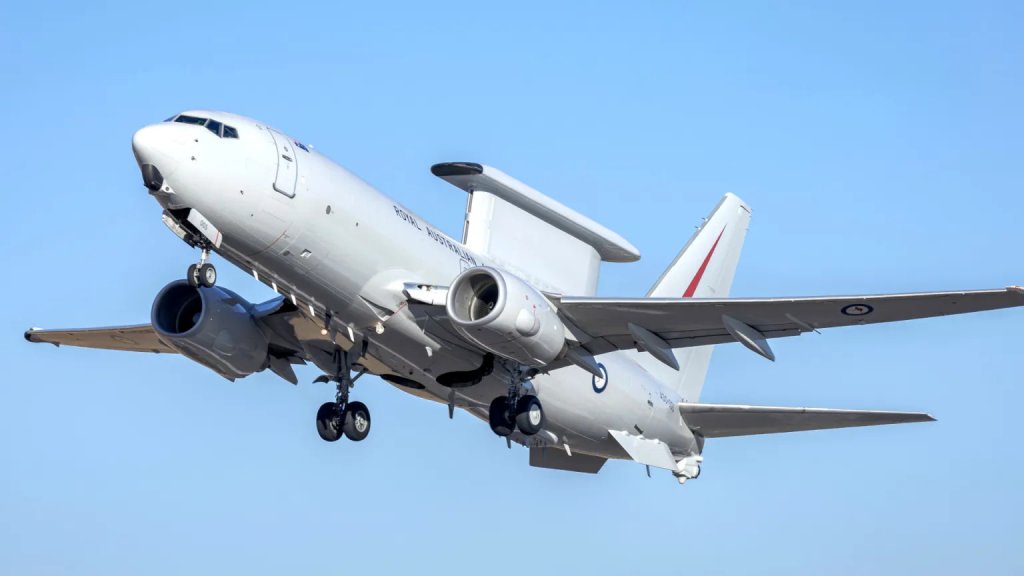
The report the House Appropriations Committee released yesterday included important additional context about the latest funding plans.
“While the President’s budget request for fiscal year 2027 did not include funding for the E–7 Wedgetail program, the Secretary of the Air Force and Secretary of Defense testified before the House Defense Appropriations Subcommittee that they support this critical platform and have submitted a budget amendment to the Office of Management and Budget to restore funding for the platform,” it explained. “The shift in mindset at the Department of Defense translated to requested transfers from the Special Update Program in Other Procurement, Air Force, and the E–2D program in Aircraft Procurement, Navy for a total investment of $1,549,098,000 for E–7 in Research, Development, Test and Evaluation, Air Force in fiscal year 2027.”
“While the Committee wholly supports the E–7 program and funding realignment, the Committee also restored the E–2D program to six aircraft for fiscal year 2027,” the report added. “The Committee understands the operational necessity of the E–2D platform; the complementary nature of the E–2D and E–7; and believes that more aircraft, not fewer, are necessary to support our warfighters now and in the future.”
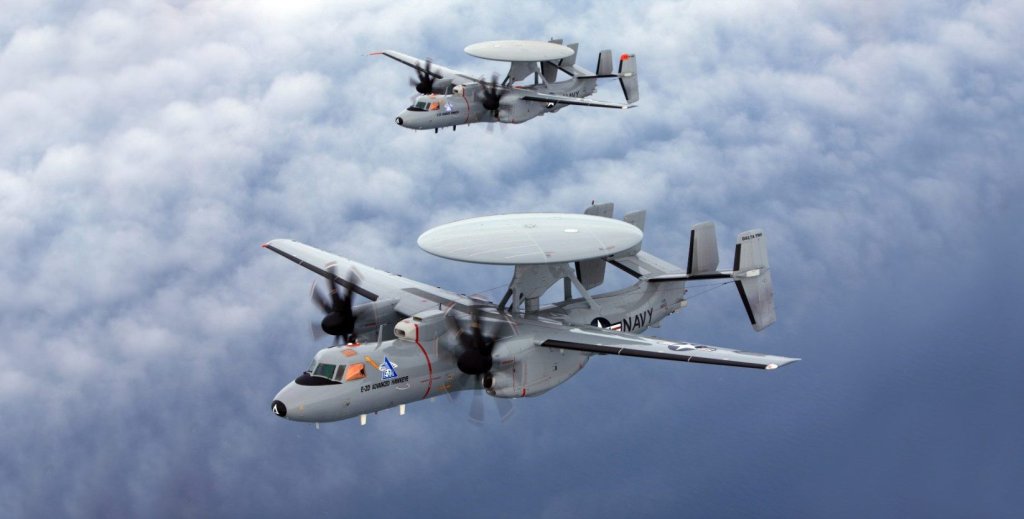
It is not immediately clear whether the draft spending plan that the House Appropriations Committee has now put forward still includes the full $1,549,098,000 for the E-7 program, as well as the restoration of funding for the E-2D purchases. The memo from OMB had stressed that its intent in shifting funding around was not to add to the roughly $1.5 trillion topline for its proposed 2027 Fiscal Year defense budget. Congress can, of course, appropriate additional funds as it sees fit, and often does.
Regardless, this new debate over how and where to find funding for the E-7 highlights larger issues surrounding airborne early warning capacity within the U.S. Air Force and the U.S. Navy.
“The conflict in Iran has reinforced the need for the Air Force to maintain a credible airborne battle management capability, currently being met with the Air Force’s E–3 Airborne Warning and Control System and the Navy’s E–2D Hawkeye programs,” the House Appropriations Committee’s report also notes. “As the E–3 is set to retire, the E–7 Wedgetail will serve as [a] modern replacement for lost battle management capability, commensurate and interoperable with assets already being utilized by key allies.”
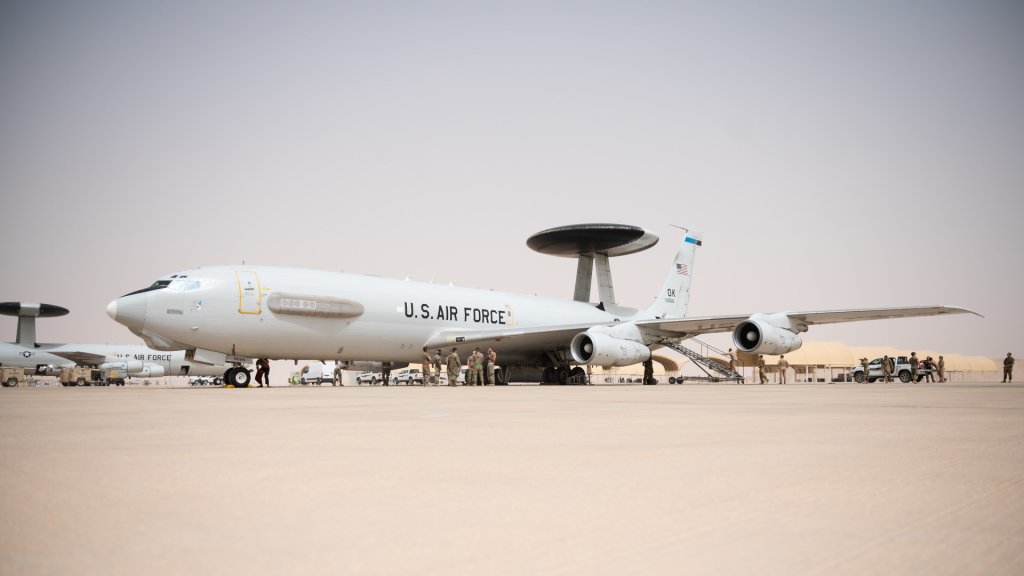
This is all true, as TWZ has previously stressed in detail, long before the latest conflict with Iran erupted in February. Airborne early warning and control is absolutely vital to the prosecution of modern air operations, and even more so now in an age of exploding drone and cruise missile threats. The substantial deployment of E-3s to Saudi Arabia was one of the clearest indicators that a major campaign against Iran was increasingly imminent. The same had been true about the lead-up to the operation to capture ex-Venezuelan dictator Nicolas Maduro.
Not mentioned in the report, however, is the Air Force’s slashing of the E-3 fleet in recent years, the service’s repeated deferral of any plans to acquire a replacement for those aircraft, and the loss of Sentry on the ground in an Iranian attack in March. The strain on the Air Force’s E-3s has been readily apparent for years now.
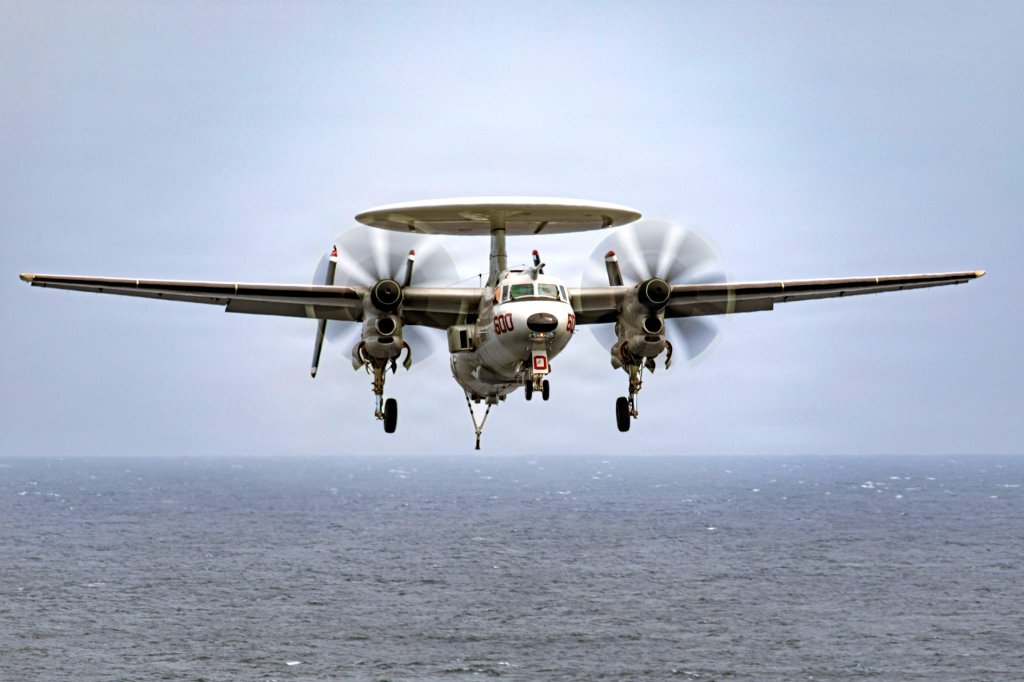
The House Appropriations Committee report also leaves out any broader context about the planned E-2D purchases for Fiscal Year 2027. When it released its proposed budget for Fiscal Year 2025 back in 2024, the Navy had no plans to order more Hawkeyes, at least over the next five years. In its 2026 Fiscal Year budget request, the service asked for funding for four E-2Ds, presumably as part of the plan to cancel the E-7. Congress subsequently appropriated funding for three Hawkeyes in that fiscal cycle.
When it rolled out its latest budget request earlier this year, the Navy outlined all-new plans to buy 12 E-2Ds – six in Fiscal Year 2027, two in Fiscal Year 2028, and four in Fiscal Year 2029 – explicitly “to replenish accelerated service life burn down of existing force structure due to Overland Airborne Early Warning (AEW) tasking.” This underscores operational strain on the Hawkeye fleet, which can only have been further added to by operations in relation to Iran over the past few months. This also points to E-2Ds supplementing E-3s in providing overland coverage.
Just yesterday, the White House sent Congress a separate supplemental funding request for nearly $90 billion, primarily to help cover various costs associated with the war against Iran.
How exactly the E-7 program gets funded in Fiscal Year 2027, as well as what happens to the plans to order more E-2Ds, remains to be seen. The House Appropriations Committee’s draft defense spending plan could still evolve in various ways in the coming weeks and months, and will need to be reconciled with companion legislation making its way through the Senate. Once Congress passes the bill, President Donald Trump will still need to sign off on it, too.
It’s also worth noting that other potential options for providing additional airborne early warning and control capacity in the interim are emerging.
What is clear is that both the E-3 Sentry and E-2D Hawkeye fleets remain as critical as ever, but have been even more stressed by recent operations against Iran, with new E-7s still years away from entering service.
Contact the author: joe@twz.com

National Bank of Ukraine Governor Andriy Pyshnyy urged international investors not to delay decisions on entering or expanding in Ukraine’s market, citing the country’s macrofinancial stability and the resilience of its financial system.

At the Ukraine Recovery Conference (URC2026) in Gdańsk, First Deputy Prime Minister and Minister of Energy of Ukraine Denys Shmyhal and Lithuanian Minister of Energy Žygimantas Vaičiūnas signed a Joint Declaration to strengthen cooperation in energy resilience and recovery.
Russia is preparing to stage a military provocation in the Baltic states or Poland amid increased pressure caused by Ukraine’s long-range strikes on Russian territory, The Guardian, citing Western sources, reported on June 26.

Kyrylo Budanov, head of the Office of the President, said that a prisoner exchange could take place in the near future.