
After Donald Trump announced an extension of the US ceasefire with Iran on April 21, Tehran refused to take an official position on the state of the ceasefire, denied it had agreed to any extension, and signaled it would not reenter talks while the US naval blockade of Iranian ports remains in place.
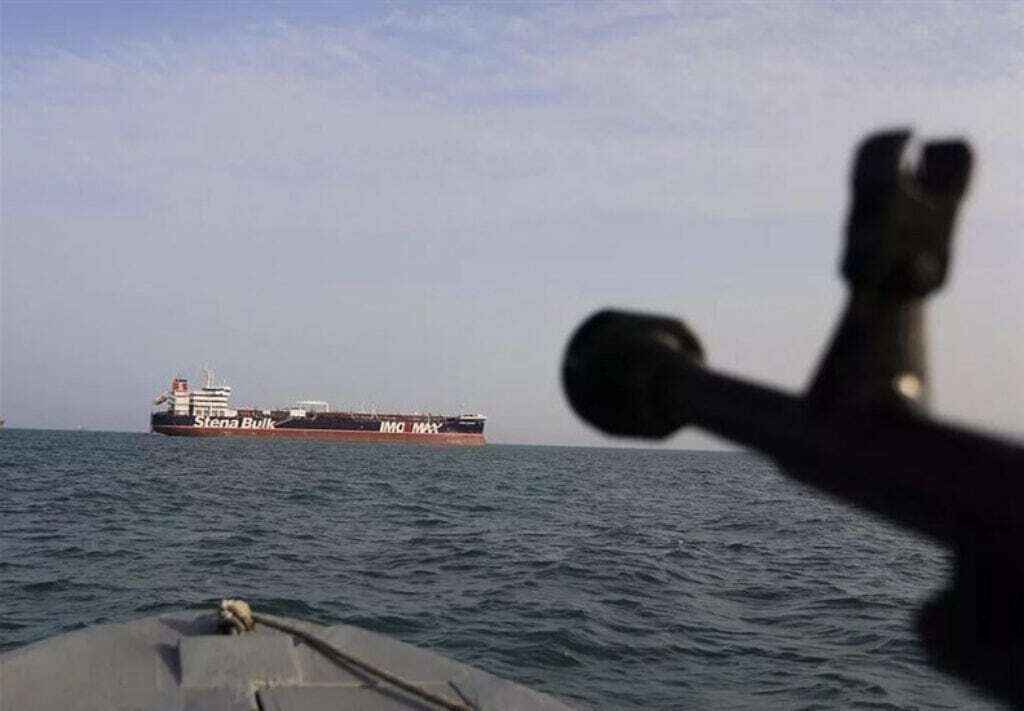
Trump’s announcement came as negotiations between the two countries stalled, with no Iranian delegation traveling to Islamabad for the next round set to take place this week, and reports indicating disputes within Iran’s leadership over how to proceed. At the same time, messaging linked to Iran’s Islamic Revolutionary Guard Corps (IRGC) expanded threats against regional oil, shipping, and digital infrastructure. The regime soon followed these threats with action, attacking at least three ships and seizing two vessels in the Strait of Hormuz.
The IRGC-controlled Tasnim News Agency wrote on April 22 that Tehran has not yet taken an “official position” on President Trump’s announcement of reextending the ceasefire. Tasnim also denied claims that Iran’s foreign ministry has “confirmed” the ceasefire, adding that the regime is “currently reviewing the various aspects of Donald Trump’s claim regarding a ceasefire extension.”
In an April 21 social media post, Trump wrote that until the “fractured” Islamic Republic “can come up with a unified proposal,” he will extend the ceasefire.
IRGC-linked media reacted immediately to Donald Trump’s April 21 announcement, with Tasnim stating, “Iran did not request an extension of the ceasefire, and Trump’s announcement, made without specifying any timeframe, could carry several meanings.” It framed the move as either a US admission that the war had failed to deliver results, a potential deception to enable US follow-on strikes, or an attempt to exit the conflict while leaving Israel engaged. “The continuation of the naval blockade amounts to continued hostilities. Iran will not reopen the Strait of Hormuz as long as the blockade persists and, if necessary, will break the blockade by force,” the Tasnim report added.
Tehran has demonstrated reluctance to meet with a US delegation again in Islamabad, Pakistan, after the first round of talks held on April 11-12. Islamic Republic of Iran Broadcasting (IRIB), the regime’s media corporation, reported on April 21, the day a second round of talks with the US was expected to take place, that “no delegation from Iran has traveled to Islamabad, Pakistan so far, whether a primary or secondary delegation, main or auxiliary.” During an April 19 interview with the Associated Press, Iranian Deputy Foreign Minister Saeed Khatibzadeh said the regime is not yet willing to enter a second round of negotiations and pointed to the lingering issue of Iran’s highly enriched uranium. “I can tell you that no enriched material is going to be shipped to the United States,” Khatibzadeh said.
The Islamic Republic is also framing the US naval blockade as a barrier to negotiations. Tasnim wrote on April 19 that the regime will not negotiate while the blockade remains in place. A day later, Esmail Baghaei, the spokesperson for Iran’s Ministry of Foreign Affairs, said Tehran has not decided whether to enter another round of talks and described the blockade as a “clear act of aggression.”
Tehran’s ‘fractured’ leadership
Trump’s ceasefire extension announcement pointed to widening rifts inside the Islamic Republic over whether and how to continue talks with Washington, a divide echoed in subsequent reporting.
The London-based satellite news channel Iran International reported on April 20 that Parliament Speaker Mohammad Bagher Ghalibaf, a former IRGC commander who has been leading the talks with Washington, warned advisers that opposition to a potential deal is being driven by hardline figures. Ghalibaf reportedly singled out Saeed Jalili, a member of Iran’s Supreme National Security Council (SNSC) and former chief nuclear negotiator, and Amirhossein Sabeti, a member of Iran’s parliament, accusing their camp of leveraging state media and mobilizing supporters to derail negotiations. Ghalibaf also allegedly raised concerns about efforts to remove him as speaker and sideline Abbas Araghchi, Iran’s foreign minister.
Axios later reported that tensions within Iran’s leadership came to light only after the Islamabad talks began, when proposals discussed by Tehran’s negotiators ran into resistance from Ahmad Vahidi, the new IRGC commander. Within days, the dispute spilled into the open: Foreign Minister Araghchi publicly announced plans to reopen the Strait of Hormuz, but the IRGC refused to comply and instead turned its criticism toward him.
Although differences among Tehran’s policymakers have long existed, final decisions have historically always rested with Ali Khamenei, the Islamic Republic’s former supreme leader, who was killed on February 28. With his successor, Mojtaba Khamenei, reportedly incapacitated, Secretary of the Supreme National Security Council Ali Larijani had been one of the few figures able to bridge factions as head of the SNSC, the body that aligns military and political leadership, before being killed on March 17 in an Israeli airstrike. Larijani’s successor, Mohammad Bagher Zolghadr, lacks the same “authority and political weight to hold Iran’s decision-making together,” according to a US official who spoke to Axios.
The Islamic Republic escalates threats, attacks vessels in the Strait of Hormuz
IRGC-linked messaging on April 19 warned that Iran was prepared for a renewed war that expands the map of potential targets to include the Bab al Mandeb Strait off the coast of Yemen, Saudi energy infrastructure, and ports, including Yanbu in western Saudi Arabia and the UAE’s Fujairah on the Gulf of Oman. After Trump’s ceasefire extension, this posture hardened, shifting to both broader threats and actual moves.
A spokesperson for Khatam al Anbiya Central Headquarters, the operational command for Iran’s military, said Iranian forces are at “full readiness” and would strike pre-designated targets if attacked, promising a response stronger than its attacks during the previous phase of the conflict with the United States and Israel. Hours before the initial US-ceasefire deadline was set to expire at midnight on April 22, footage released online showed how the regime marked the moment. Iran’s military paraded a Qadr ballistic missile at a state-backed rally in Tehran.
By April 22, Tasnim had published escalating regime threats, stating that any US strike on Iranian infrastructure would be met by attacks on oil facilities across the region that benefit Washington. A separate Tasnim video pushed the point further, warning that a renewed war would bring heavier attacks on regional US interests and outlining various escalation scenarios already under consideration.
IRGC-linked media outlets also widened the regime’s threats to new types of targets, warning Persian Gulf states that their digital economies could face “catastrophe” if a renewed conflict disrupts undersea internet cables concentrated around the Strait of Hormuz.
Iran followed up its rhetoric with action. The IRGC Navy announced that it had seized two vessels in the Strait of Hormuz, the Liberian-registered Epaminondas and the Panama-flagged MSC Francesca, accusing them of violations and attempting to leave the strait covertly. The IRGC Navy said it transferred the ships into Iranian waters for inspection. Reports indicate that Iranian forces have also attacked at least one other ship.
Janatan Sayeh is a research analyst at the Foundation for Defense of Democracies focused on Iranian domestic affairs and the Islamic Republic’s regional malign influence.
Tags: Iran, IRGC, Strait of Hormuz, US-Iran, US-Iran ceasefire


