Europe
President Emmanuel Macron’s initiative is gaining steam, as German officials plan to observe French nuclear operations.
Jun 1, 2026, 10:24 AM
Meanwhile, Germany will participate in French nuclear exercises as soon as September, joining them in an observer role.

Jun 1, 2026, 10:24 AM
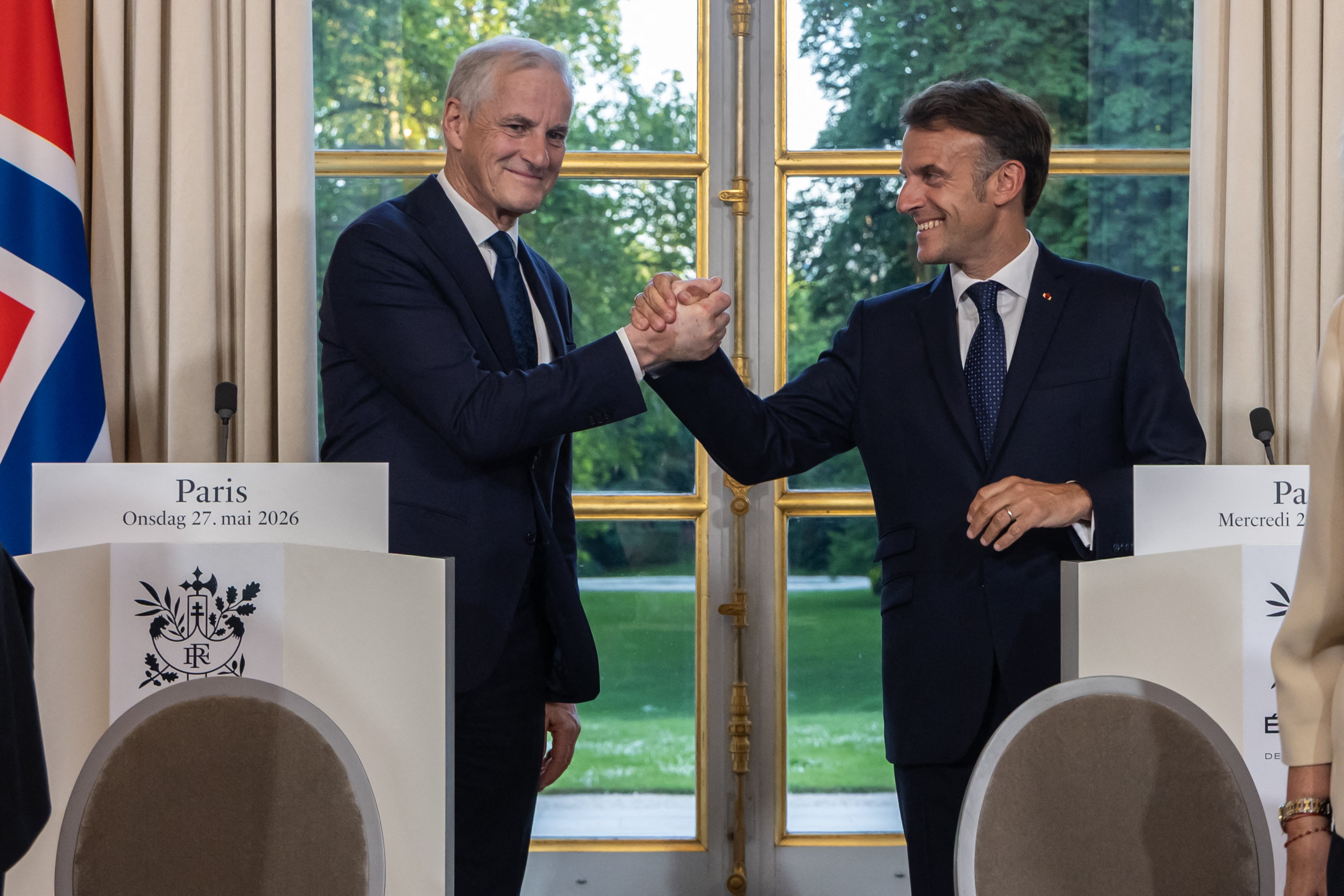
The announcement came following a visit by the Norwegian prime minister, Jonas Gahr Stoere, to Paris last week. Also present in Paris were delegates from other European countries that had signed up for what France bills as “forward deterrence,” a still nebulous but historically significant redefinition of what France’s nuclear weapons are for.
Norway will not host nuclear weapons in peacetime, Stoere said. But the new French doctrine, which was announced in theatrical fashion by Emmanuel Macron, the country’s president, while standing in front of a nuclear submarine in March, promises to link existential threats to European allies to a French nuclear response even if the U.S. may disengage. All decision-making powers will remain in Paris, as will the control over nuclear weapons. France would, in effect, act as a protective power for Europe.
What this means in practice is still up for definition, and Norway, as the latest newcomer, is still at the beginning of the process of figuring it out. Others are farther along: The discussions in Poland, for example, envision a possible role for forward deployment of French nuclear-capable Rafale aircraft.
The nuclear-deterrence framework is perhaps most mature in Germany: The two countries formed a steering group on the issue earlier this year, promising first concrete steps by the end of 2026.
Germany was also present at the meeting in Paris last week, sending Chancellor Merz’s foreign policy and security advisor, according to reporting by German magazine Der Spiegel. The next steering group meeting is supposed to take place shortly, ahead of the summer break when most of Europe’s bureaucrats are out of office.
Germany will participate in French nuclear exercises as soon as September, joining them in an observer role. Additionally, they will visit and learn about French nuclear weapons facilities and infrastructure. Later, the Bundeswehr may play a more active part, Spiegel reported, though this would be limited to supporting roles that don’t directly interact with nuclear weapons.
The confusion and ambiguity about the specifics of what France is actually offering its European allies may be by design. The French nuclear doctrine is openly “strategically ambiguous,” as has been publicly confirmed by the relevant ministries and policy thinkers in Paris. What does seem clear is that it will be a less participative process than the current U.S.-backed NATO nuclear sharing, which currently has nuclear bombs based in the Netherlands, Belgium, Germany, Italy and Turkey, and provides for German warplanes to drop U.S.-armed and owned nuclear bombs in the event of a war.
Rather, it’s a redefinition of French nuclear doctrine to include a sort of sphere of influence, where the French president may choose to respond to incursions with a nuclear response − or not. Aside from Norway, Germany and Poland, Sweden, Denmark, Greece, the Netherlands, Belgium and the U.K. have also signed up to the new French forward deterrence scheme.
France is one of five countries permitted under international treaties to possess nuclear weapons, and one of nine that actually do. At around 290 warheads, the French nuclear arsenal is the fourth-largest in the world, after China, the U.S. and Russia, and ahead of the U.K.
Linus Höller is Defense News' Europe correspondent and OSINT investigator. He reports on the arms deals, sanctions, and geopolitics shaping Europe and the world. He holds master’s degrees in WMD nonproliferation, terrorism studies, and international relations, and works in four languages: English, German, Russian, and Spanish.

Walter Reed National Military Medical Center earned an "A" hospital safety grade from Leapfrog Group for spring 2026, the fifth consecutive six-month cycle it has earned the grade.

Hegseth urged Asian allies to ramp up military spending to counter China’s growing power.
Hegseth urged Asian allies to ramp up military spending to counter China’s growing power.

The court ruled that the Trump administration could, for now, bar transgender people from enlisting, but blocked the discharge of current service members.