Over ten Ukrainian units deploy AI point defence turret
Ukraine has integrated AI into a point defence turret, marking the start of what seems to be the deployment of autonomous weapons at scale.
Army Technology
75
3 min read
0 views
The effector defends troops against fibre-optic controlled drones built to withstand Ukrainian jamming.
Pictured is a Ukrainian “Khyzhak” remote controlled weapon station. The Ministry of Defence has begun to make the system autonomous. Credit: Ukraine Ministry of Defence.
Ukraine has integrated artificial intelligence (AI) to a point defence turret
It marks the beginning of what seems to bethe deployment of autonomous weapons systems at scale
The turret will be deployed with more than ten units along frontline areas
More than ten Ukrainian military units are deploying an autonomous point defence turret placed along frontline areas.
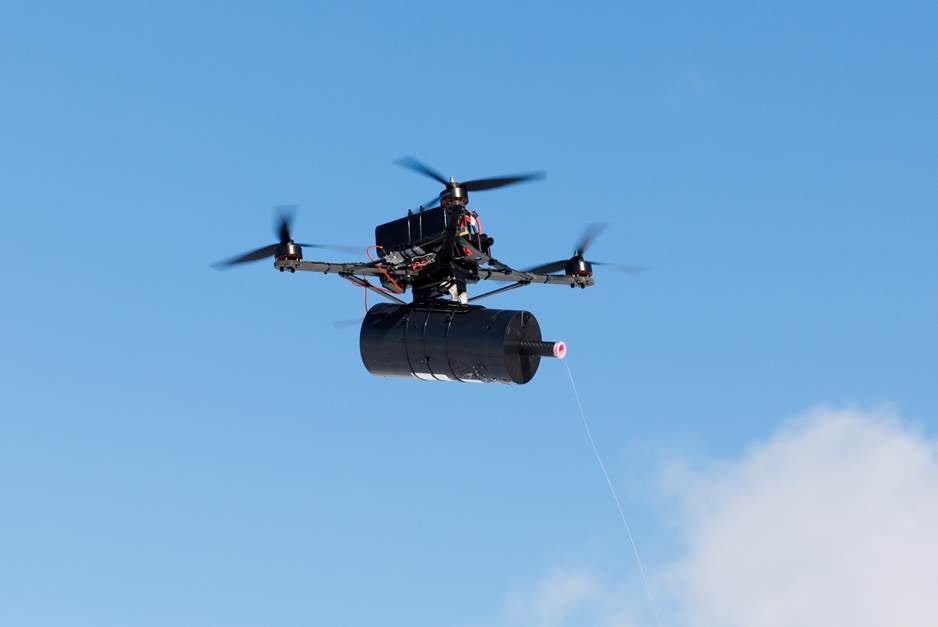
According to a recent press release, the Ministry of Defence emphasised that these weapons will help to protect personnel from fibre-optic controlled uncrewed aerial systems (UAS). The latter threat is one of the latest developments in the Russia-Ukraine conflict built to withstand jamming and other forms of electronic warfare (EW).
The AI-powered turret, meanwhile, detects, tracks and calculates a flight path to neutralise these manoeuvrable and EW-resistant UAS faster and more accurately than a human operator could.
Brave1 developed the system alongside the military allowing the turret to move from design to frontline deployment in what the Government claim is “the shortest possible time.”
A first-person view, fibre-optic controlled UAS in flight. Credit: Shutterstock/Drop of Light.
Status of AI at present
Of course, this is not the first use of autonomy in the fast-moving conflict.
AI is primarily used as an analysis tool to sift through large intelligence data sets from across the battlespace. As it relates to tactical weapon systems, AI is increasingly featured in UAS: from the Russian KUB-BLA and Lancet to Ukraine’s Bayraktar TB2 drones. Elsewhere, the UK industry is concluding drone swarm tests using novel software.
But inserting autonomy into point defence and counter-drone systems is less pervasive. Yet it marks the ongoing race to deploy AI assisted modules for any military system.
Remote to autonomy
Current conflict trends demonstrate the pervasive use of remote-controlled systems to make up for the limited breakthrough in AI-powered capabilities. According to the Institute for the Study of War both sides have demonstrated some integration of limited AI capabilities into drones as of May 2025, but have not deployed them at scale on the battlefield.
A Center for Strategic and International Studies report indicates that a modular approach to automatic target recognition integration extends the technology’s applicability across a wide range of weapon systems and uncrewed platforms.
Regarding the AI-powered turret, Ukraine has inserted an AI module into what appears to be a 7.62mm remotely operated “Khyzhak” weapon station, which the Ministry of Defence codified and authorised in July 2025. This embodies the ongoing transition from remote-controlled systems to full autonomy.
Ukraine’s Minister of Defence Mykhailo Fedorov shared a similar sentiment:
“Our key objective now is to grow the market and rapidly scale up ready-made solutions across the front… We are gaining an advantage in every technological cycle.”