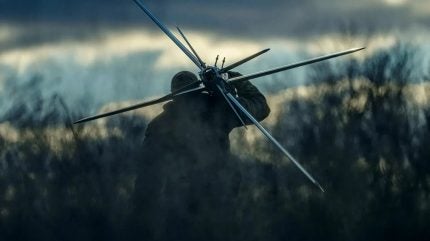
Ukraine wants 15,000 recruits to help create drone ‘kill zone’
Ukraine's concept of a 15km-deep drone kill zone is intended to hold the line in the face of Russian attacks, and limit Ukrainian casualties.
The post Ukraine wants 15,000 recruits to help create drone ‘kill zone’ appeared first on Naval Technology.
Naval Technology
75
4 min read
0 views
The Drone Line concept, unveiled in 2025, will expand to create a “kill zone” across the frontline.
Ukraine is leading the world in adopting drone warfare. Credit: Ukraine MoD
Ukraine seeks 15,000 recruits for drone-focussed units to build a 10–15 km “kill zone” along the front.
The Drone Line project is now part of the Unmanned Systems Forces, with multiple dedicated brigades/units
Jobs include FPV/UAS operators plus support roles like OSINT and camouflage, trained at three specialised centres
Ukraine wants to recruit 15,000 additional personnel to bolster specialised drone-equipped regiments operating across land, sea, and air domains, part of the Drone Line concept intended to establish a 15km-deep “kill zone” along the frontline.
Detailing the recruitment drive in a 29 April release, the Ukrainian Ministry of Defence stated that the Drone Line project, launched in 2025, was incorporated into the Unmanned Systems Forces (USF) grouping of the Armed Forces of Ukraine.
Discover B2B Marketing That Performs
Combine business intelligence and editorial excellence to reach engaged professionals across 36 leading media platforms.
Find out more
The units have been tasked with establishing a “kill zone with a depth of 10-15km”, within which “the enemy cannot operate without sustaining losses”, and destroying Russian or Russian-allied targets before they are able to approach Ukrainian positions.
The Drone Line concept has seen the creation of a bespoke uncrewed systems unit, including the 427th Separate Brigade; the 20th Separate Brigade; the 429th Separate Brigade; the 414th Separate Brigade; and the 3rd Border Guard Detachment.
Other units supported by the Drone Line include the 412th Separate Unmanned Systems Brigade; 59th Separate Assault Unmanned Systems Brigade; 1st Separate Unmanned Systems Center, among others, indicating the extensive integration of drones throughout the Ukrainian military.
While many of the 15,000 roles available cover front-end positions like FPV drone and UAS operator, other positions indicate the holistic development of bespoke units, rather than being attached to traditional formations.
The Drone Line vacancies include duties such as OSINT analyst, indicative of the information war battleground being contested in the digital domain, and a ‘camouflage and concealment specialist’.
Training is provided at three “specialised centres”, with skills development supported by “modern simulators”, stated Ukraine’s USF.
Drones having doctrinal effect on militaries
Ukraine says that the USF constitute the world’s first military service to employ aerial, maritime surface and subsurface, and ground-based uncrewed/robotic systems in combat operations.
Whether the claim is accurate or not, the adoption and integration of drone systems by Ukraine is being replicated by Western militaries – and those in the east such as Taiwan – as being a force multiplier for existing ‘conventional’ forces.
Ukraine’s approach has taken this concept a step further, potential due to personnel constraints and combat role recruitment challenges.
It is now thought that up to 90% of combat casualties on the Ukrainian battlefields are caused by drones, a small increase from the 80% ratio reported by Army Technologyin April 2025.
Ukraine’s adoption of drone warfare has led many to consider that Western militaries, rather than being considered more sophisticated that their Ukrainian counterparts, are in many respects increasingly considered as the junior partner in term of battlefield experience and developing combat doctrine.
In late-2024, it was suggested during a UK parliamentary committee session that military training provided by the UK for Ukrainian forces under Operation Interflex was considered ineffectual in providing infantry unit-level understanding in how to operate in a drone saturated environment.
Night operation success: Ukraine’s Navy hit Russian vessels in the Kerch Strait. “Sobol” and “Grachonok” — key assets protecting the Kerch Bridge — were struck, enemy losses reported. Systematic pressure on Russia’s Black Sea presence continues. pic.twitter.com/qszwIFXhVP
Operations by Ukrainian forces such as Spider Web, or the neutralisation of much of Russia’s Black Sea Fleet, highlight the role that expeditionary uncrewed systems can play in warfare.
Such has been their impact, forces such as the UK’s are looking to adopt much of the lessons learned by Ukraine in a root-to-branch rethink in how to equip military units.
One source, speaking to Army Technology recently, detailed the use of small drones by British Army personnel during exercises, bought at a price point that allows their attrition even when operated in non-combat conditions.
These small FPV drones are able to be operated by frontline units, providing tactical ISR and battlefield awareness. This is a marked change from previous systems, which were considered too expensive for such attritional usage.