North Korea pushes tourism but struggling people say survival comes first
North Korean authorities are pushing organized domestic tourism ahead of summer 2026, but ordinary North Korean people facing economic hardship are responding with near-total indifference, saying survival takes priority over sightseeing. A source in North Hamgyong province told Daily NK on Thursday
Daily NK
75
4 min čtení
0 zobrazení

North Korean authorities are pushing organized domestic tourism ahead of summer 2026, but ordinary North Korean people facing economic hardship are responding with near-total indifference, saying survival takes priority over sightseeing.
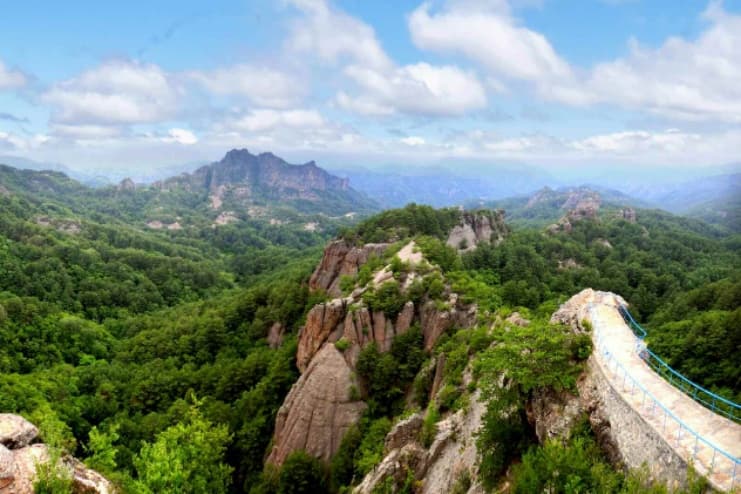
A source in North Hamgyong province told Daily NK on Thursday that the North Hamgyong province party committee issued instructions on June 17 to party committees at major institutions and enterprises across the province, directing them to actively encourage employees to use local tourist sites. Party committees at those institutions have since been working through their affiliated General Federation of Trade Unions and Socialist Patriotic Youth League chapters to organize group tours to a selection of the province’s leading attractions, including Chilbo Mountain, Kyongsong hot springs, and Yombunjin beach, and to encourage participation. The source said the authorities’ underlying aim is to channel spending into domestic tourism and capture tourism revenue internally.
North Korean people, however, are largely treating the push as irrelevant to their lives. For those struggling to get by, tourism is seen as an unaffordable luxury.
Cost is the main deterrent. “Unless the factory covers the expenses, you need at least 300,000 North Korean won just for transport and a week’s food and accommodation,” the source said. “Hardly anyone is going to spend that kind of money on sightseeing.” People have been saying things like “sightseeing is something you do when your mouth has reason to celebrate” and “even Mount Kumgang only looks beautiful on a full stomach,” the source added. For people who consider themselves fortunate just to get through each day, the idea of going on a tour feels entirely out of reach.
A picnic by the river is the realistic option
Even North Korean people who previously visited Pyongyang on organized trips have been underwhelming in their accounts of the experience. Some have said they scraped together travel money only to find the food and lodging substandard and the sightseeing constrained, to the point where they wished they could get their money back. Others have said that for people like themselves, a meal eaten outdoors with family by a river or the sea brings more genuine joy than any organized tour. Given that attitude, the source said, it was hard to imagine many people enthusiastically signing up for state-organized tourism.
In this environment, the leisure option that North Korean people are actually choosing is what is sometimes called “field play” — packing food and heading to a nearby riverbank or hillside. It requires no fixed schedule, costs relatively little, and involves none of the social pressure of participating in an organized group activity.
Tourism, the source concluded, has come to be seen by North Korean people as something only those without financial worries can afford. No matter how much the state promotes it, for people whose more pressing concern is putting food on the table each day, the push registers as nothing more than empty words.
A Note to Readers


